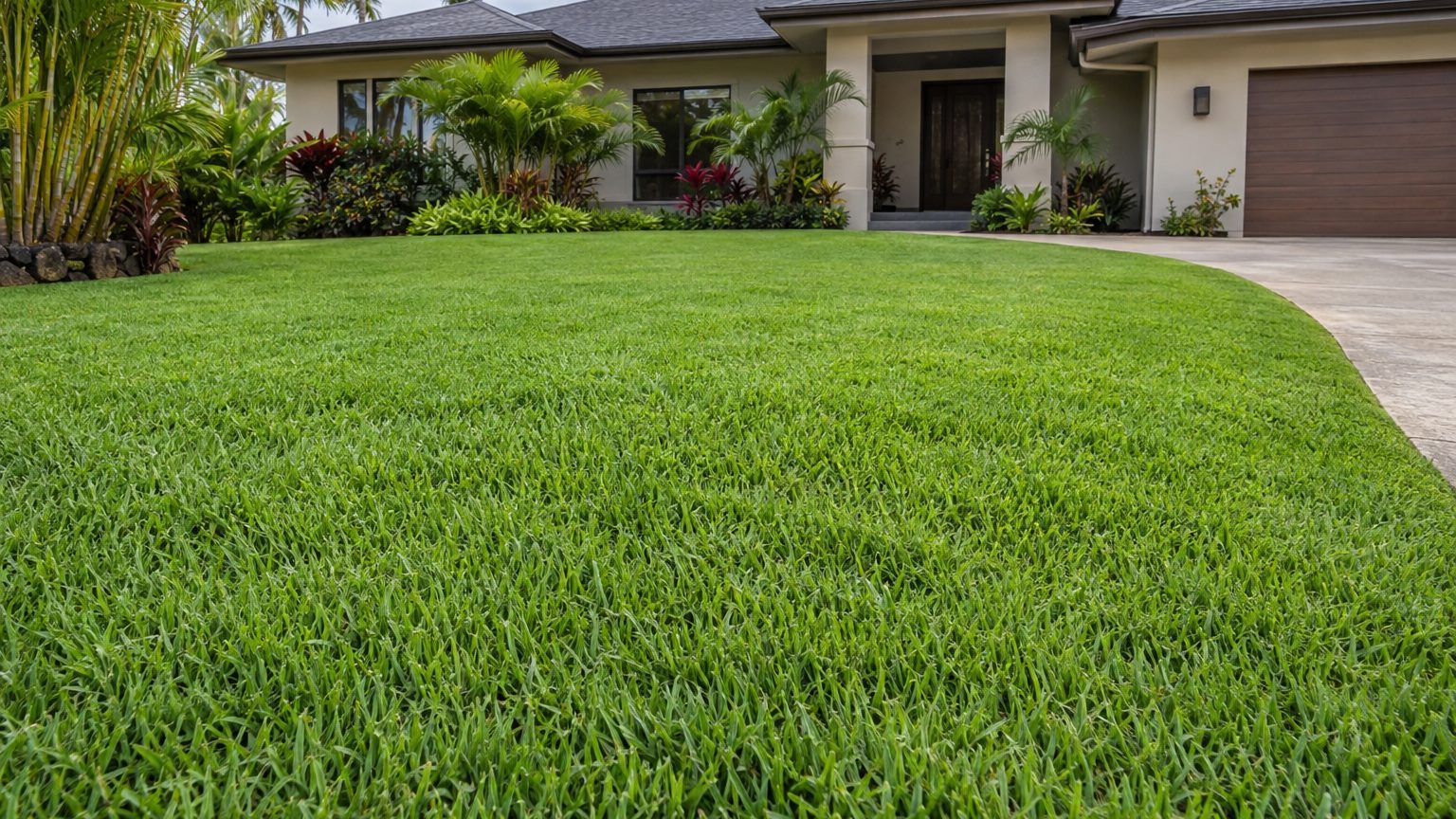
A Hawaii lawn has no frost-driven dormancy, so mowing and watering can continue in every season. What changes from one yard to the next is rainfall, elevation and whether your house sits on the wet windward side or the dry leeward side of its island.
Frost Dates and Growing Season in Hawaii
Where people live in Hawaii, no freeze occurs, so there is no last spring frost or first fall frost to plan around. Frost shows up only on the high volcanic summits of Mauna Kea, Mauna Loa and Haleakala. The USDA hardiness system, which rates the average coldest night of the year, puts the state at zone 9a to 13a, so cold never ends a season for a young seedling. Grass growth follows rain and sun instead, and the year splits into these moments:
- In winter, from January through February, grass keeps growing, so mowing and watering carry on all twelve months, and windward yards can ease off fertilizer because cool, wet weather slows the turf.
- In early spring, around March and April, fertilizing picks up on a monthly rhythm as days lengthen and the lawn thickens.
- Through late spring and summer, from May to August, growth peaks, so the mower runs often and leeward lawns need regular irrigation to stay green.
- In early fall, in September and October, feeding continues while the heat eases, which makes it a comfortable time to patch bare spots with sod or plugs.
- In late fall, in November and December, fertilizing becomes optional, and windward lawns can skip it while mowing and watering go on as usual.
Because no cold season interrupts planting, a bare patch can be filled whenever you can keep the new grass watered.
Hawaii — the year and the numbers
- State
- Hawaii
- USDA zones
- 9a-13a
- Frost
- none in an average year
- Annual rain
- 16 in
- Lawn type
- warm-season
- Source
- NOAA NCEI 1991-2020 Climate Normals: not-computable flag for every freeze percentile at 32F and 36F, zero days per year at or below 32F, station USW00022521 — https://www.ncei.noaa.gov/access/services/data/v1?dataset=normals-annualseasonal&stations=USW00022521 · Honolulu
Cool-Season or Warm-Season Grass in Hawaii?
Warm-season grass is the answer here. Hawaii has no hard winter to make a cool-season lawn worth the trouble, and the steady warmth and sun suit grasses that thrive in heat. Rainfall then decides which warm-season type fits your yard.
Salt spray, dry leeward slopes and soggy windward soil each favor different choices. Hawaii lawns use five warm-season grasses.
| Grass | How it does in Hawaii | Why |
|---|---|---|
| Common bermudagrass | Widely grown, and the only one sold as seed | Grows from seed, so it is the easy choice for starting from scratch |
| Zoysiagrass (Manila, Mascarene) | Established by sod, plugs or sprigs | Planted vegetatively, never from seed |
| St. Augustinegrass | Grown across island yards | Planted vegetatively, because it is never sold as seed |
| Centipedegrass | Listed as a lawn option | Also spreads from plugs or sprigs rather than seed |
| Seashore paspalum | Listed as a lawn option | Suited to coastal conditions, planted vegetatively |
Since only common bermudagrass comes as seed, most other lawns here start from sod, plugs or sprigs, which is a different job than scattering seed over bare soil.
When to Seed, Fertilize and Aerate a Lawn in Hawaii
Hawaii has few hard deadlines. Most tasks run all year, and the real choice is which months give the best results for feeding and planting.
Only common bermudagrass can be seeded, so every other grass goes in as sod, plugs or sprigs. Aeration has no dated window for the islands, so base it on how compacted your soil feels underfoot.
| Task | Best months in Hawaii | Why then |
|---|---|---|
| Fertilizing | March through October | Warm, active growth uses the nutrients; it also works in January, February, November and December |
| Mowing | January through December | Grass grows in every month |
| Laying sod, plugs or sprigs | January through December | Any month works as long as the new grass gets water |
| Seeding common bermudagrass | It works in any month, January through December | No cold season to threaten seedlings |
| Watering | January through December | Leeward lawns especially need steady moisture |
Fertilize monthly during the active months. In windward locations, reduce or skip feeding in the winter months, since cool, wet weather there slows the grass and wastes the product.
Lawn Problems to Watch for in Hawaii
Thin, Pale Grass in Wet Windward Yards
Constant rain on the windward sides leaches nutrients out of the soil, so grass turns pale and thins even though it never stops growing. Pale blades plus soil that stays soggy point to feeding and drainage trouble. Keep up monthly fertilizing in the active months, then reduce it in winter, and avoid watering on top of rain.
Brown Patches on Dry Leeward Lawns
On the leeward coasts, sun and little rain dry the turf fast. Straw-colored areas that spring back after a good soaking are thirsty, not dead. Water deeply and regularly, and mow often enough that the grass stays healthy instead of stressed, since mowing continues all year.
Bare Spots That Never Fill In
A spot that stays bare in a warm, mild place usually has compacted soil or too much shade. Check by pushing a screwdriver into the ground, since it should slide in easily. If it resists, loosen the soil, then fill the gap with sod, plugs or sprigs of the same grass, which can go in any month.
How Lawn Care Dates Change Across Hawaii
The islands share a mild climate, but local weather shifts quickly over short distances, and the calendar bends with it.
- Windward Hilo and the Hamakua coast: Steady rain keeps soil wet and nutrients washing away, so winter feeding can be skipped or reduced while mowing continues.
- Leeward Kona and Kihei: Dry, sunny conditions make irrigation the main task, and lawns here keep taking fertilizer through winter more readily.
- Upcountry Maui and the higher slopes of Hawaii Island: Cooler air at elevation slows growth, so these lawns grow more slowly and need less frequent mowing than those at sea level.
Use your own rainfall and elevation as your guide rather than the island you live on.
Where to Get Lawn Advice in Hawaii
The University of Hawaii extension service, run through CTAHR, offers grass guides written for island conditions. Your county extension office can also help with soil tests and lawn diagnosis.
- The extension service publishes grass guides, so look there before choosing between bermudagrass, zoysia or St. Augustine.
- Your county office can help with soil testing, which is worth doing before you fertilize a pale, thinning lawn.
Common Questions
Do Lawns in Hawaii Go Dormant in Winter?
No freeze reaches inhabited areas, so grass keeps growing in winter. Growth slows on cool, wet windward sides and at higher elevations, but mowing and watering still apply in every month.
Can You Grow St. Augustinegrass from Seed in Hawaii?
No. St. Augustinegrass is never sold as seed, so it goes in as sod, plugs or sprigs. Zoysiagrass is planted the same way, and only common bermudagrass comes as seed.
Is There a Wrong Month to Lay Sod in Hawaii?
Not for the calendar. Sod, plugs or sprigs can go in during any month, provided the new grass gets water while it roots, which matters most on dry leeward sides.