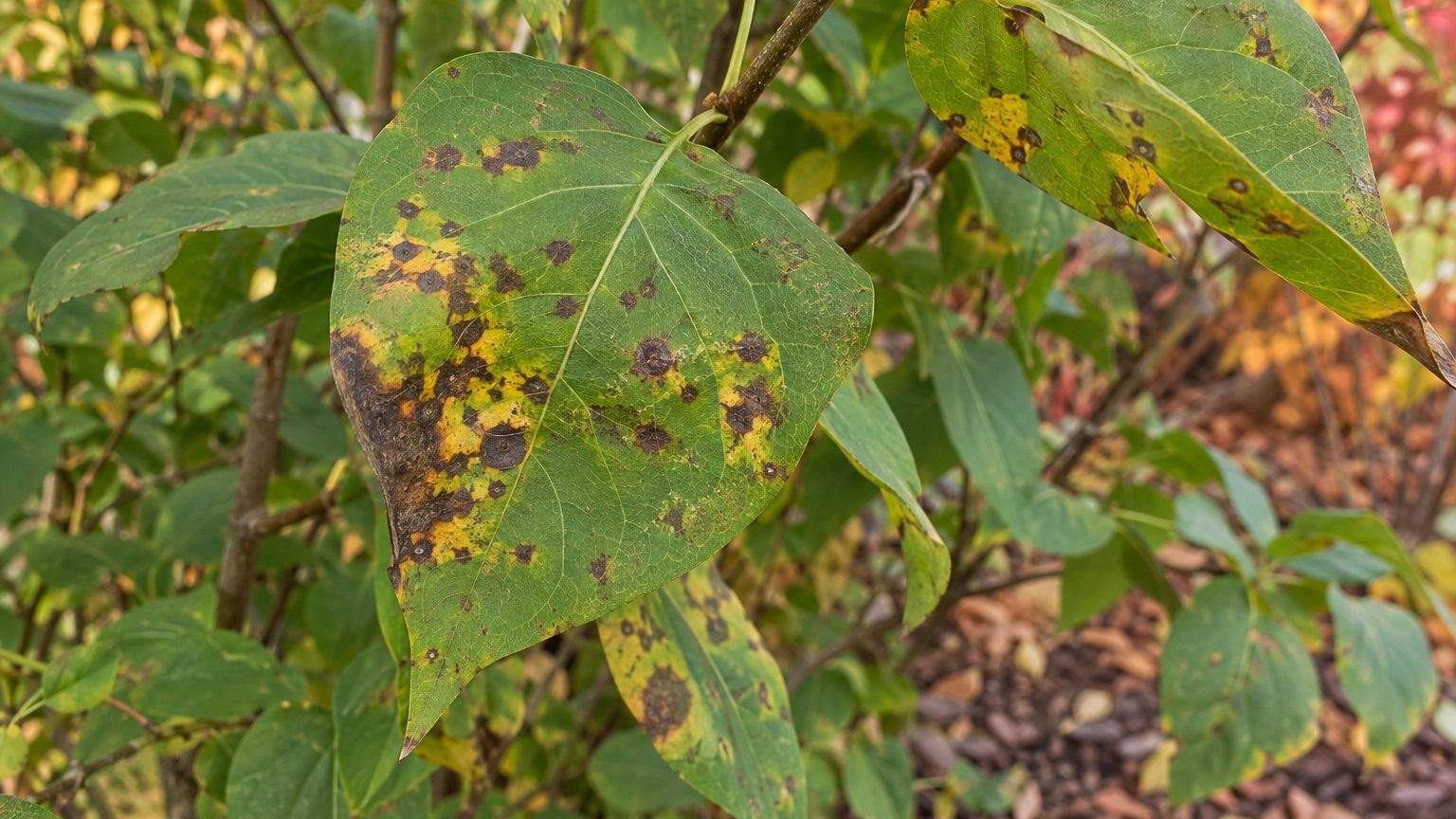
Tan or brown blotches on lilac leaves, sometimes with leaves dropping early, are the usual sign of a leaf spot disease, and most of the time the damage is more cosmetic than dangerous. The shrub looks rough, yet it generally comes back the next spring. What matters is telling the fungal types from the bacterial one, then cleaning up so the problem does not carry over.
Leaf Spot: What You See

Start with the leaf edges, because that is where the common fungal leaf spot gives itself away.
- Brown spots begin at the edges of the leaves and move inward, sometimes looking splotchy.
- As the infection progresses, neighboring spots merge, and the leaves curl and eventually drop.
- Spots stay small at first, then enlarge, and veins hold them in place so they look angular.
- Browning often starts on the lower part of the shrub and works its way up.
- In Iowa, damage shows up in summer and intensifies into September on common lilac.
Severe browning looks dramatic, but the shrub is rarely in danger from it.
From the almanac
Lilacs in your state
The dates on this page depend on where you live. Your state's page carries its frost dates, its USDA zones and the year laid out month by month.
Northeast
Southeast
- Alabama
- Arkansas
- Delaware
- Florida
- Georgia
- Kentucky
- Louisiana
- Maryland
- Mississippi
- North Carolina
- South Carolina
- Tennessee
- Virginia
- West Virginia
Midwest
Southwest
West
Pacific Northwest
Canada
Leaf Spot or Something Else?
Bacterial blight is the main lookalike, and it behaves differently from a fungal spot. It hits shoots and flowers as well as leaves.
Wet spring weather and a late frost can also muddy the picture, so check where on the plant the damage sits before deciding.
| Looks like | How to tell them apart |
|---|---|
| Bacterial blight | Leaves look singed as if by flame, and dark black streaks form on one side of young shoots. |
| Bacterial blight on blooms | Flowers wilt and turn brown, and unopened buds blacken, which a fungal spot does not do. |
| Fungal leaf spot | Brown spots start at the leaf edge and merge, with leaves curling and dropping. |
Frost or winter injury can look similar in spring.
What Causes Leaf Spot, and Where It Is Worst
Several fungi cause lilac leaf spots, including Pseudocercospora and Septoria, and a bacterium, Pseudomonas syringae, causes the blight lookalike. The fungal types favor rainy or humid weather and moderate temperatures. Symptoms do not develop until seven or more days after infection, so visible damage reflects earlier weather.
In Vermont, the fungus overwinters on fallen leaves and infects emerging leaves during wet spring weather. As wet weather continues, more leaves become infected. Vermont and the Northeast see it commonly, and it flared there in 2024 after a wet spring and early summer.
In Oregon, cool, wet springs favor bacterial blight, especially when rain follows a late frost or winter injury. Crowded plants that stay damp after rain or dew are more vulnerable everywhere.
How to Treat Leaf Spot
Treatment is mostly sanitation, done in an order that keeps spores from reaching healthy growth.
- Confirm the symptoms by checking leaf edges, shoots and buds, so you know whether it is a fungal spot or the bacterial blight.
- In Maryland, prune off infected leaves and dead twigs during winter or dry summer months to prevent the spread of the disease spores.
- In Vermont, thin crowded stems in winter so air moves through the shrub and the leaves dry faster.
- In Maryland and Vermont, rake up fallen leaves in autumn so the fungus has less debris in which to overwinter.
- Dispose of the debris by burying or composting it, or by burning it where allowed.
Most leaf spots are cosmetic, so many lilacs need nothing beyond cleanup.
How to Prevent Leaf Spot Coming Back
Prevention follows the lilac’s year, since the fungus waits on fallen leaves and wakes in wet spring weather.
- In Vermont, thin the shrub in winter and prune out dead branches so air can move through the canopy.
- In Vermont, watch for wet spells in spring, when the fungus infects emerging leaves.
- In summer, water at the base and not over the foliage, since leaves that dry quickly after rain or dew are less vulnerable to infection.
- Through the growing season, keep lilacs well spaced from neighboring shrubs and walls.
- In Maryland and Vermont, collect and dispose of infected fallen leaves in autumn so the disease is less likely to carry into the next season.
Thorough fall cleanup is essential because the disease can pass from one season to the next through leaf debris.
Where This Comes From
These notes draw on university extension guidance from Oregon, Maryland, Wisconsin, Vermont and Iowa. Timing and pruning advice holds where it was written, so check with your own state’s extension service for what fits your climate.
Common Questions
Will Leaf Spot Kill a Lilac?
Rarely. Most leaf spots are cosmetic, and even dramatic browning is not lethal to the shrub. In Wisconsin, buds set on the stems are ready to sprout the following spring.
Can You Compost Infected Lilac Leaves?
Composting is one option, alongside burying the leaves or burning them where allowed. The point is getting the leaves away from the shrub.
Why Do Lilac Leaves Turn Brown in Wet Years?
Humid, rainy weather favors the fungus, and the problem tracks high local humidity. In Vermont and the Northeast, the disease occurred in 2024 after wet weather in spring and early summer.