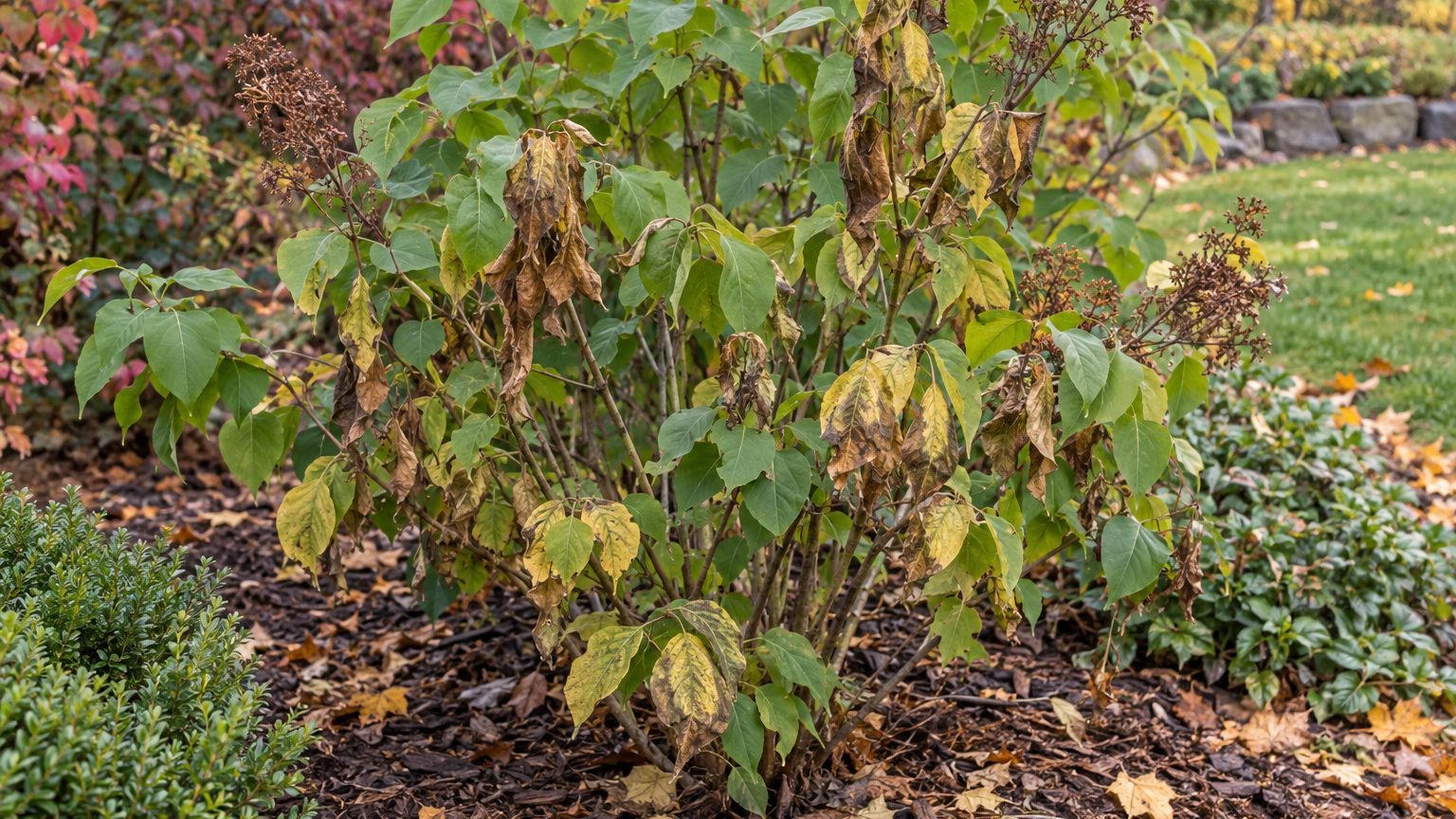
A lilac branch that droops and yellows in summer while the rest of the shrub looks fine is the picture most gardeners remember. That pattern points to a soil fungus that clogs the plant’s plumbing from the inside.
Verticillium Wilt: What You See

The disease shows up on one part of the shrub first, which sets it apart from problems that hit the whole plant evenly.
- Wilting and yellowing begin in a single branch or one section of the shrub, and the foliage on only one side may collapse.
- In midsummer, leaves turn yellow at the margins, then brown and dry.
- Individual branches wilt suddenly and die, a pattern called flagging, and in Wisconsin affected branches may sit on one side or be scattered through the plant.
- The wood under the bark of a wilting branch is discolored in streaks that run the length of the stem.
- Those streaks are often not visible in lilac, so a clean cut stem does not clear the shrub.
Because the dieback can spread to the rest of the shrub, a lilac with one flagging branch deserves a close look soon.
From the almanac
Lilacs in your state
The dates on this page depend on where you live. Your state's page carries its frost dates, its USDA zones and the year laid out month by month.
Northeast
Southeast
- Alabama
- Arkansas
- Delaware
- Florida
- Georgia
- Kentucky
- Louisiana
- Maryland
- Mississippi
- North Carolina
- South Carolina
- Tennessee
- Virginia
- West Virginia
Midwest
Southwest
West
Pacific Northwest
Canada
Verticillium Wilt or Something Else?
Several lilac problems brown the leaves, so a single clue is never enough. Look at where the damage sits on the plant and what the wood looks like when you cut into it.
The sorting comes down to pattern: one branch dying while its neighbors stay green, plus dark streaking under the bark, leans toward the fungus.
| Looks like | What happens | How to tell them apart |
|---|---|---|
| Other wilt-type diseases of lilac | Leaves also wilt and brown | Verticillium wilt can kill lilacs rapidly, and it often begins with sudden wilting in an individual branch. |
| Dry-soil stress | Leaves droop and edges brown | Drought stress tends to affect the whole shrub, while the fungus begins on a single branch or one side |
Lilac is not the only host. Barberry, catalpa, elm, linden, smoke-tree and redbud can carry the same disease, so a sick neighbor in the yard is a useful clue. A local plant diagnostic lab can confirm the cause from a sample.
What Causes Verticillium Wilt, and Where It Is Worst
The cause is a fungus, typically Verticillium dahliae on lilac, living in the soil. It enters through the roots and colonizes the water-conducting tissue (the xylem), then blocks it off. Water can no longer travel from the roots to the branches, and the leaves wilt.
Soil is the carrier, so the problem follows the ground rather than a climate zone. Because the fungus lives in soil, the risk follows infested ground rather than a particular climate zone. Japanese tree lilac is among the lilacs affected by this disease.
Other hosts in the garden keep the fungus in place. Rose, boxwood and barberry are frequent hosts alongside lilac, so a bed that has already lost one of them is worth treating with care before planting a lilac there.
How to Treat Verticillium Wilt
No yard remedy reverses the blockage, so the work is about protecting the rest of the shrub and the soil. Start with the steps below, in this order.
- Because streaking is often not visible in lilac, have a local plant diagnostic lab test a sample before you treat the shrub.
- Cut out dead and wilting branches well below the damage, so that dying wood does not linger on the shrub.
- Remove dead and wilting branches without assuming that pruning removes the soilborne fungus.
- Water the shrub regularly through dry spells and avoid heavy feeding, so that a stressed plant keeps as much working tissue as it can.
- Do not expect a yard treatment to reverse the blockage inside the plant.
- Watch the shrub through the following seasons, so that you catch new flagging early.
If the whole shrub declines, removal may be the kindest choice. Replace it with something not on the host list, as the soil keeps the fungus.
How to Prevent Verticillium Wilt Coming Back
Prevention is mostly timing and tidiness, because the fungus waits in the soil and waits for a weak plant.
- In early spring, check each lilac for branches that failed to leaf out, since a dead branch can be the first sign from the previous summer.
- Once the soil warms, water deeply and regularly during dry periods, so that the shrub does not enter summer stressed.
- In midsummer, look over the shrub often for leaves yellowing at the margins, and mark any one-sided wilting.
- After removing diseased wood, take the debris out of the planting bed.
- When choosing a replacement in a bed that had the disease, skip known hosts such as barberry, catalpa, elm, linden, smoke-tree, redbud, rose and boxwood.
A tidy bed and a steady watering habit cannot remove the fungus, but they keep the shrub in the best shape to hold on.
Where This Comes From
Local conditions differ, so have the diagnosis confirmed before you act.
Common Questions
Can a Lilac Recover from Verticillium Wilt?
Some shrubs lose affected branches and carry on, but the disease can kill lilacs rapidly. Because the fungus blocks water movement inside the plant, recovery is uncertain even after wilting wood is removed.
Is It Safe to Plant Another Lilac Where One Died?
The fungus lives in the soil, so a lilac in the same spot faces the same risk. Choose a different plant that is not a known host, and remember that the fungus remains in the soil.
Can Verticillium Wilt Spread to Other Plants in the Yard?
Yes. Barberry, catalpa, elm, linden, smoke-tree and redbud are susceptible, and rose and boxwood are frequent hosts. Keep an eye on those plants if a lilac nearby has been diagnosed.