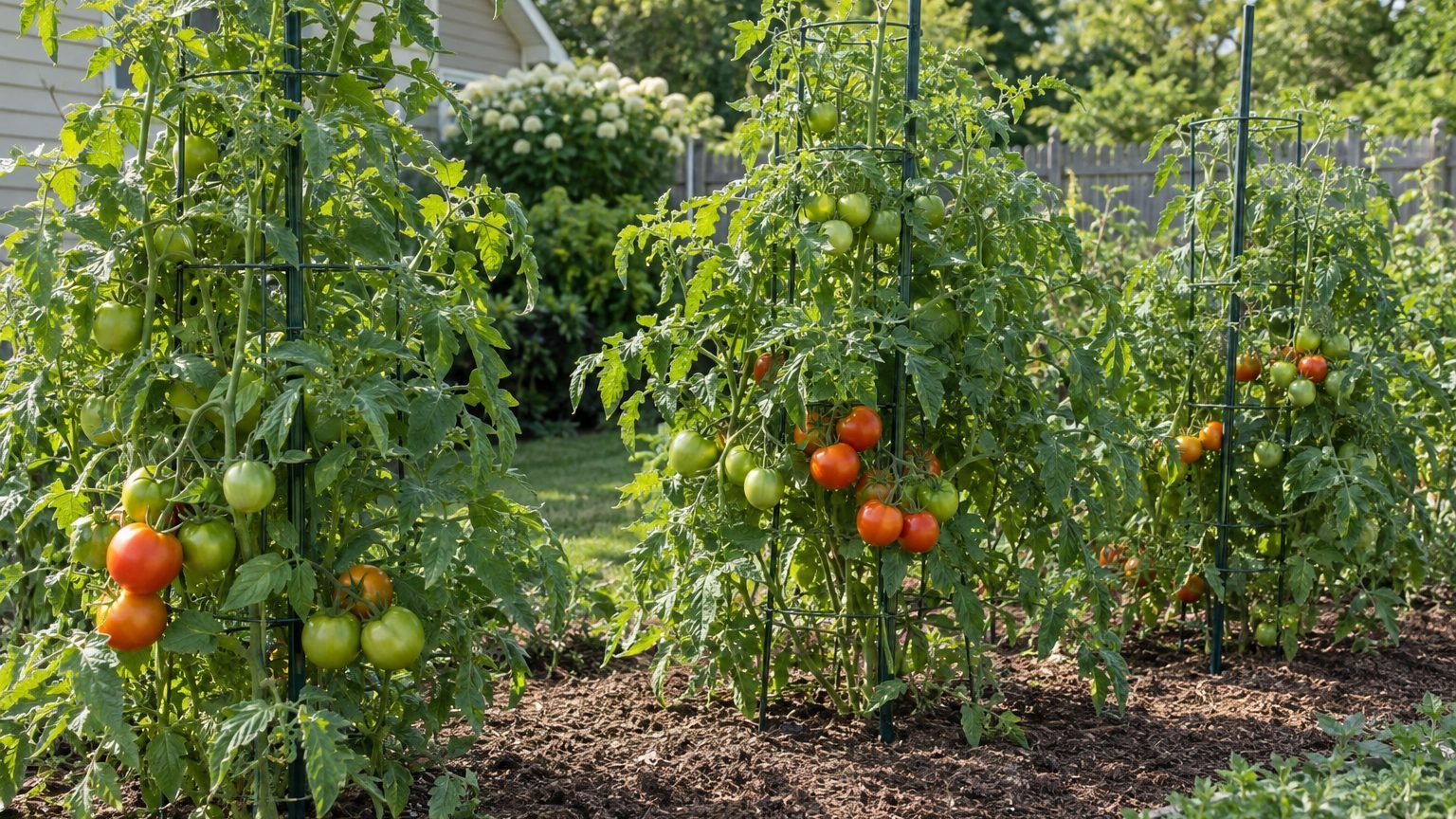
Tomato plants go into warm ground after the last frost, and the variety you choose matters as much as the date. A tomato that thrives in a short northern summer can drop its blossoms in the humid South, so planting time and variety both follow the climate where you garden.
The Tomato Year, Season by Season
A tomato plant follows the same order of jobs wherever it grows, and only the calendar shifts from one climate to the next.
- In late winter or early spring, sow seed indoors under good light. Allow time to grow a sturdy transplant, and resist starting too early, because leggy seedlings cost you more than they gain.
- As spring settles, set the seedlings outside for a little longer each day so the leaves toughen before they meet full sun and wind.
- Once the last frost has passed and the soil has warmed, plant them out. Bury the stem deep, and for a plant in a peat pot cover the pot’s top edge with soil.
- In early summer, tie or cage the plants as they grow, and water on a steady schedule. Uneven watering is what sets up most fruit problems.
- Through summer and early fall, pick as fruit colors up. In hot climates, where large tomatoes stall in peak heat, a second planting for fall harvest picks up the slack.
- In fall, pick everything of size before the first frost, since cold ends the plant’s work overnight.
The state selector just below this section takes you to the page for your own state.
From the almanac
Tomatoes in your state
The dates on this page depend on where you live. Your state's page carries its frost dates, its USDA zones and the year laid out month by month.
Northeast
Southeast
- Alabama
- Arkansas
- Delaware
- Florida
- Georgia
- Kentucky
- Louisiana
- Maryland
- Mississippi
- North Carolina
- South Carolina
- Tennessee
- Virginia
- West Virginia
Midwest
Southwest
West
Pacific Northwest
Canada
Types of Tomatoes and What Each Needs
Growth habit sorts most tomatoes. Determinate plants stay bushy and ripen much of their crop in one stretch, while indeterminate plants keep vining until frost and bear steadily into late summer and early fall.
Shape and purpose sort the rest. Fruit may be round, slightly flattened or pear-like, and each form has a kitchen job.
| Tomato type | What it gives you | What it needs |
|---|---|---|
| Determinate (Celebrity, Bush Early Girl) | A bushy plant with a concentrated crop | Little staking, and the shorter vine suits smaller spaces |
| Indeterminate | Steady fruit until the first fall frost | Tall, strong support and regular tying |
| Cherry (Super Sweet 100, Juliet) | Small fruit, early and plentiful | Regular water to keep the plant productive |
| Paste or Roma | Low water content, good for cooking down into sauce and ketchup | Steady moisture and healthy foliage |
| Disease-resistant hybrid | Ease of growing and reliable yield | Resistance letters on the label, such as V, F, N |
| Heat-set (Heat Wave II) | Fruit through hot months | Descriptions saying heat-set, hot-set or heat-tolerant |
Heirlooms taste wonderful but often struggle in summer heat, so where summers run hot, plant them soon after the last frost. Early Girl ripens early with mid-size fruit, and in North Carolina Celebrity and Early Girl are among the early-season types that ripen in 50 to 65 days after transplanting. A few sub-arctic varieties are bred for low spring temperatures, though they usually must be grown from seed.
Best Tomatoes by Region
Each region has one main hurdle, whether it is a short season, heat, disease or cool nights, and the best choices answer that hurdle.
- Upper Midwest and northern plains (Minnesota, North Dakota, Alberta): Celebrity is a determinate vine that resists many diseases and cracking. Septoria leaf spot is the most common tomato disease in the Dakotas, and BadaBing! is among the first varieties to resist it.
- New England and New York (Connecticut, Maine, New York): Foliage diseases such as gray leaf spot and blight decide the season, so look for resistance. Neptune is an early determinate that tolerates heat and resists bacterial wilt.
- Great Lakes, Corn Belt and Central Plains (Illinois, Iowa, Michigan): Clear away old plant debris before planting, and keep water off the leaves. Hybrids are known for ease, resistance and reliable yield.
- Mid-Atlantic, Kentucky and Tennessee (Maryland, Pennsylvania, Virginia): Disease-resistant cultivars matter here, and heat-bred heirlooms such as Arkansas Traveler, Homestead 24 and Hazelfield Farm hold fruit in hot spells.
- North Carolina and Arkansas: Check the letters after the name. V, F, FF, N and A mark resistance, and F covers fusarium wilt, as in Celebrity VFN.
- Deep South (Alabama, Georgia, Louisiana): Read descriptions for heat-set, hot-set or heat-tolerant, and plant favorite heirlooms early in spring.
- Florida: Heat Wave II suits the hotter months. Sweet Treats resists fusarium wilt, leaf mold and tomato mosaic virus.
- Pacific Northwest (Washington, Oregon, British Columbia): Pair cold-tolerant early varieties with heat-tolerant later ones.
Rocky Mountain, Desert Southwest, California and Hawaii gardeners follow the same logic: pick resistance to local diseases and heat-tolerant types where nights stay warm.
Common Tomato Problems and What Causes Them
Blossom End Rot

A dark, sunken patch forms on the bottom of the fruit. It is a physiological disorder, caused by calcium deficiency induced by water stress, so the soil is not lacking calcium so much as the plant is not getting steady water.
Water regularly. Leaving plants dry while you travel is a common way to trigger it.
Leaves Yellowing from the Bottom

Lower leaves yellow and spot, and the trouble climbs the plant. Foliage diseases such as early blight and Septoria are likely when the spots are marked and the weather is wet.
Remove old plant debris before planting, water at the base so the leaves stay dry, and choose resistant varieties next year.
Blossoms Dropping Without Fruit
Flowers fall off in a hot spell and nothing sets. Large-fruited tomatoes stop setting fruit when summers run hot.
Plant heat-set types, or put heirlooms in soon after the last frost so they fruit before the heat arrives.
Tomato Guides by State
The state pages turn all this into months and varieties for your own climate. Pick your state from the selector above.
- When to Plant Tomatoes in your state gives the planting window, so check it before you buy transplants or start seed.
- Best Tomatoes to Grow in your state names varieties that suit your region, and it helps most when you are choosing seed in winter.
Common Questions
Should You Grow Determinate or Indeterminate Tomatoes?
Choose determinate for a compact plant and a crop that comes together, and indeterminate for fruit over a longer stretch. Indeterminate vines need sturdy support.
Do You Need Disease-Resistant Varieties?
They help a great deal if tomato diseases have bothered you before. Seed catalogs and plant tags list resistance, and you may need to try several varieties before finding the ones that suit your yard.
Why Do Tomatoes Crack?
Cracking often follows uneven watering, as a plant that dried out swells suddenly. Steady moisture helps, and some varieties, such as Celebrity, resist cracking.