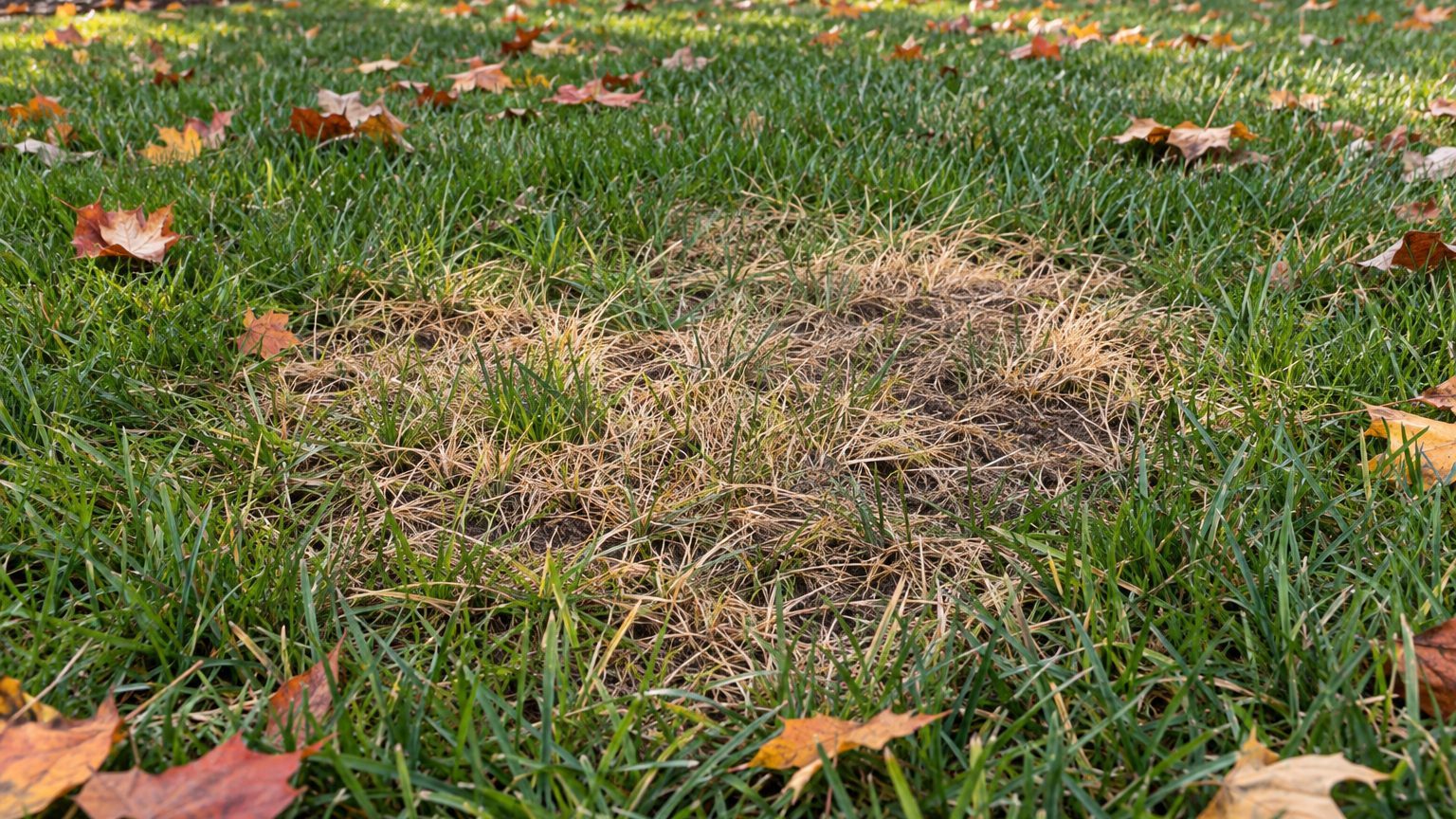
A ring of straw-colored grass opening up in the heat of midsummer, with green turf still standing in the middle and all around it, is the classic look of summer patch. In North Carolina, the fungus begins attacking the roots in spring, before symptoms appear above ground. Because the damage is done underground, the calendar and the soil temperature matter more than any single glance at the lawn.
Summer Patch Symptoms

Summer patch shows up in hot weather as patches and rings, and a few details separate it from ordinary heat stress.
- The outer edge of an active patch is usually orange or bronze, which sets it apart from the plain tan of dried-out turf.
- Circular patches or rings run from 6 inches to 3 feet across, and some have green grass left in the center.
- Blades in the affected area turn from dull green to straw as the roots below stop delivering water.
- In North Carolina, symptoms typically appear in early to mid-July, and the lawn can show them anywhere from June to September.
- The patches come back in the same spot year after year, often wider than before.
Pull up a handful of turf from the edge of a patch and look at the roots, which should be dark and brittle rather than white and firm.
From the almanac
Lawn in your state
The dates on this page depend on where you live. Your state's page carries its frost dates, its USDA zones and the year laid out month by month.
Northeast
Southeast
- Alabama
- Arkansas
- Delaware
- Florida
- Georgia
- Kentucky
- Louisiana
- Maryland
- Mississippi
- North Carolina
- South Carolina
- Tennessee
- Virginia
- West Virginia
Midwest
Southwest
West
Pacific Northwest
Canada
Lawn Problems Mistaken for Summer Patch
One disease is close enough to fool nearly everyone, and it shares the same rings and the same bluegrass lawns. The difference is mostly a matter of timing, so note when the damage first appeared.
| Looks like | How to tell them apart |
|---|---|
| Necrotic ring spot: rings and patches of dying turf, often in Kentucky bluegrass | Symptoms are virtually indistinguishable by eye, but necrotic ring spot occurs at cooler temperatures, so rings that appear in spring or fall point toward it and rings in midsummer heat point toward summer patch |
Years ago, both diseases were lumped together under the name Fusarium blight, and you may still see that label on older lawn advice. Plain drought stress and pet urine can also leave tan spots in hot weather. Those tend to lack the orange or bronze rim and the repeating ring shape, and a patch that does not return in the same place the next summer was probably not this disease.
What Causes Summer Patch
A soil fungus causes it, one that lives on and in the roots, stolons and rhizomes of the grass. It starts the infection in spring, when the soil warms and stays warm. According to University of Illinois Extension, the first root infections occur once soil temperatures settle at 65 to 70 F at the 2-inch depth. According to NC State Extension, the fungus begins to attack when soil temperatures reach 65°F.
Nebraska uses a similar mark as its trigger for preventive work: soil at a 2-inch depth in mid afternoon reaching 65°F for 5 consecutive days. That gives you a practical signal, since a cheap soil thermometer tells you more than the date on the calendar.
The grasses at risk are annual bluegrass, Kentucky bluegrass and fine fescues. That makes it mainly a problem for cool-season lawns, which is why it turns up in the Upper Midwest, the Mid-Atlantic and the transition zone, where a bluegrass lawn meets hot summers. Symptoms appear after the infection, when summer heat and dry spells ask more of roots that are already damaged.
How to Treat Summer Patch
Treatment combines practices that protect the roots you still have. Your state’s extension service can tell you which fungicides are approved where you live, so ask there before buying anything.
- Confirm the diagnosis by checking the patch edge for orange or bronze color and the roots for dark, brittle tissue, so you do not treat a different problem.
- Mow at 2-3 inches, which is the range Utah recommends, so the grass keeps enough leaf to shade the soil and feed the roots.
- Cut often enough that only 30-40% of the leaf length is removed per mowing, because heavy scalping stresses turf that is already struggling.
- Water deeply when the lawn needs it, rather than in light daily sprinklings, so roots follow the moisture downward instead of staying shallow.
- Feed with restraint, since in California the advice is a total of 4 to 6 pounds of actual nitrogen per 1,000 square feet per year, which keeps growth steady without pushing soft, weak blades.
- According to UC IPM, University of California, avoid applying more than 1 pound of actual nitrogen per application, so the lawn does not get a surge that its damaged roots cannot support.
Where a fungicide is warranted, timing matters more than quantity. It works as a preventive measure applied in spring as the soil warms, not as a rescue once the rings have turned tan. Both summer patch and necrotic ring spot are difficult to control, so expect gradual improvement rather than a quick fix.
How to Prevent Summer Patch
Prevention follows the soil more than the calendar, because the fungus wakes up when the ground warms. Care through the year should keep roots deep and the lawn lightly stressed.
- In Illinois, monitor soil temperature at the 2-inch depth in spring so you know when infection season begins.
- Where preventive fungicide treatment is warranted in Nebraska, time it to the local soil-temperature guidance.
- Through late spring and early summer, mow high and water deeply but infrequently, so roots grow down before the hot weather arrives.
- In midsummer, when symptoms appear, avoid scalping and heavy fertilizer, which can push growth the roots cannot support.
- In early fall, when temperatures ease, seed or overseed thin spots with a blend that fits your region so the turf thickens before winter.
Choosing grass types carefully also helps over time. Because annual bluegrass, Kentucky bluegrass and fine fescues are susceptible, choose a grass blend suited to your area.
Common Questions
How Fast Do Summer Patch Rings Grow?
Slowly. The rings expand about 2 to 4 inches per year, so a small patch can gradually become a noticeable circle.
Is Summer Patch the Same as Fusarium Blight?
Not anymore. Fusarium blight was once an unexplained disease complex, and it was later split into summer patch and necrotic ring spot, which is why older advice often blends the two.
How Much Water Should Follow a Fungicide Application?
According to University of Illinois Extension, drench the product into the soil right after applying it, using 0.5 to 1.0 inches of water per 1,000 square feet. That carries it down to the roots where the fungus is working.