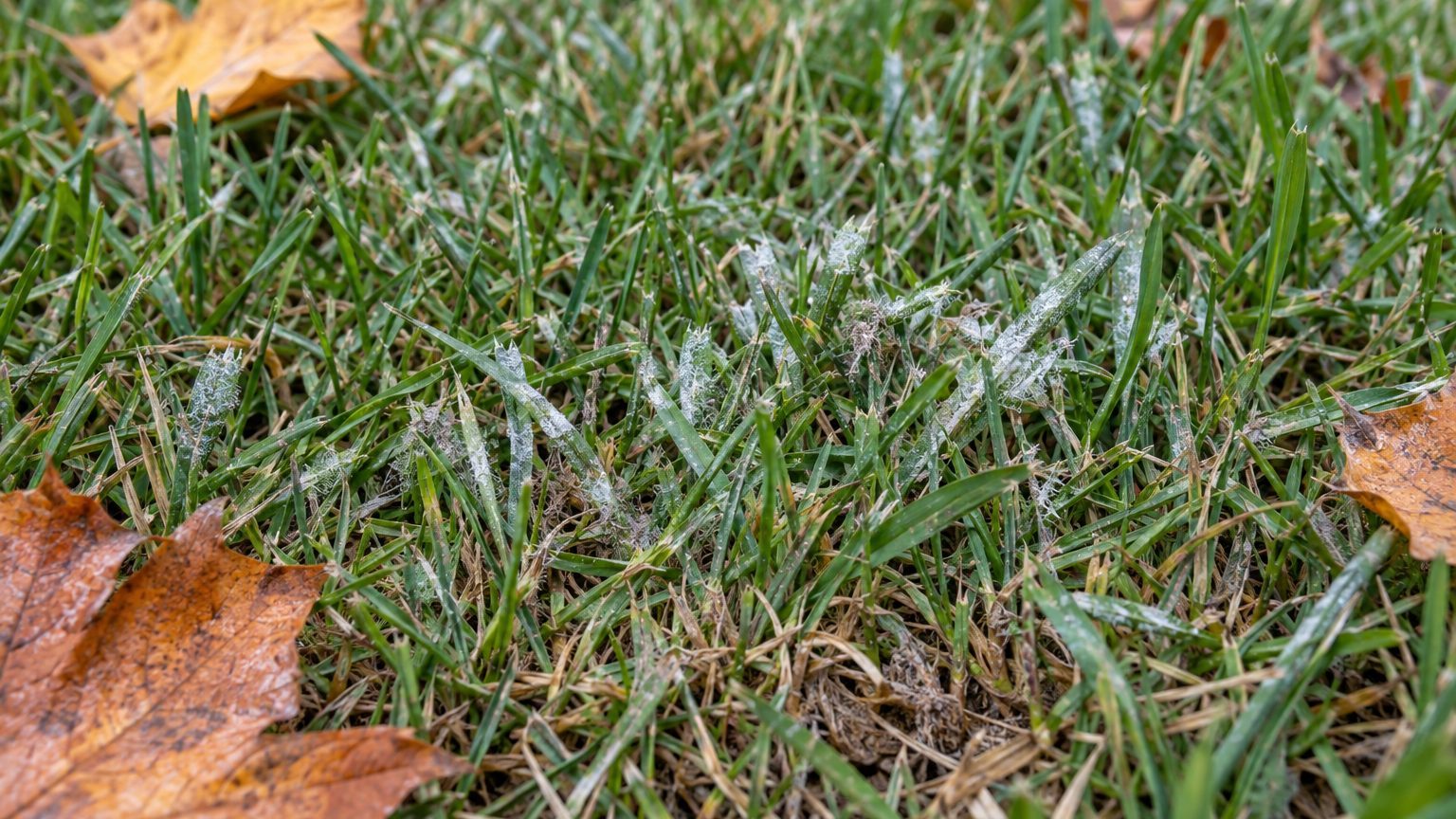
A gray-white dusting on the blades, easiest to spot in a shady corner of a bluegrass lawn, usually means powdery mildew. It is a surface fungus; in Pennsylvania, it is commonly observed during cool, humid, cloudy weather in spring and autumn.
Powdery Mildew Symptoms

Look at the upper surface of the blades first, because that is where the fungus shows itself.
- Fine, gray-white, cobwebby tufts appear on single blades, usually confined to the upper surface of the leaf.
- The growth thickens quickly and can cover the whole blade, as if someone dusted the lawn with talc or flour.
- Older leaves are usually hit harder than new growth.
- Heavily infected blades turn yellow, then develop tan or brown patches as they die.
- Affected areas can look scorched or ragged, with dead patches mixed in among healthy green blades.
From the almanac
Lawn in your state
The dates on this page depend on where you live. Your state's page carries its frost dates, its USDA zones and the year laid out month by month.
Northeast
Southeast
- Alabama
- Arkansas
- Delaware
- Florida
- Georgia
- Kentucky
- Louisiana
- Maryland
- Mississippi
- North Carolina
- South Carolina
- Tennessee
- Virginia
- West Virginia
Midwest
Southwest
West
Pacific Northwest
Canada
Lawn Problems Mistaken for Powdery Mildew
A few other things leave a pale or dusty look on grass. The trick is to pair what you see with where it sits and what happens when you touch it.
Powdery mildew starts as isolated wefts of cobwebby growth, then spreads across the blade surface until it looks floury.
| Looks like | How to tell them apart |
|---|---|
| Dust, pollen or fine soil splash | Rinses off with a hose and does not return in the same shady patch. Mildew wipes smear but come back on the same blades. |
| Dried, bleached grass from drought or heat | Blades are crisp and straw-colored across sunny, dry areas, with no gray-white coating on the leaf surface. |
| Lawn clippings or lime left on the grass | Clumps sit on top in uneven patches right after mowing or spreading, and they brush away without any cobwebby growth underneath. |
If the coating is thin, cobwebby and sits in the shade on bluegrass, mildew is the likelier answer. If it washes away or lies in clumps, look elsewhere.
What Causes Powdery Mildew
The cause is a fungus that grows on the surface of grass leaves. Kentucky bluegrass is the usual host, and it is quite susceptible, especially when planted in shade. Fine fescues and tall fescue are quite resistant, so a lawn of those grasses rarely gets it badly.
Weather sets the stage. In Pennsylvania, outbreaks are commonly seen during cool, humid, cloudy weather, which prevails in spring and autumn. In Indiana, the fungus is favored by those same cool, cloudy conditions in spring and fall. Ohio sees severe outbreaks on shaded bluegrass from spring to fall when moderate temperatures and high humidity prevail.
Unlike many lawn diseases, it does not need long wet spells. In Indiana, prolonged dew or wet weather is not needed for the disease to establish and spread, though high humidity helps it along. Shaded spots with poor air movement, such as the north side of a house or under dense trees, are the most exposed. Those are the places where outbreaks tend to start.
How to Treat Powdery Mildew
Most cases ease once the grass gets more light, air and steady care, so start with the yard itself.
- Raise the mowing height, because taller blades hold up better. According to NC State Extension, the suggested height is approximately 3 inches.
- Trim back low branches and shrubs that shade the affected patch, so more sun and moving air reach the grass.
- Hold off on heavy feeding, since lush growth is more tender. According to NC State Extension, apply no more than 1 pound of nitrogen per 1,000 square feet at any one time.
- Changing irrigation alone will not stop the disease, because prolonged dew or wet weather is not needed for it to establish and spread.
- Overseed persistent shady spots with a more resistant grass, such as a fine fescue or tall fescue, when the season for seeding comes around.
Fungicides are rarely needed for a lawn, and what is approved varies by state. If the problem keeps coming back after these changes, your state extension office can tell you what is legal and sensible where you live.
How to Prevent Powdery Mildew
Prevention follows the same rhythm as the disease, which flares in the cool, cloudy months and fades in between.
- In Pennsylvania, check shady corners in spring and thin out branches that block light before damp, cloudy weather settles in.
- Through spring, keep the mower set higher, since a relatively higher cut is a practice that helps manage the disease in Pennsylvania.
- Match watering and fertilizer to the grass and local conditions rather than treating summer as a universal schedule.
- In Pennsylvania, watch shaded bluegrass in autumn for the first gray-white wefts so you can adjust early.
- In the season for seeding, work resistant fine fescue or tall fescue into the shadiest patches instead of more bluegrass.
A lawn that gets sun, air and a steady cut seldom needs more than that.
Common Questions
Does Powdery Mildew Kill Grass?
Seldom outright. Heavily infected blades yellow and die back in tan or brown patches, which thins the lawn, but the crowns usually survive once light and airflow improve.
Can You Mow a Lawn That Has Powdery Mildew?
Yes. Keeping the mower at a relatively higher setting can help manage the disease.
Why Does Powdery Mildew Show Up in Shade and Not in Full Sun?
Shade holds humidity near the blades and slows drying, and that suits the fungus. Bluegrass in those spots is also more vulnerable, which is why the same corner can flare again.