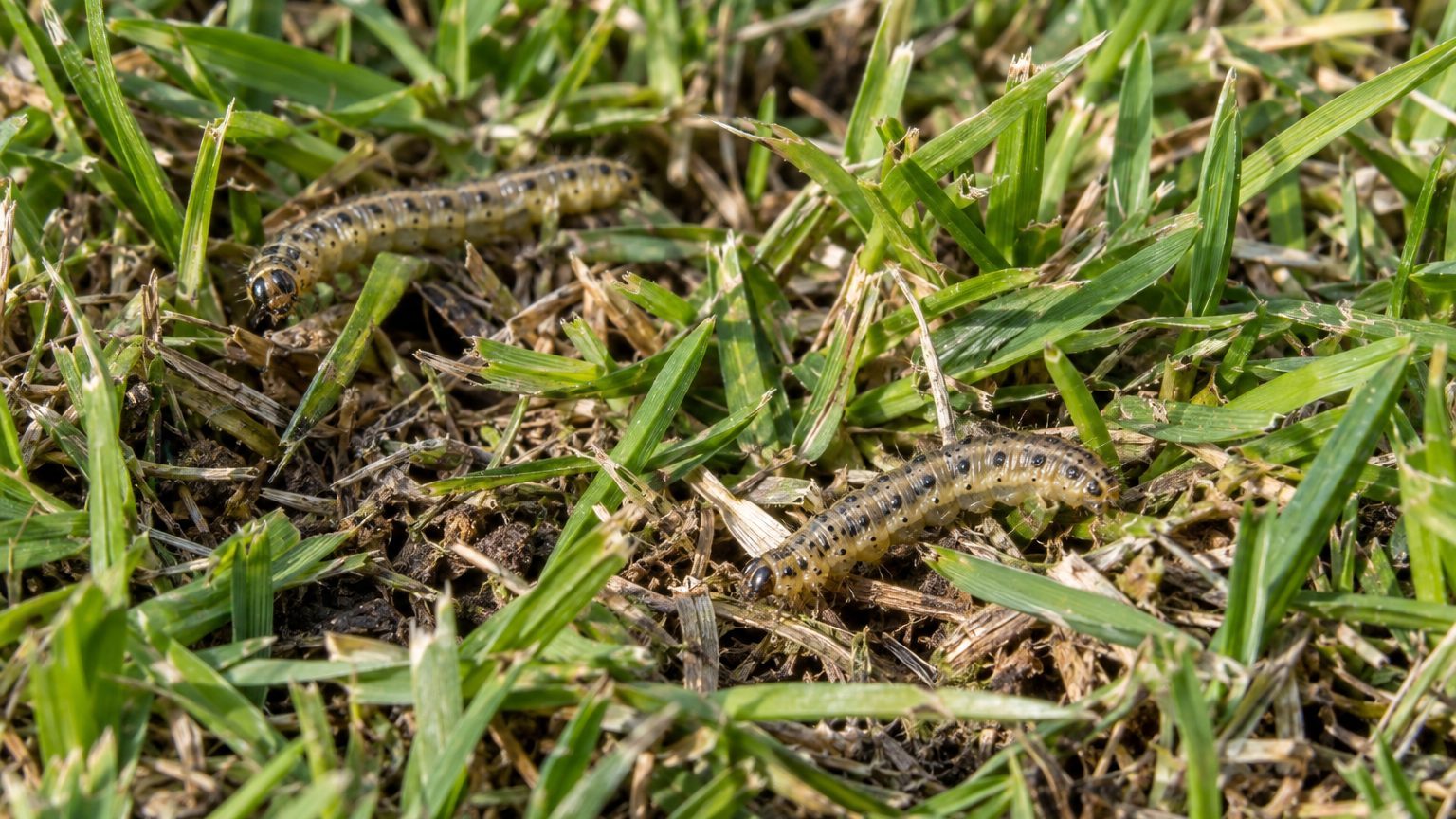
Small yellow-brown patches that spread across a lawn in midsummer, especially on hot slopes and banks, often point to sod webworms feeding at the thatch line. The caterpillars hide by day and chew grass blades at night, so the damage shows before the pest does. A simple soap test confirms them.
Signs of Sod Webworms in a Lawn

Look for the signs that set sod webworms apart from other lawn trouble.
- Larvae surface from the thatch when you pour soapy water over a patch, and they are slender, tan to light brown, and often marked with small darker spots.
- Small yellow spots or patches appear first, much like the yellowing left by dog urine.
- Patches turn yellow-brown in midsummer and quickly merge into large dry areas in dry weather.
- Grass blades look chewed or scraped on the upper surface, an injury that is easy to overlook in the early stages.
- Small brownish or dull grey moths, up to 3/4 inch long, flutter low over the grass when you walk across it.
Fully grown larvae reach about 1 inch long, which helps identify them when they surface.
From the almanac
Lawn in your state
The dates on this page depend on where you live. Your state's page carries its frost dates, its USDA zones and the year laid out month by month.
Northeast
Southeast
- Alabama
- Arkansas
- Delaware
- Florida
- Georgia
- Kentucky
- Louisiana
- Maryland
- Mississippi
- North Carolina
- South Carolina
- Tennessee
- Virginia
- West Virginia
Midwest
Southwest
West
Pacific Northwest
Canada
Lawn Damage Mistaken for Sod Webworms
Early webworm injury is a small yellow spot, and plenty of other things leave the same mark. Judge by the spot’s location and by what turns up when you test the thatch.
Drought and pet urine can leave similar marks, and neither involves an insect.
| Looks like | How to tell them apart |
|---|---|
| Dog urine spots | Scattered yellow spots in spots where the dog goes, and no larvae surface when you pour soapy water over the spot. |
| Drought stress | Browning on banks, slopes and sunny edges, with no chewed blades or larvae in the thatch. |
Moths flying over the lawn do not prove the patches are webworm damage, since adults are harmless. The caterpillars are what count, so check the thatch before you treat anything.
When Sod Webworms Damage Shows Up
Moths lay eggs on the lawn, and the caterpillars that hatch do the feeding. In Pennsylvania and Wisconsin, eggs hatch in 7 to 10 days. The larvae then feed and grow for 6 to 10 weeks in Wisconsin, depending on temperature and other conditions.
The early stages chew only the upper surface of the blades, so the lawn looks fine for a while. Damage becomes obvious in midsummer, when the patches turn yellow-brown and merge quickly in dry weather.
Some lawns are hit harder than others:
- Hot, dry banks and steep slopes, where drought stress runs higher.
- Bermudagrass and St. Augustinegrass, the warm-season grasses tropical sod webworm favors, as it infests all warm-season turfgrasses.
- St. Augustinegrass varieties sold in Georgia, such as Palmetto and Raleigh, which are susceptible.
- Lawns heavily fed with nitrogen, which can build thatch and invite attack.
How to Get Rid of Sod Webworms
Confirm the pest first, then decide whether the numbers justify treating.
- Mix 2 tablespoons of liquid dish detergent into 2 gallons of water and pour it over a 1 ft2 area of turf, so larvae hiding in the thatch come to the surface.
- Repeat the test across the damaged area because the larvae may be unevenly distributed.
- Compare your count with the threshold. In Pennsylvania and Utah, treatment may be warranted at 10 to 15 larvae per square yard of turf.
- Contact your state’s cooperative extension office for the products approved where you live, and follow the label exactly.
- Hold off on heavy irrigation and mowing for 3 days after application, as Wisconsin advises, so the treatment stays where the larvae feed.
- Keep watering the damaged patches normally so surviving grass can fill in, and reseed only bare spots that do not recover.
Below the threshold, a lawn in good health usually outgrows the feeding without help, so skipping treatment is often the right call.
How to Prevent Sod Webworms
Prevention comes down to keeping the turf from becoming the hot, thick, stressed lawn that moths prefer.
- In Georgia, avoid over-fertilizing with nitrogen, since it can build thatch and increase sod webworm attack.
- Through the growing season, mow regularly with the mower set at the height recommended for your grass species, as Georgia advises.
- During dry spells, keep slopes and banks from becoming drought-stressed, since sod webworms prefer hot, dry grassy areas.
- In midsummer, scout hot, dry areas with the soapy water test before yellow patches have time to spread.
- Dethatch only when the layer has grown thick, and time the work for your grass species.
Catching a problem while the larvae are still small saves far more grass than treating a lawn that has already gone brown.
Common Questions
Can a Lawn Recover from Sod Webworm Damage?
Often yes, if the crowns and roots survive. The caterpillars feed on the blades, so grass usually regrows once feeding stops and the lawn gets normal watering.
Do Sod Webworm Moths Hurt the Grass?
No. The moths are whitish or brownish, up to 3/4 inch long, and only the larvae feed on the turf.
Which Lawns Are Most at Risk?
Bermudagrass and St. Augustinegrass lawns top the list, along with any lawn that has hot, dry slopes. Cool-season lawns are not immune, particularly under drought stress.