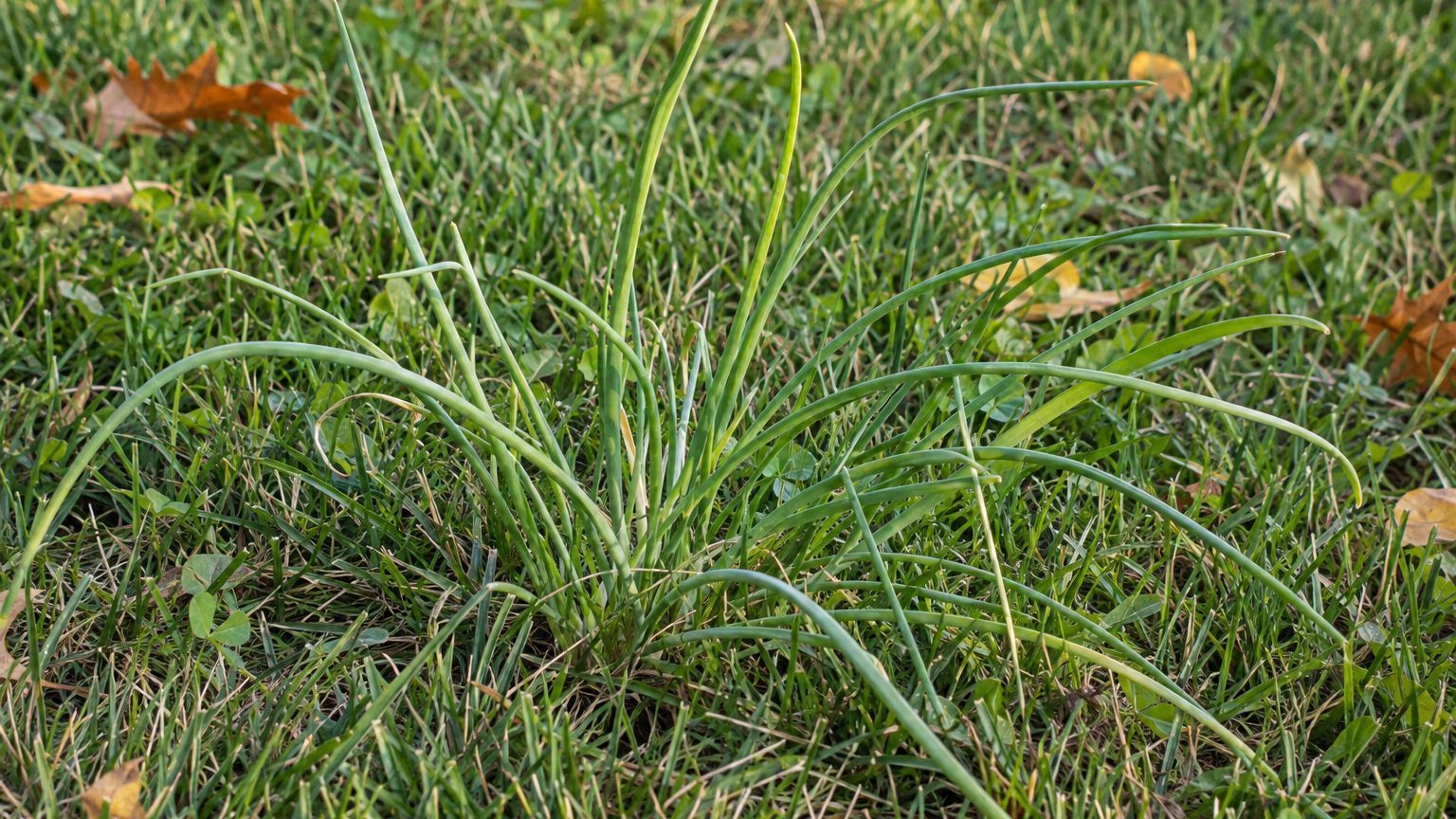
In South Carolina, wild onion and wild garlic emerge in late fall and grow through winter and spring. Both are perennial weeds that show up in turfgrass and landscape beds. Knowing the leaf shape tells you which one you have.
How to Identify Wild Onion and Wild Garlic

Start with the leaf, because it separates wild onion from wild garlic and is easy to check by pinching a blade.
- Cut or pinch a leaf: wild garlic leaves are round and hollow, like a tiny straw.
- Wild onion leaves are flat and solid, with no hollow center.
- In South Carolina, their dark green, grassy tufts emerge in late fall and grow through winter and spring.
- The stems are thinner than garden onions and garlic, and the plants do not grow as tall.
- Wild garlic makes flowers and dormant bulbs on the flowering stem, while wild onion only makes flowers, in the spring.
Dig up a clump and you will find underground bulbs, which is where the real problem sits.
From the almanac
Lawn in your state
The dates on this page depend on where you live. Your state's page carries its frost dates, its USDA zones and the year laid out month by month.
Northeast
Southeast
- Alabama
- Arkansas
- Delaware
- Florida
- Georgia
- Kentucky
- Louisiana
- Maryland
- Mississippi
- North Carolina
- South Carolina
- Tennessee
- Virginia
- West Virginia
Midwest
Southwest
West
Pacific Northwest
Canada
Weeds Mistaken for Wild Onion and Wild Garlic
Grassy plants in lawns are sometimes mistaken for onion grass. True grasses can share the narrow green blade but do not grow from onion- or garlic-like bulbs.
Garden varieties of onion and garlic look similar too, but they grow taller and thicker than the wild types.
| Looks like | How to tell them apart |
|---|---|
| Garden onion or garlic | Thicker stems and taller growth, and they are planted in beds, while the wild types have thin stems and stay short in turf |
| Wild garlic versus wild onion | Pinch the leaf: round and hollow means garlic, flat and solid means onion |
Clumps of ordinary grass will not have hollow or flat solid leaves coming from a bulb, so dig a small piece to confirm before you treat anything.
What Causes Wild Onion and Wild Garlic in Lawns
The cause is the bulbs. Both plants reproduce from underground bulblets, and some germinate in the fall while the hard ones germinate in the spring. In Pennsylvania, that split is how a lawn can seem clear and then fill in again later.
Mowing does not solve it, because the plant produces clusters of many underground bulbs when mowed.
In South Carolina, the plants emerge in late fall from underground bulbs and grow through the winter and spring. That cool-season growth is why they show up when warm-season turf is dormant. A thin lawn gives them room, and in Indiana, a dense turf from proper fertilization and regular mowing makes them less noticeable and less problematic.
How to Get Rid of Wild Onion and Wild Garlic
Control means targeting the bulbs rather than the leaves.
- Confirm the plant by pinching a leaf, so you treat onion or garlic and not a lookalike grass.
- Skip hand pulling, because in Pennsylvania the advice is that the foliage breaks and the bulblet stays behind.
- Dig out small patches with a trowel, taking care to remove the underground bulblets, since any left in the soil can regrow.
- Bag the dug plants and bulbs instead of composting them, so the bulblets do not return to the lawn.
- Treat larger areas in the fall after new shoots have emerged and again in early spring, which in South Carolina means February or early March, before the plants can produce the next generation of bulbs.
- Check your state extension office for which products are approved where you live and how to apply them.
In Pennsylvania, a small patch can also be left alone because the foliage is mainly an early-season eyesore and fades naturally with mowing.
How to Prevent Wild Onion and Wild Garlic
Prevention is mostly about keeping turf thick and catching shoots before they set the next round of bulbs.
- In late fall, walk the lawn for new shoots, since that is when the plants emerge in South Carolina and when small clumps are easy to spot.
- Through winter and spring, dig out any clump you find and remove the bulblets with it.
- In South Carolina, treat in early spring before the plants can produce new bulbs, using the timing recommended for the area.
- In Indiana, regular mowing and proper fertilization create denser turf that makes these weeds less noticeable and less problematic.
A thick lawn will not erase the bulbs already in the soil, but it keeps the clumps from standing out.
Common Questions
Does Mowing Get Rid of Wild Onion and Wild Garlic?
No. Mowing trims the leaves, but the plant produces clusters of many underground bulbs when mowed, so the weed keeps spreading from below.
Can You Tell Wild Garlic from Wild Onion Without Digging?
Yes. Pinch a leaf and check the shape: wild garlic leaves are round and hollow, while wild onion leaves are flat and solid.
Will the Weeds Go Away on Their Own?
Not completely, since they are perennial. In Pennsylvania, though, the foliage is mainly an early-season eyesore that fades naturally with mowing.