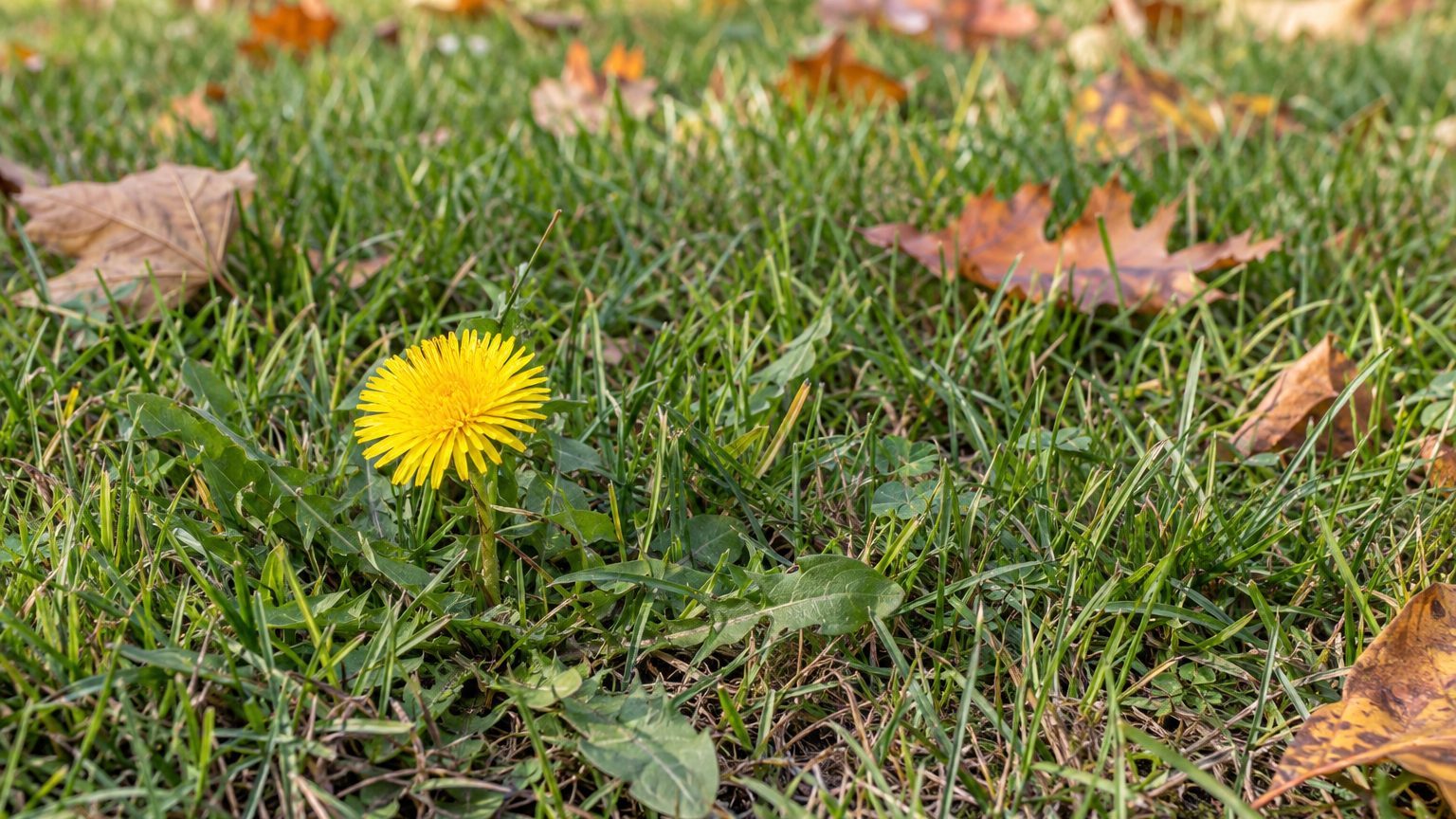
A yellow-headed weed sitting in a flat green rosette can be a dandelion. Dandelion is easy to identify, can be removed from the yard, and the lawn can be made far less welcoming to it.
How to Identify Dandelion

Break a leaf or stalk and look at what comes out, then check the shape of the plant against these signs.
- Milky sap oozes from a broken leaf, which sets dandelion apart from many other low rosette weeds.
- The leaves form a flat rosette hugging the ground; they are smooth, with no hairs, and grow 2–10 inches long.
- Leaf edges are jagged, ranging from deeply cut to almost entire, so neighboring plants can look slightly different.
- Each yellow head sits alone on a hollow, leafless stalk that can reach 2-20 inches long.
- A thick, fleshy taproot anchors the plant, and it is what you meet when you try to pull one by hand.
Once you have seen the rosette and the single hollow stalk together, you will recognize the plant at a glance, even in short grass.
From the almanac
Lawn in your state
The dates on this page depend on where you live. Your state's page carries its frost dates, its USDA zones and the year laid out month by month.
Northeast
Southeast
- Alabama
- Arkansas
- Delaware
- Florida
- Georgia
- Kentucky
- Louisiana
- Maryland
- Mississippi
- North Carolina
- South Carolina
- Tennessee
- Virginia
- West Virginia
Midwest
Southwest
West
Pacific Northwest
Canada
Weeds Mistaken for Dandelion
Other yellow-headed plants pop up in lawns and get blamed on dandelion. The treatment can differ, so a quick look at the stems and the leaf surface saves effort.
Catsear is the usual culprit. Check the stems and run a finger over a leaf before you decide.
| Looks like | How to tell them apart |
|---|---|
| Catsear | Long, slender, branching stems carry yellow heads 24 to 32 inches from the ground, and the leaves feel textured and hairy. Dandelion has one head per stem and smooth leaves without hairs. |
Other yellow-headed weeds also turn up in turf. If a plant fits neither description, compare its leaves, stems, and growth habit before choosing a treatment.
What Causes Dandelion in Lawns
Dandelion gets in through seed. It reseeds prolifically, and the seed lands on any bare or thin spot where grass is not dense enough to block it.
Mowing habits make it easier. In Iowa, dandelion tolerates even low mowing heights, so a lawn cut short leaves the weed untouched while the grass is weakened. Scalped turf also opens up more bare soil for seed to settle on.
Soil can tip things too. In New York State, excessive liming is noted as a factor that promotes dandelion growth, so adding lime without a soil test can work against you.
Seasonal habits keep the plant going. Dandelion is a perennial that sends more resources to its roots as winter approaches, so a plant you cut back in autumn is simply storing energy for the next year.
How to Get Rid of Dandelion
Scattered plants respond well to hand work, and bigger patches take a mix of digging and follow-up. Work in this order.
- Water the area before digging, so the soil is soft and the taproot is easier to lift intact.
- Dig each plant out with a long, narrow weeder, lifting the whole fleshy taproot, because a piece left behind can regrow.
- Remove seed heads from any plants you cannot dig yet, since dandelion reseeds prolifically.
- Fill each hole with soil and sprinkle grass seed on top, so turf rather than weeds claims the gap.
- Ask your state extension office which herbicides are approved for lawns where you live, and follow the label if you choose one for large infestations.
- Recheck the lawn regularly and dig out new rosettes while they are small and the roots are still shallow.
Expect some plants to return. Seedlings keep arriving, so steady follow-up matters.
How to Prevent Dandelion
A dense lawn does much of the work, and seasonal habits help keep it that way.
- Test the soil before you add lime. In New York State, excessive liming is known to promote dandelion.
- In South Dakota, mow at a higher setting of approximately 3 inches. Taller grass shades the soil and starves seedlings of light.
- In South Dakota, remove no more than 1/3 of the blade length at each mowing, so the grass stays vigorous and thick.
- In planting beds next to the lawn in the Pacific Northwest, keep mulch at a minimum of 3 inches deep to make it harder for dandelion seed to establish.
- Overseed thin or bare patches when conditions favor your grass, so turf fills the spaces where dandelion can establish.
Lawn gaps close on a different schedule in every climate, so adjust these timings to when your own grass grows strongest.
Common Questions
Will Dandelions Keep Coming Back After You Remove Them?
Yes. New plants appear from seed each year, even with the best weeding effort, so the aim is to keep the lawn dense enough that fewer seedlings take hold.
Does Dandelion Die Back in Winter?
In Maryland, the leaves may die back, but the fleshy taproot survives cold weather and regrows in spring. That is why cutting off the top rarely ends the problem.
Does Dandelion Show Up Only in Spring?
No. In Iowa, yellow heads appear first thing in spring and then sporadically all season, so you can find new ones in summer and fall as well.