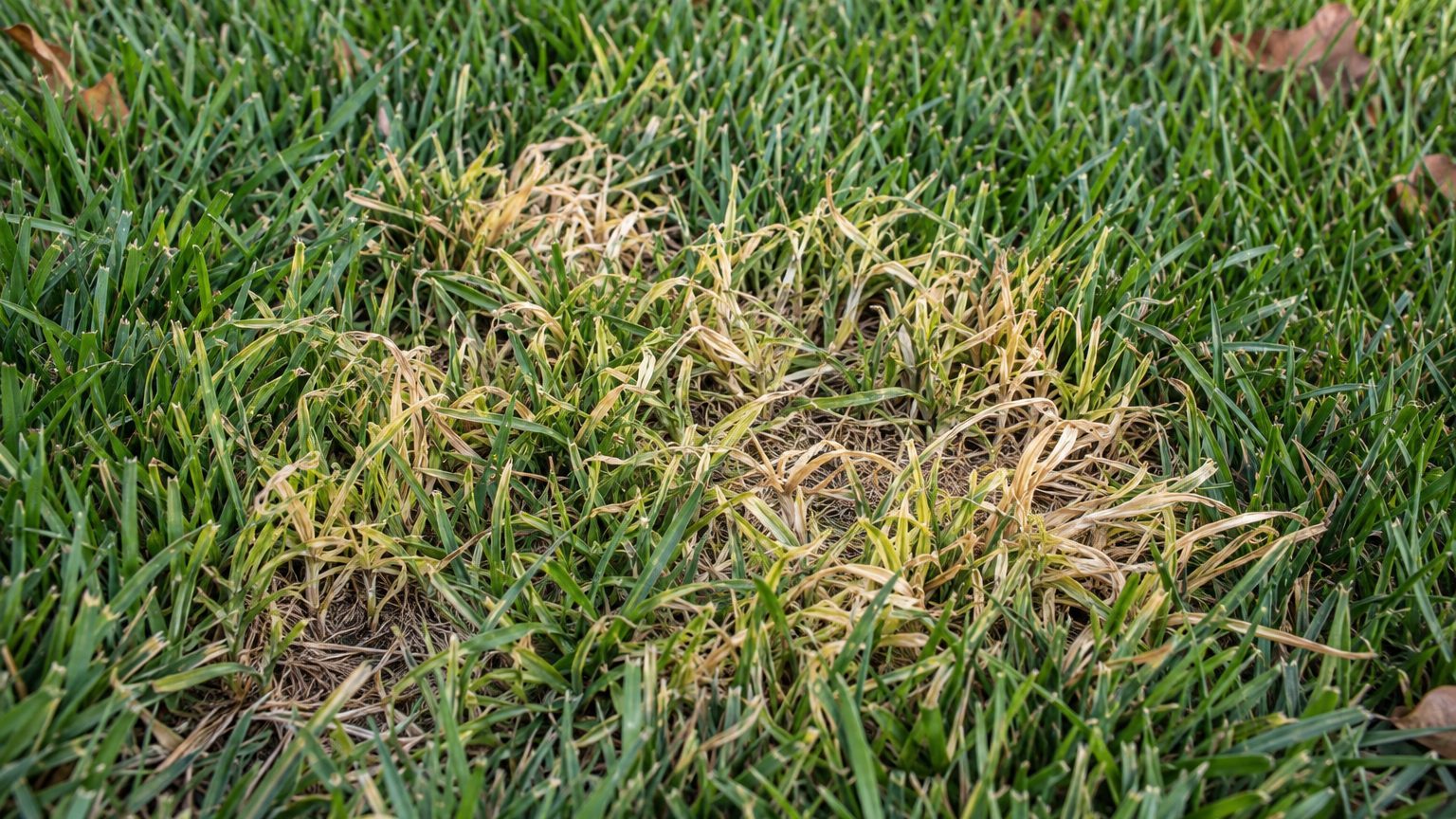
A patch of lawn that curls, twists or browns in a streak after a weed treatment is usually herbicide damage, and it often looks worse before it looks better. Grass and nearby plants can recover or not, depending on how much product landed and how healthy they were to begin with.
How to Recognize Herbicide Damage

The clearest sign is a pattern of twisting and bending that shows up on neighboring plants.
- Stems and leaf stalks look twisted or bent, and leaves may cup, which is typical of phenoxy-type injury.
- Leaves and other green parts curl or distort instead of simply yellowing.
- Neighboring plants show the same symptoms, because overspray or drift rarely touches just one plant.
- Damage looks like what the product does to the weeds it was meant to kill.
- In South Carolina, symptoms can take days to weeks to appear after an application.
Some plants shrug it off: new growth may come in clean, and long-term harm may never develop.
From the almanac
Lawn in your state
The dates on this page depend on where you live. Your state's page carries its frost dates, its USDA zones and the year laid out month by month.
Northeast
Southeast
- Alabama
- Arkansas
- Delaware
- Florida
- Georgia
- Kentucky
- Louisiana
- Maryland
- Mississippi
- North Carolina
- South Carolina
- Tennessee
- Virginia
- West Virginia
Midwest
Southwest
West
Pacific Northwest
Canada
Problems Mistaken for Herbicide Damage
Drought, disease and insects can all leave a lawn looking scorched or distorted. The difference is usually in the pattern, so pair what you see with where it sits in the yard.
A lab test of leaves or stems will not settle it, since residue testing is rarely conclusive.
| Looks like | How to tell them apart |
|---|---|
| Drought stress | Grass wilts and browns in the driest, sunniest spots and perks up after a deep watering. Herbicide injury shows twisting and curling and does not respond to water. |
| Disease | Spots or rings with a defined edge appear on blades, often in humid weather. Herbicide damage may follow the path of a sprayer or wind drift and affect neighboring plants. |
| Insect feeding | Turf pulls up easily and shows chewed or hollowed roots or blades. Herbicide injury often bends stems and leaves and may follow the path of a sprayer or drift. |
Check the neighbors in the bed or along the fence line. Injury from drift hits a band of plants on the side facing the spray, while a pest or disease tends to be patchy.
What Causes Herbicide Damage
Herbicide damage can come from product landing where it was never aimed. Improper application and drift to desirable plants cause damage that looks like what the targeted weeds go through, and some landscape plants are more susceptible than others.
Contaminated material is the quieter route. Mulch, manure or compost can carry residues, and grass clippings from a treated lawn are a common example. Spreading them on a garden bed or around shrubs delivers the herbicide straight to the roots.
Conditions matter too. In South Carolina, skip spraying in excessive heat or high winds because these conditions increase off-target movement.
How to Fix Herbicide Damage
There is no quick reversal, so the fix is about protecting what is left and cleaning up the source.
- Stop the exposure by removing any contaminated mulch, compost or clippings, so no more residue reaches the roots.
- Check nearby plants for the same symptoms, so you know how far the damage reaches and where it came from.
- Give affected grass good care and wait to see how it responds.
- Skip rescue sprays and extra fertilizer because neither can reverse injury once it appears.
- Treat the soil only if the source is soil-active, since in Utah activated charcoal at 1 to 2 lbs. per 100 sq. ft. worked in to a depth of 6 inches inactivates or absorbs most soil-active products.
Recovery can be slow. In Utah, a plant that took a sub-lethal dose may show symptoms for several seasons before recovering; in South Carolina, light damage to healthy, well-established landscape plants may not kill them. If the damage is widespread or unclear, your state extension office can help you decide whether to reseed.
How to Prevent Herbicide Damage
Prevention follows the season: apply carefully, keep the lawn healthy and keep contaminated material out of beds.
- In Iowa, read the label before any treatment and follow its application conditions carefully.
- Once weeds start growing and you decide to spray, pick a calm day, since in South Carolina the guidance is to avoid winds above 10 mph.
- In South Carolina, skip spraying on days over 90 °F; in Iowa, water the lawn through hot, dry stretches to keep stress low.
- Whenever the soil tests low, fertilize as needed and watch for disease and insects, because in Iowa fewer stresses mean less injury from any exposure.
- After each use, clean all equipment so leftover product does not contaminate the next job.
- Before spreading clippings, compost or manure on beds, confirm they did not come from a treated lawn.
Treated clippings are best kept out of garden beds altogether.
Common Questions
Can You Test Grass or Leaves to Confirm Herbicide Damage?
Testing is rarely conclusive. Even a known concentration does not guide action, because the acceptable damage threshold is unknown for most garden plants. Comparing symptoms on neighboring plants is the more useful check.
Will a Lawn Recover from Herbicide Damage?
It depends on how severe the exposure was and how healthy the grass is. New growth may come in unaffected, and in Utah plants given a sub-lethal dose may show symptoms for several seasons before recovering.
Can You Use Treated Grass Clippings as Mulch?
Clippings from a treated lawn may carry herbicide residue and can injure plants in beds. Keep them out of gardens and around shrubs unless you know the lawn was untreated.