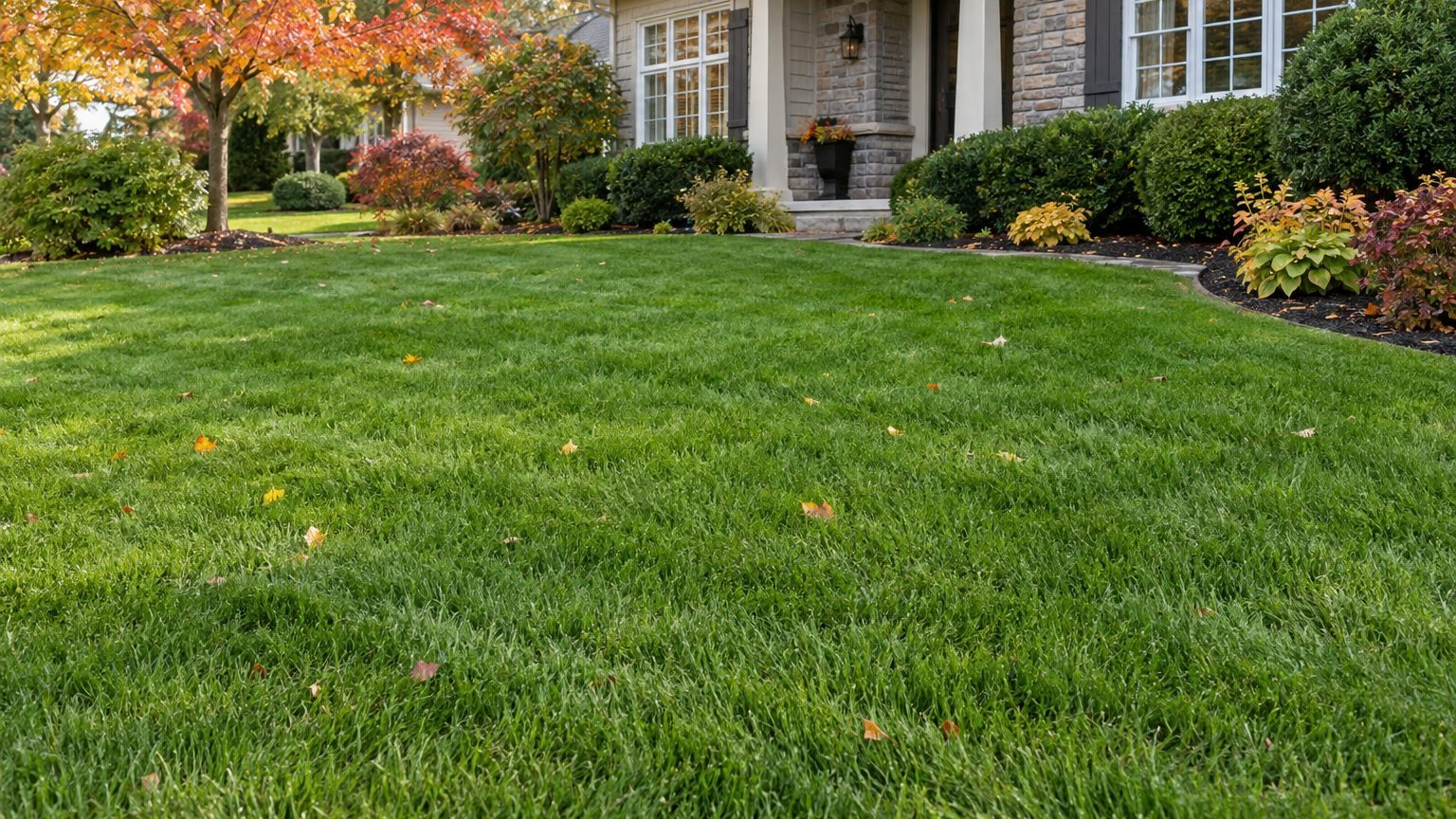
A zoysiagrass lawn fades to straw tan after hard frosts and greens up again once the soil warms in spring. Knowing that cycle helps you plan its care and decide whether this warm-season grass suits your yard.
What Is Zoysiagrass?
Zoysiagrass is a warm-season grass. It grows hard in summer heat, stalls when the soil cools, and sits dormant and tan through winter. It forms a dense, low turf that feels springy underfoot and can crowd out weeds once established.
Its calling card is shade. It is rated excellent for shade, which puts it ahead of most warm-season lawn grasses under tree canopy, and its cold hardiness is very good, so it reaches farther north than its relatives.
Wear tolerance is very good as well, so it stands up to kids and pets. The trade-off is a high maintenance level, which shows up in the mowing and thatch work described below.
From the almanac
Lawn in your state
The dates on this page depend on where you live. Your state's page carries its frost dates, its USDA zones and the year laid out month by month.
Northeast
Southeast
- Alabama
- Arkansas
- Delaware
- Florida
- Georgia
- Kentucky
- Louisiana
- Maryland
- Mississippi
- North Carolina
- South Carolina
- Tennessee
- Virginia
- West Virginia
Midwest
Southwest
West
Pacific Northwest
Canada
Where Does Zoysiagrass Grow Best?
Zoysiagrass is grown throughout the warm-season regions, and it thins out as winters turn colder and summers shorter. The figures below come from a reference city in each state and show how that plays out across the country.
- Gulf Coast and Deep South: Louisiana, Mississippi, Alabama and Florida are first-choice territory. Summers here are long, with Mississippi logging 71 days at 90F or more, and winter lows stay mild enough that dormancy is brief.
- Desert Southwest: Arizona and Nevada also suit it, though the heat is a different kind. Arizona sees 169 days at 90F or more, so the grass grows hard for a long season and wants irrigation to match.
- Transition belt: Oklahoma, Kansas, Tennessee and Kentucky sit where no grass excels, and zoysiagrass is a compromise here. Kansas has a coldest month averaging a low of 22F, which tests the grass in a hard winter, though it often pulls through.
- Upper Midwest and Corn Belt: Nebraska, Iowa, Ohio and Indiana will not hold it reliably. Iowa’s coldest month averages a low of 14F, and summers are too short for the turf to recover from winter damage. Plant tall fescue or Kentucky bluegrass instead.
A state is not a zone, so the far ends of a large state can fall in the neighboring category. The state selector just below this section leads to the page for your state, where the local picture is spelled out.
How to Care for Zoysiagrass Through the Year
Spring Green-Up
Zoysiagrass wakes with soil warmth, not with the last frost, so it greens later than cool-season grass nearby. Be patient. Raking out dead blades and thatch after growth begins lets sunlight reach the crowns, and mowing can wait until the lawn is clearly growing.
Mowing Height
Extension advice spans 0.75 to 3 inches, which is wide because varieties and mowers differ. Most home lawns do well between 1 and 2 inches. Mow at the taller end in shade, where leaves need more surface to catch light, and keep blades sharp, since zoysiagrass leaves are tough and a dull blade shreds the tips and leaves a gray cast.
Summer Heat

This is the season the grass is built for. Drought tolerance is good, but water deeply when the turf begins to show drought stress. Watch for thatch, since dense turf piles up dead stems and then sheds water instead of absorbing it.
Fall Slowdown
As days shorten and nights cool, growth slows. Ease off feeding, keep mowing while the grass grows, and rake leaves off the turf so shade does not smother it before dormancy.
Winter Dormancy
Straw-colored turf is not dead. Cold hardiness is very good, so the crowns usually come through. Dormant grass recovers slowly from damage, so limit heavy traffic and keep the mower off frozen ground.
Zoysiagrass Diseases, Pests and Weak Points
Clear ratings exist for how zoysiagrass handles shade, drought, traffic and cold. They show a grass that tolerates a lot, with its weak point on the work side rather than the weather side.
That shape explains why it suits some yards and frustrates others, since the toughness comes with a demand for regular attention.
| Threat | How Zoysiagrass handles it |
|---|---|
| Shade | Excellent, ahead of other warm-season lawn grasses |
| Drought | Good, with deep watering in long dry spells |
| Foot traffic | Very good, but slow to recover when dormant |
| Cold | Very good, reaching into transition areas |
| Upkeep | High, with sharp blades and thatch control |
If you see patches of thinning turf, check your local extension office with a sample.
Is Zoysiagrass Right for Your Yard?
Zoysiagrass fits yards with a mix of sun and shade, steady foot traffic, and an owner who does not mind regular mowing. It is a poor match for cold northern winters or anyone wanting a no-fuss lawn.
- In the South and Southwest, expect a dense, shade-friendly lawn that usually warrants a closer look at the care calendar for your state.
- In the transition belt, treat it as a trade-off, and weigh its winter tan against the cool-season alternatives.
- Pick your state in the selector to reach its lawn page, and read it before you buy sod or seed.
Common Questions
How Do You Start a Zoysiagrass Lawn?
You can use sod, sprigs, plugs or seed. Sod creates a continuous surface when installed, while plugs and sprigs spread across the soil as they grow. For seed, a new lawn takes 1 to 2 lb per 1000 square feet.
Does Zoysiagrass Handle Drought?
Its drought tolerance is rated good, so it rides out dry spells better than many lawn grasses. Deep watering when it starts to look dull keeps the turf from thinning.
Will Zoysiagrass Work in Coastal California?
California has just 2 days at 90F or more in its reference city, and a coldest month averaging a low of 49F. Mild winters keep dormancy short, though cool summers along the coast slow growth compared with the Southeast.