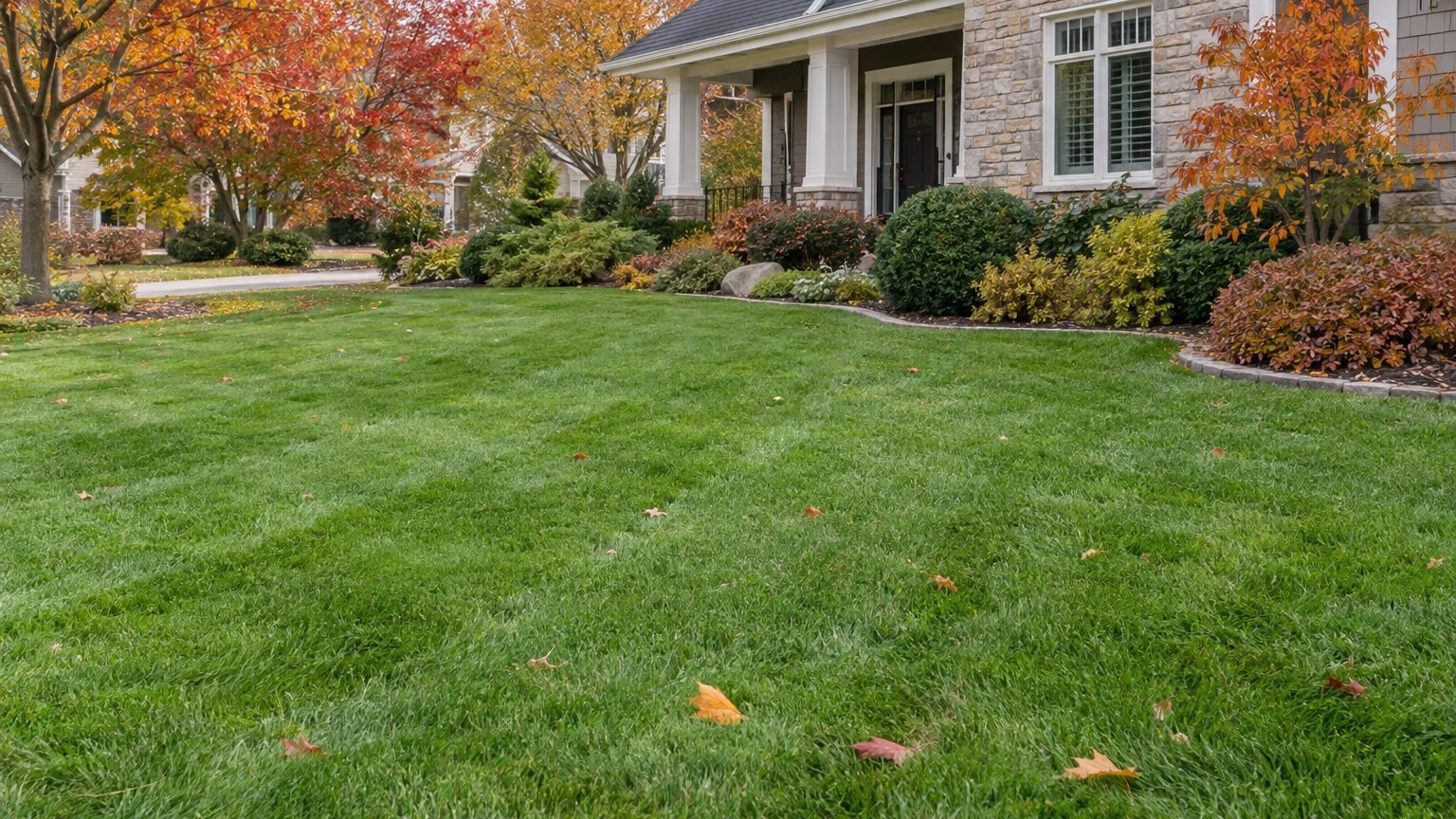
Fine fescue is the grass that keeps its color in the corner under the maple, where bluegrass thins out a little more each summer. It grows best in the cool-season belt of the northern half of the country, in shade and on yards that get little attention. Mowing high and watering deeply when needed help keep it dense.
What Is Fine Fescues?
Fine fescues are cool-season grasses, so they grow hardest in spring and fall and slow down in summer heat. The leaf blades are very narrow and the turf looks soft and fine-textured. They are established from seed rather than sod or sprigs.
Their strengths show in the places other grasses struggle. Shade tolerance runs from excellent to very good, and cold hardiness is just as high. Drought tolerance is good, which is why they suit low-maintenance yards.
Wear is the weak side. Tolerance runs from good to fair, so a path where kids and dogs cut across daily will thin out.
From the almanac
Lawn in your state
The dates on this page depend on where you live. Your state's page carries its frost dates, its USDA zones and the year laid out month by month.
Northeast
Southeast
- Alabama
- Arkansas
- Delaware
- Florida
- Georgia
- Kentucky
- Louisiana
- Maryland
- Mississippi
- North Carolina
- South Carolina
- Tennessee
- Virginia
- West Virginia
Midwest
Southwest
West
Pacific Northwest
Canada
Where Does Fine Fescues Grow Best?
Fine fescues are a first choice across the cool-season states and a compromise in the transition belt. They will not hold in the Deep South or the desert Southwest. The state selector right below this section takes you to the page for your own state.
- Upper Midwest and Northern Plains: Minnesota, Iowa and the Dakotas have cold winters and summers that suit cool-season grasses. Fine fescues handle both, and they are a natural fit under mature trees.
- Great Lakes and Ohio Valley: Michigan, Ohio, Indiana and Illinois have summers that suit fine fescues without much help. Shady lots do especially well.
- Northeast and Mid-Atlantic: New York, New Hampshire, Delaware and West Virginia sit comfortably in the cool-season zone. Fine fescues are a good pick for shaded lawns and for low-input yards.
- Transition belt: Oklahoma, Kansas, Tennessee and Kentucky bring enough summer heat to make fine fescues a compromise. Fine fescues work here as a compromise, and no grass excels. Choose them mainly for shade.
- Mountain West: Colorado, Utah and Idaho can be challenging in low, warm valleys, while results vary with elevation. Expect a compromise in the low, warm valleys.
In Arizona, Nevada, Texas, Florida, Mississippi and Louisiana, fine fescues will not hold through the long heat. Choose a locally adapted warm-season grass instead; bermudagrass, zoysia and St. Augustine fit different sites within this broad region. A state is not a zone, so the far ends of a large state can fall in the neighboring one.
How to Care for Fine Fescues Through the Year
Spring Wake-Up
Fine fescues green up early because they are a cool-season grass, well before warm-season lawns stir. Thin spots from winter or shade can be overseeded then. A new lawn takes 4 to 6 pounds of seed per 1000 square feet, and shaded areas fall at the lower end of that range.
Mowing Height
The right mowing height depends on the fine fescue and local conditions, within the 1.5-to-4-inch range. For a typical home lawn, favor the taller part of that range.
Mow at the taller end under trees, where the leaf needs every bit of surface to catch light. Keep the blade sharp so the narrow leaves cut cleanly.
Summer Heat

Good drought tolerance means fine fescues can slip into a tan, dormant state in a dry spell and recover when rain returns. Water deeply when you do water, rather than a little each day. Skip heavy traffic on a stressed lawn, since wear tolerance is only good to fair.
Fall Renewal
Fall is the best time to seed fine fescues, as soil is warm and the cool air suits germination. Overseed bare patches under trees, and rake out the fallen leaves so seedlings are not smothered. Fine fescues are suited to low-input lawns.
Winter Rest
Cold hardiness is excellent to very good, so severe winter cold is usually less of a concern than summer heat. Keep foot traffic off frozen turf. Keep the final fall mow within the normal height range and avoid scalping.
Fine Fescues Diseases, Pests and Weak Points
The documented weak point is traffic. Fine fescues give little back when walked on hard, so the lawn thins along paths and play areas. Heat is the other limit, which is why they fail in the South.
| Threat | How Fine Fescues handles it |
|---|---|
| Heavy foot traffic | Does not tolerate it, wear tolerance is good to fair |
| Dry shade | Handles it well, shade tolerance is excellent to very good |
| Drought | Good tolerance |
| Severe cold | Excellent to very good hardiness |
| Long hot summers | Will not hold in warm-season territories |
Disease and pest problems are not covered by the sources, so ask your county extension office what shows up locally.
Is Fine Fescues Right for Your Yard?
Fine fescues suit shaded yards, dry spots under trees, and homeowners who would rather mow less and water less. They do not suit a lawn that doubles as a ball field or a dog run, nor any yard in the hot South.
- Your state page gives the months for seeding and care where you live, so check it before you buy seed.
- If your yard is mostly sun and heavy foot traffic, compare it with tall fescue or bluegrass on the same state page.
- In shade, seed in fall at the recommended rate and keep the mower high.
Common Questions
Can Fine Fescues Replace Bluegrass in Shade?
Yes. Fine fescues are the better choice in dry shade under trees, where bluegrass thins year after year. In full sun with heavy traffic, bluegrass or tall fescue is a better fit.
Do Fine Fescues Grow from Sod or Seed?
They are established from seed. Use 4 to 6 pounds per 1000 square feet for a new lawn.
Do Fine Fescues Survive Hot Summers?
They tolerate a dry spell fairly well, but they struggle in places with long heat. In the transition belt they are a compromise, and in the warm-season South they will not hold.