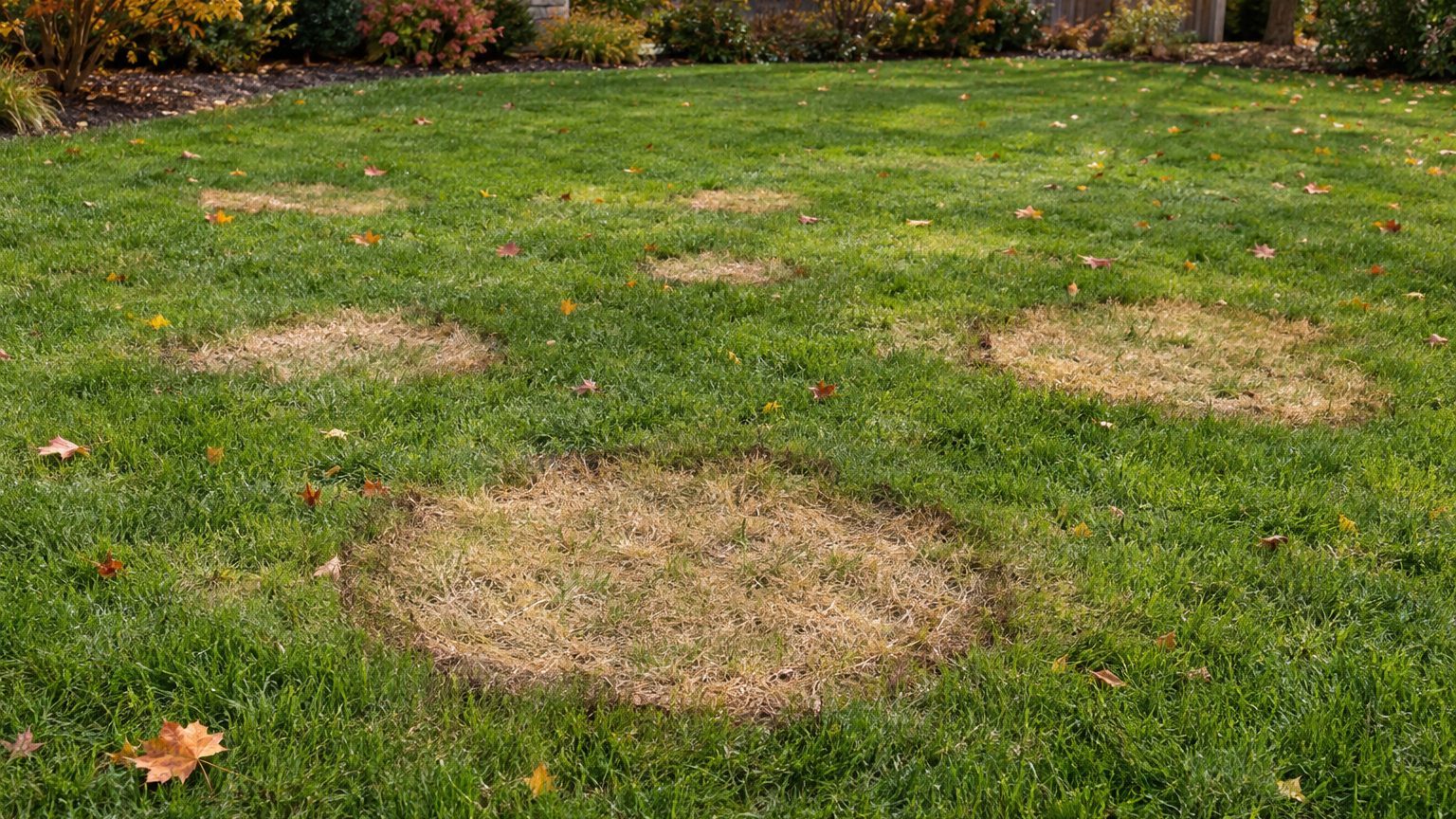
Tan circles that widen after a muggy stretch, or small bleached spots on a once-even lawn, can point to a fungal disease. Brown patch, dollar spot and leaf spot are common lawn diseases. Each has a look, a weather pattern and a sensible response.
How Do You Recognize a Lawn Disease?
A lawn disease shows up as patches, rings or spots that grow while the weather stays damp and the blades stay wet. What you see depends on the grass type, the season and the region, so the same fungus can look different in a Maryland tall fescue lawn and a Georgia bermudagrass lawn.
Combine clues before naming anything. Brown patch tends to appear as wide, roundish patches in cool-season grass during humid spells. Dollar spot makes small, straw-colored spots that can merge into larger blotches. Leaf spot marks individual blades with dark flecks, and the lawn can look thin overall.
Wetness is the common thread. According to University of Maryland Extension, leaf disease outbreaks can take hold when leaves stay wet for 12 to 24 hours in mild weather. The state selector just below this section leads to the page for your State.
From the almanac
Lawn in your state
The dates on this page depend on where you live. Your state's page carries its frost dates, its USDA zones and the year laid out month by month.
Northeast
Southeast
- Alabama
- Arkansas
- Delaware
- Florida
- Georgia
- Kentucky
- Louisiana
- Maryland
- Mississippi
- North Carolina
- South Carolina
- Tennessee
- Virginia
- West Virginia
Midwest
Southwest
West
Pacific Northwest
Canada
How to Treat a Lawn Disease

Most outbreaks respond to changes in how you water, mow and feed, so work through the gestures in this order.
- Note the shape of the damage and the weather that came before it, because the pattern becomes more useful when read alongside recent weather.
- Move irrigation to the overnight hours, since in Maryland a programmed sprinkler can start three or more hours after sunset and finish before sunrise, which lets blades dry once the sun is up.
- Mow regularly in spring, because in Pennsylvania cutting at 2.5 to 3.0 inches helps reduce the severity of leaf spot and melting-out.
- Keep spring feeding moderate, since in Pennsylvania 0.5 to 1.0 lb of nitrogen per 1,000 square feet in early spring avoids pushing the soft, lush growth that fungi favor.
- Skip the sprayer for ordinary outbreaks, because fungicides are not recommended for managing diseases in home lawns.
- Rake out matted, spotted leaves and thin debris after a bad stretch, so air reaches the crown and the surface dries faster.
Recovery is usually gradual. Grass that was only attacked at the leaf tips grows out of the damage once the weather dries and the lawn is mowed and fed sensibly. Melted-out areas, where the crowns died, may need overseeding later in the grass’s growing season.
Lawn Diseases by Grass Type
Cool-season and warm-season lawns face different trouble at different times. A fungus that thrives in midsummer humidity on a bluegrass lawn may hit a bermudagrass lawn in the cool, wet days of fall and spring.
Knowing your grass tells you which season to watch, which matters more than memorizing the diseases themselves.
| Grass | Season | What to watch for |
|---|---|---|
| Kentucky bluegrass and fine fescues | Cool | In Pennsylvania, summer leaf spot and melting-out in warm, wet weather of 68 to 95°F |
| Tall fescue and perennial ryegrass | Cool | In Maryland, brown patch is a particular risk, and gray snow mold may hit them harder than bluegrass |
| Bermudagrass | Warm | In North Carolina, leaf spot does most damage in cool, wet fall and spring weather |
| Bluegrasses (general) | Cool | In North Carolina, leaf spot is active in warm, humid weather |
For you, this means the calendar of worry shifts with the grass. A tall fescue lawn deserves a closer look during humid summer spells, while a bermudagrass lawn needs the attention when green-up and dormancy bring cool, damp days. Zoysia, centipede and St. Augustine have their own disease patterns that depend on climate and season.
Lawn Disease Mistakes to Avoid
Calling It from One Clue
A brown patch can be disease, drought or a pet problem. Naming it from color alone leads to the wrong fix, wasted effort and a patch that keeps growing.
Look at the edge of the damage and the weather behind it. Wet blades for a long stretch plus a spreading ring points to a fungus. Dry soil plus a crisp, even brown points elsewhere.
Feeding Heavily During an Outbreak
A big dose of fertilizer feels like a rescue but feeds soft growth that fungi favor. According to NC State Extension, the advice is no more than one pound of nitrogen per 1,000 square feet in a single application.
Split feedings into lighter passes, and hold off while the lawn is actively diseased.
Treating Too Late
Waiting until the grass is visibly dying costs you the window where treatment helps. In North Carolina, leaf spot control works best in the early stages, and once melting out occurs, fungicide may not cure it but will reduce spread.
In South Carolina, moist spring and fall weather with day temperatures between 70 to 80 °F is when applications may be needed. Watch the weather early rather than reacting to dead turf.
Lawn Diseases in Your State
The signal to act varies with the grass and the disease: humid weather and lingering leaf wetness raise concern for many cool-season lawns, while bermudagrass leaf spot can be worse in cool, wet periods. Local weather decides when that happens, so the timing differs a lot from State to State.
- The page for your State covers the months when your lawn is most exposed and when to adjust watering and mowing.
- Check it before the first humid spell, then walk the lawn early in the morning to see whether blades are still wet.
Common Questions
How Can You Tell Brown Patch from Drought Stress?
Look at the weather and the edge of the damage. Brown patch follows warm, humid, wet stretches and often leaves a ring or irregular patch with a darker border. Drought stress follows dry weather and browns the lawn more evenly, with soil that feels hard and dry.
Is Dollar Spot the Same as Brown Patch?
No. Dollar spot makes small, scattered, straw-colored spots that may merge. Brown patch makes much larger patches. Check the size of the spots and whether they cluster or scatter across the lawn.
When Is It Worth Calling the Extension Office?
Call when the damage keeps spreading after you have corrected watering, mowing and feeding, or when the pattern does not match the descriptions you find. A local office can look at a sample and tell you what is happening in your area.