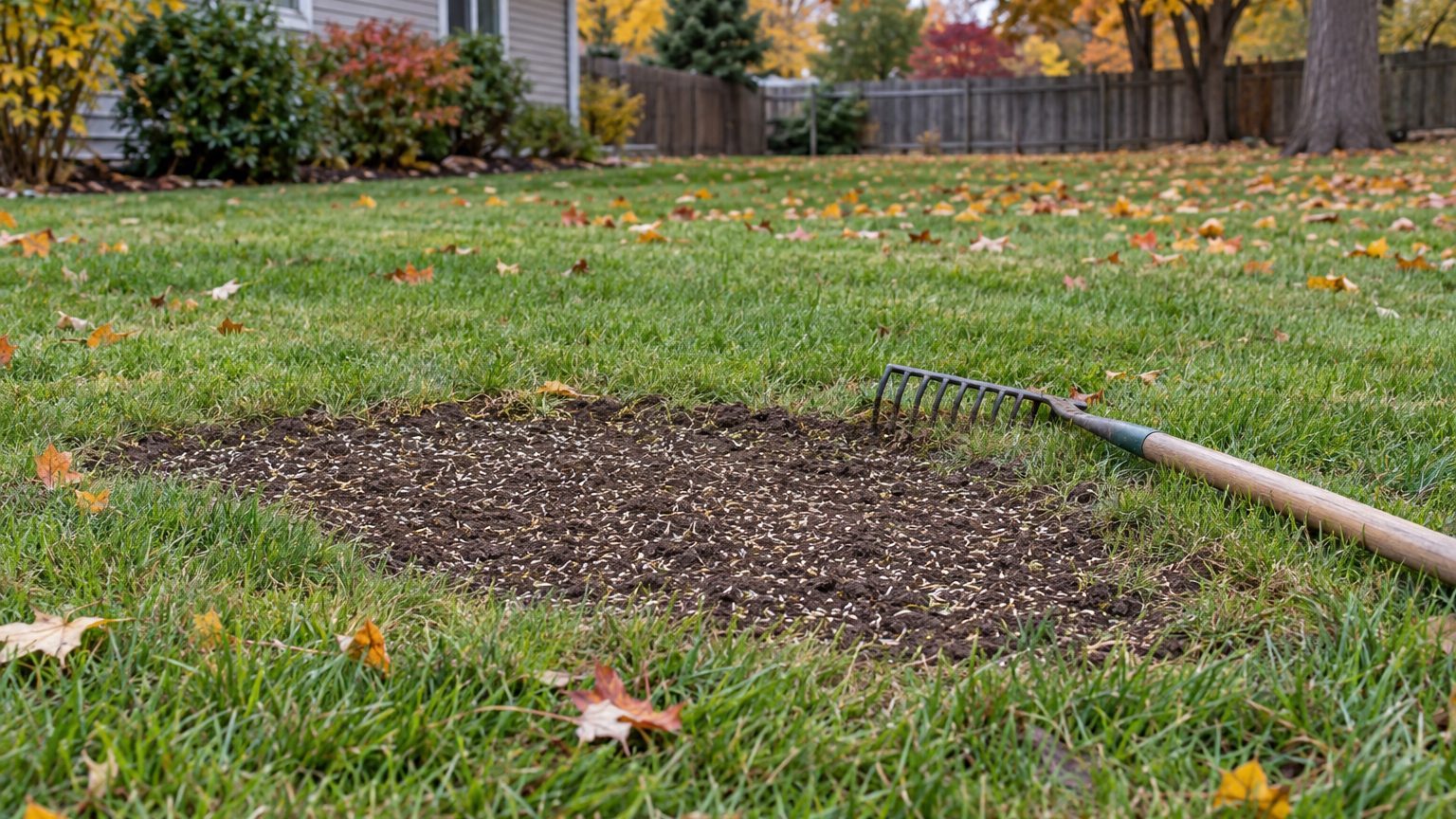
A bare patch usually shows itself after winter thaw or after a dry summer stretch, a tan or brown circle of soil sitting in otherwise green turf. Whether grass fills the spot on its own depends on the species and the cause of the damage. Repairing it means loosening the soil, seeding, and keeping the seedbed damp until roots take hold.
How Do You Fix Bare Spots in a Lawn?
You loosen the bare soil, work in the seed so it touches dirt, and keep the spot moist until new grass roots. The basic approach is similar, but the timing and materials depend on the grass and the region. What changes is the timing, because cool-season and warm-season grasses want different seasons.
Region moves the dates further, since soil warms and cools on a different schedule in Georgia than in Minnesota. The state selector just below this section leads to the page for your state, where the months for your lawn are laid out.
From the almanac
Lawn in your state
The dates on this page depend on where you live. Your state's page carries its frost dates, its USDA zones and the year laid out month by month.
Northeast
Southeast
- Alabama
- Arkansas
- Delaware
- Florida
- Georgia
- Kentucky
- Louisiana
- Maryland
- Mississippi
- North Carolina
- South Carolina
- Tennessee
- Virginia
- West Virginia
Midwest
Southwest
West
Pacific Northwest
Canada
How to Repair Bare Spots in a Lawn

Before any seed goes down, work out why the grass died, then repair the spot in this order.
- In Kentucky, break up the soil with a garden rake or a similar tool, because seed needs loose ground to root into rather than a crusted surface.
- In Wisconsin, rake out a large dead patch and add ¼ to ½ inch of good quality soil so the seed has a fresh bed to start in.
- Sprinkle seed evenly, and for tall fescue in New Jersey the rate is 4 to 6 pounds per 1000 square feet, which keeps the new stand thick enough to crowd out weeds.
- Rake the seed lightly back in and run a roller over it, so each seed sits in firm contact with the soil and can pull in moisture.
- Cover with a light mulch, and in New Jersey that means about 25% of the soil still shows through, so seedlings get shade and moisture without being smothered.
- In New Jersey, keep the top 2 inches moist, since seed that dries out after it has started to sprout usually dies.
With favorable growing conditions, straw mulch and timely rain or irrigation can give an established lawn in 4 weeks in New Jersey. In New Jersey, once seedlings have a real root system, water less often but more deeply, down to 3 to 5 inches, to push roots downward.
Bare Spot Repair by Grass Type
Cool-season grasses such as the fescues are repaired in fall, when mild air and warm soil help new seedlings establish. They grow best in the cooler parts of the year, so fall seeding lines up with their natural growth.
In New Jersey, tall and fine fescue use the same seeding rate.
| Grass | Season | Seed rate (New Jersey) | Repair timing |
|---|---|---|---|
| Tall fescue | Cool | 4 to 6 pounds per 1000 square feet | Fall |
| Fine fescue | Cool | 4 to 6 pounds per 1000 square feet | Fall |
Warm-season lawns such as Bermudagrass or zoysia follow the opposite rhythm. They grow when the soil is warm, so their repairs belong to the warm months rather than fall. Seed rates differ by species and by seed or sod, so check the bag or ask your state extension office. If you are not sure which grass you have, that answer decides your calendar before anything else does.
Lawn Repair Mistakes to Avoid
Seeding Without Fixing the Cause
New seed in a spot where pet urine or spilled mower gasoline killed the grass will often fail the same way. Rocks close to the surface and heavy foot traffic can do the same. Look for the cause first, using clues such as where the patch sits and what the dead grass looks like. Then remove it, flush the area, or reroute the traffic before reseeding.
Letting the Seedbed Dry Out
A seedbed that dries out between waterings loses sprouting seed, and the work is wasted. In Iowa, water at least once a day after seeding. Where a daily trip with the hose is hard, a small sprinkler on a timer keeps the surface damp and saves the repair.
Leaving Heavy Mulch On
Mulch laid on thick blocks light, and seedlings pale and stall underneath it. In New Jersey, partially remove mulch once germination occurs and roots reach 2–3 inches. Rake it thinner by hand rather than pulling it all away, so the young grass keeps some shade while it hardens off.
When to Repair a Lawn in Your State
The signal is the grass itself. Cool-season lawns are ready for repair as fall growth returns, and warm-season lawns when the soil has warmed and the turf is growing actively. Iowa suggests mid-August through mid-September for thin lawns, as one local example.
- Open your state page to find the months that match your region and your grass type.
- Check it again when spring thaw reveals new bare spots, so you can decide what to patch now and what to leave for fall.
Common Questions
Can Spring Bare Spots Wait Until Fall?
Often they can. In Wisconsin, bare patches, vole trails, moss and thin stands are described as spring issues that need a quick fix before summer. On a cool-season lawn, a small patch can be covered lightly in spring and fully repaired in fall.
How Do You Tell Dead Grass from Dormant Grass?
Tug a handful of blades. Dormant grass stays anchored and often greens again with water or cooler weather, while dead grass lifts out easily with dry, brittle roots. Check whether the whole area has turned the same color or whether the damage forms a clean-edged patch, since that points toward a local cause.
Will Grass Seed Grow Where a Dog Keeps Going?
It may sprout, but repeated urine can burn the new seedlings before they root. Rinse the spot with water, repair it, then give the dog another place to go while the grass establishes. A temporary fence around the patch keeps both paws and urine off.