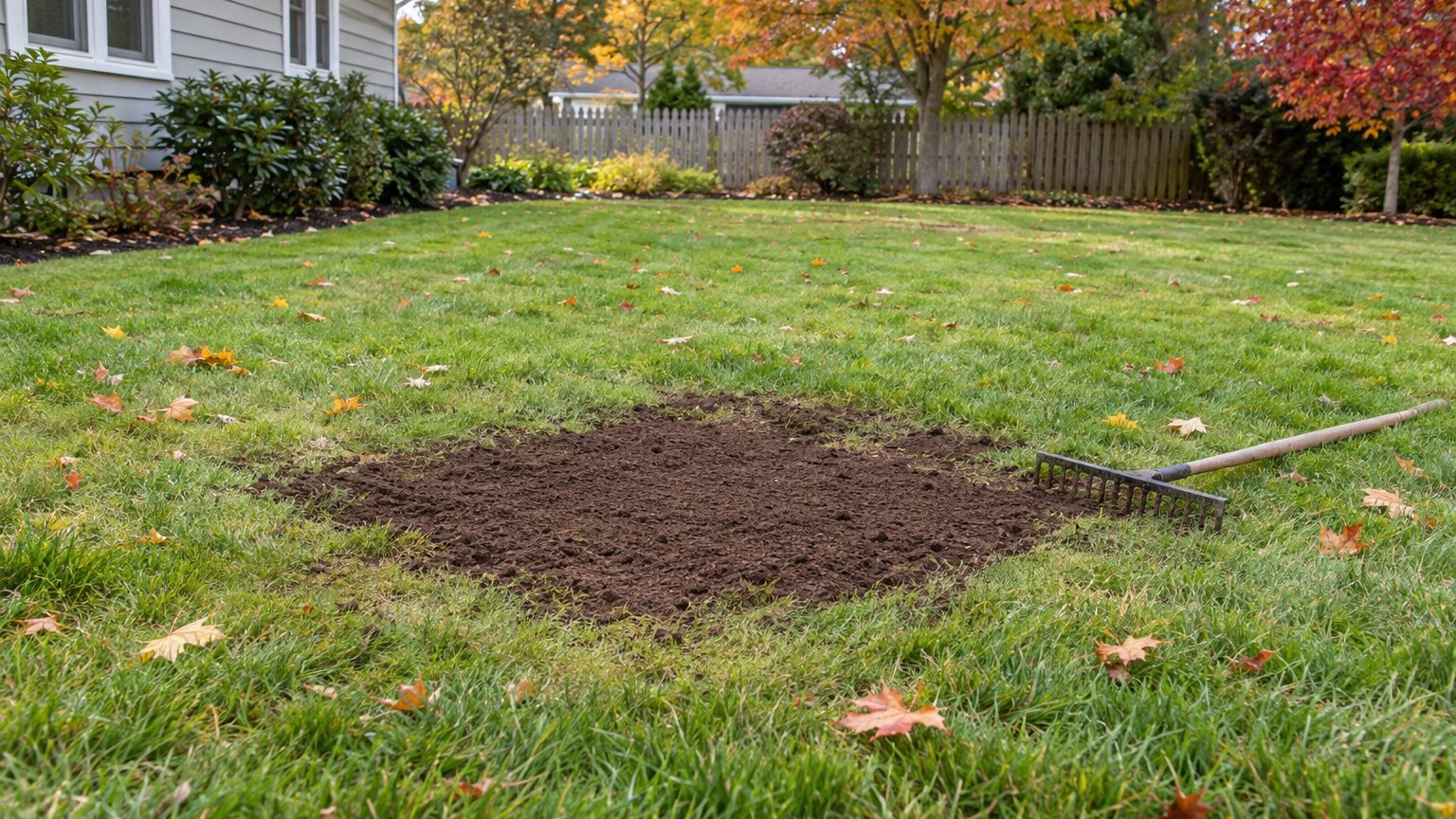
Bumps and dips usually show up as the mower scalps a high spot or a wheel drops into a hollow. A bumpy lawn is leveled by filling low areas with a thin layer of soil or compost and letting the grass grow up through it. The details depend on what caused the roughness and what grass you have.
How Do You Level a Bumpy Lawn?
Level it by topdressing: spread a thin layer of compost or soil over the low spots, work it down between the grass blades, and let the turf grow through. Timing follows the grass. It should be actively growing so it can climb out of the fill, which means different seasons for cool-season and warm-season lawns, and different months from region to region.
Knowing why the surface got rough helps you choose the fix. Thinning turf, soil that heaves as it freezes and thaws, and earthworm castings all cause bumps, and each calls for a slightly different response.
The state selector just below this section leads to the page for your state, where the local timing is laid out.
From the almanac
Lawn in your state
The dates on this page depend on where you live. Your state's page carries its frost dates, its USDA zones and the year laid out month by month.
Northeast
Southeast
- Alabama
- Arkansas
- Delaware
- Florida
- Georgia
- Kentucky
- Louisiana
- Maryland
- Mississippi
- North Carolina
- South Carolina
- Tennessee
- Virginia
- West Virginia
Midwest
Southwest
West
Pacific Northwest
Canada
How to Level a Lawn

Work in this order and each step sets up the next, so the fill settles into living turf instead of sitting on top of it.
- Mow near the lower end of your grass’s normal range without scalping, then rake out the clippings and thatch so the new material reaches the soil rather than a mat of dead stems.
- If the soil is compacted, aerate the lawn; in Colorado, aeration in spring and fall is recommended to loosen compacted ground and help the surface smooth out.
- Spread a thin layer of topdressing over the low spots, because in Maryland about ¼- to ¾-inch of material can go on without smothering the crown of the grass.
- Rake the material level and work it down between the blades with the back of a rake, so the leaf tips stay exposed and can keep making food from sunlight.
- In Maryland, the advice for ruts and deep hollows is to strip the sod, amend the soil and regrade it, then replant.
- Water the filled areas so the material settles into the gaps, then check again later for spots that sank and need a touch more.
Apply light layers over time if a hollow is deep, and avoid a thick application. Each thin layer lets the grass grow through before the next goes on, and the surface firms up evenly as the roots knit the fill together.
Leveling by Grass Type
Grass type decides when the lawn can recover from a layer of fill. A grass that is growing hard pushes through topdressing quickly, while a dormant or struggling one can stay buried and thin out.
Cool-season lawns are common in northern regions, while warm-season lawns dominate the South. These grass groups follow the same steps, but the calendar differs.
| Grass | Season | How it does with leveling |
|---|---|---|
| Kentucky bluegrass, tall fescue, fine fescue, perennial ryegrass | Cool | Actively grows in spring and fall, so topdressing in those seasons can fill in quickly. |
| Bermudagrass, zoysiagrass, centipedegrass, St. Augustinegrass | Warm | Actively grows in the heat of late spring and summer, once the lawn is fully green. |
For a cool-season lawn, a shaded or worn patch may still need seed along with the fill, since thinning turf can make older lawns rough. Warm-season grasses that spread by runners can often fill a thin layer on their own. Match the job to your grass’s active growing season so the turf can recover.
Lawn Leveling Mistakes to Avoid
Spreading Fill Too Thick
A heavy pile of soil over a dip buries the grass, and the covered patch turns yellow and thins out, leaving a bare spot that sits lower than before. In Maryland, about ¼- to ¾-inch is considered a safe depth for the crown. Add thin layers over time instead.
Topdressing a Deep Rut
Ruts and deep low areas swallow topdressing and keep sinking, because the soil underneath is usually compacted. In Maryland, the recommended fix is to remove the sod, amend the soil to regrade it and reduce compaction, and then replant turf. Lift the grass, fix the ground, and put the turf back.
Mowing Low and Chasing Worms
Scalping a freshly leveled lawn cuts off the leaf tips just as they need to feed new growth, and it exposes every ridge to the blade. In Colorado, the advice after leveling is to mow as high as the mower can be set and to leave the worms alone; their castings contribute to roughness along with other causes. Raise the deck and let them work.
When to Level a Lawn in Your State
Start when the grass is growing strongly and the soil is warm enough to support it, which for a cool-season lawn means spring or early fall, and for a warm-season lawn means after full green-up. Dormant grass cannot climb out of fill. The months for each state are on that state’s page.
- Open your state’s page to see which months suit leveling for the grass types grown there.
- Check the same page before aerating or topdressing, so the work lands while growth is strong.
- Walk the lawn, mark the low spots with flags, and fill them as the grass reaches its growing season.
Common Questions
Can You Use a Roller to Level a Lawn?
A light roller can help, though it will not fix real dips. In Colorado, aeration in spring and fall paired with light rolling is recommended to smooth the surface. A heavy roller compacts the soil and works against the roots.
Can You Use Soil from the Garden to Level a Lawn?
Yes, in moderation. In Colorado, a light layering of compost or soil taken from an adjacent flowerbed or vegetable garden is described as helpful. Screen out clumps and sticks first so the layer spreads evenly.
Does Fertilizer Help Smooth a Bumpy Lawn?
In Iowa, a spring application is expected to thicken the grass and make the bumps less noticeable, with the strongest results in late summer, from late August to mid-September. It evens out a rough lawn but will not fill a real hollow.