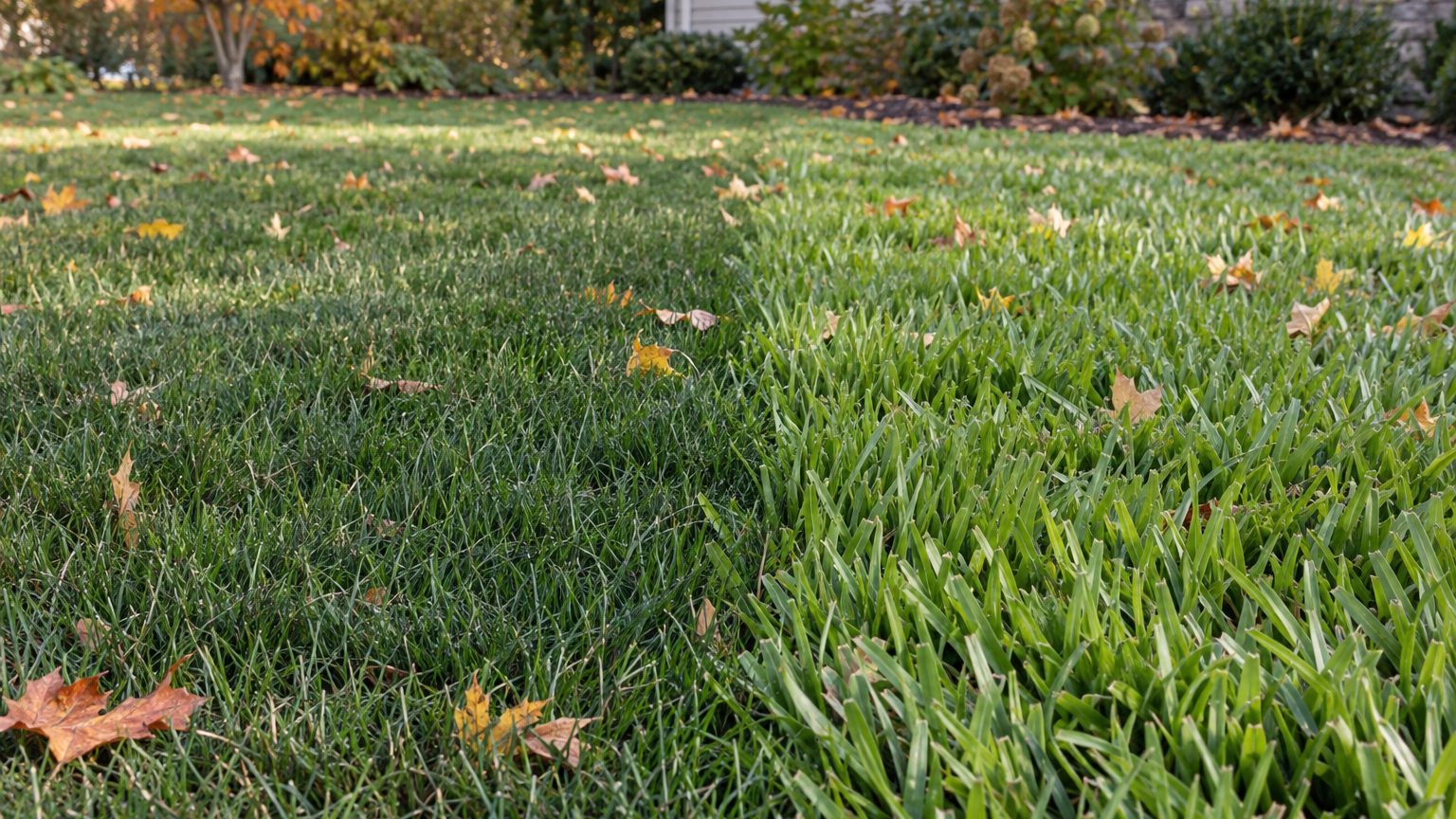
A lawn that greens up early in spring and sulks in August is telling you something about its grass type. Every turfgrass belongs to a cool-season or a warm-season group, and each group has its own weather where it thrives. Knowing which grass group you have, or should have, helps explain how your lawn behaves through the year.
What Are the Main Types of Lawn Grass?
Lawn grasses split into cool-season and warm-season groups, and the group matters more than the species. In Virginia, cool-season grasses are active in mild weather, in spring and again as summer cools. Warm-season grasses wait for real heat, then grow thick and turn tan once cold sets in.
Across the broad middle of the country, cool-season and warm-season groups overlap in what turf managers call the transition zone. Cold winters and hot, dry summers make every choice a compromise there, and your region, your sun and the species all shift the answer. The state selector just below this section takes you to your own state’s page.
From the almanac
Lawn in your state
The dates on this page depend on where you live. Your state's page carries its frost dates, its USDA zones and the year laid out month by month.
Northeast
Southeast
- Alabama
- Arkansas
- Delaware
- Florida
- Georgia
- Kentucky
- Louisiana
- Maryland
- Mississippi
- North Carolina
- South Carolina
- Tennessee
- Virginia
- West Virginia
Midwest
Southwest
West
Pacific Northwest
Canada
How to Choose a Grass Type for Your Yard
Start with climate and light, then narrow down to a species.
- Place your yard in cool-season country, warm-season country or the transition zone, because that shapes whether the grass can stay healthy in your climate.
- Track how much direct sun each part of the yard gets, since tall fescue in South Carolina is said to grow well with as little as 5 hours of sunlight per day.
- Match the species to your local region, because the answer can change within a state, as in Virginia where centipedegrass and St. Augustinegrass are adapted only to the Tidewater region.
- Decide between seed and sod based on how soon you want a finished lawn, because species differ a lot in how quickly seed sprouts and fills in.
- Ask your state extension office which varieties it recommends, because named varieties within a species can differ in heat, drought and disease tolerance.
Expect some compromise if you live in the middle band. In Virginia, turfgrass specialists put it bluntly: the state can grow eight different turfgrasses, but not very well. Picking a grass that can handle the tougher season is more practical than chasing a grass that only looks good under favorable conditions.
Lawn Grass Types by Region
Each grass has a home climate, and the table uses Virginia as a worked example of how a transition-zone state sorts them out.
Cool-season turfgrasses suit the hill and valley regions of the southwest, the Shenandoah Valley and northern Virginia. Warm-season types fit the hotter, lower ground.
| Grass | Season | How it does in Virginia |
|---|---|---|
| Tall fescue | Cool | Grown in all regions, but struggles in summer extremes in the southern Piedmont and Tidewater. Seed germinates in 10-14 days. |
| Kentucky bluegrass | Cool | Seed is easy to find but slow to germinate, 14-21 days, and full establishment usually takes months. |
| Perennial ryegrass | Cool | Germinates in 7-10 days and builds a dense canopy quickly. |
| Bermudagrass | Warm | Needs full sun, with very poor shade tolerance. Tolerates mowing heights from 0.5 to 2.5 inches. |
Centipedegrass and St. Augustinegrass are the warm-season options that stay close to the coast, since they are adapted only to the Tidewater region. For you, the lesson reaches beyond Virginia. A grass that thrives nearby may fail in your yard, so match the species to your own corner of the state, not to the state as a whole.
Grass Selection Mistakes to Avoid
Warm-Season Grass in Shade
In Virginia, bermudagrass is a full-sun grass with very poor shade tolerance, so planting it under trees can leave thin, weak turf that weeds move into. Match shady areas to a cool-season type such as tall fescue, or accept mulch or groundcover where little light reaches.
Slow Seed for a Fast Fix
In Virginia, Kentucky bluegrass is slow to start, and complete establishment can take months. If bare soil is washing out or you need green soon, choose a faster starter such as perennial ryegrass or tall fescue, or lay sod. Save the bluegrass for a yard where you can wait.
Southern Grass Outside Its Region
Centipedegrass and St. Augustinegrass are adapted only to the Tidewater region in Virginia, which shows how narrow a warm-season grass’s range can be. Outside their adapted region in Virginia, these grasses may struggle. Ask a local garden center what holds up through your local winters and summers before you buy.
Best Grass Types for Your State
The grass in your yard sets the timing. Watch for its growth surge, for warming soil and for whether your turf belongs to the cool or warm season. Each state’s page turns those signs into months.
- Open your state’s page to find the months for seeding, feeding and mowing your grass type.
- Check it again when your lawn speeds up in spring and when summer heat begins to ease.
Common Questions
Which Grass Types Handle Frost and Low Light Better?
For Illinois lawns, cool-season grasses tolerate frost, low light and lower temperatures better than warm-season grasses do. That helps explain why northern lawns often use cool-season grasses, while shade choices in warmer regions need local advice.
Do Warm-Season Grasses Use Less Water?
They generally need less water than cool-season grasses, according to Illinois guidance, though they also have lower frost tolerance. If you live where summers are dry, that trade can be worth considering, as long as your winters are mild enough for the grass to survive.
Can You Grow More than One Grass Type in the Same Yard?
You can, and in the transition zone many yards do. A sunny front slope may suit a warm-season grass while a shaded backyard does better with a cool-season one. Keep each type in its own area so the mowing height and care you give one doesn’t harm the other.