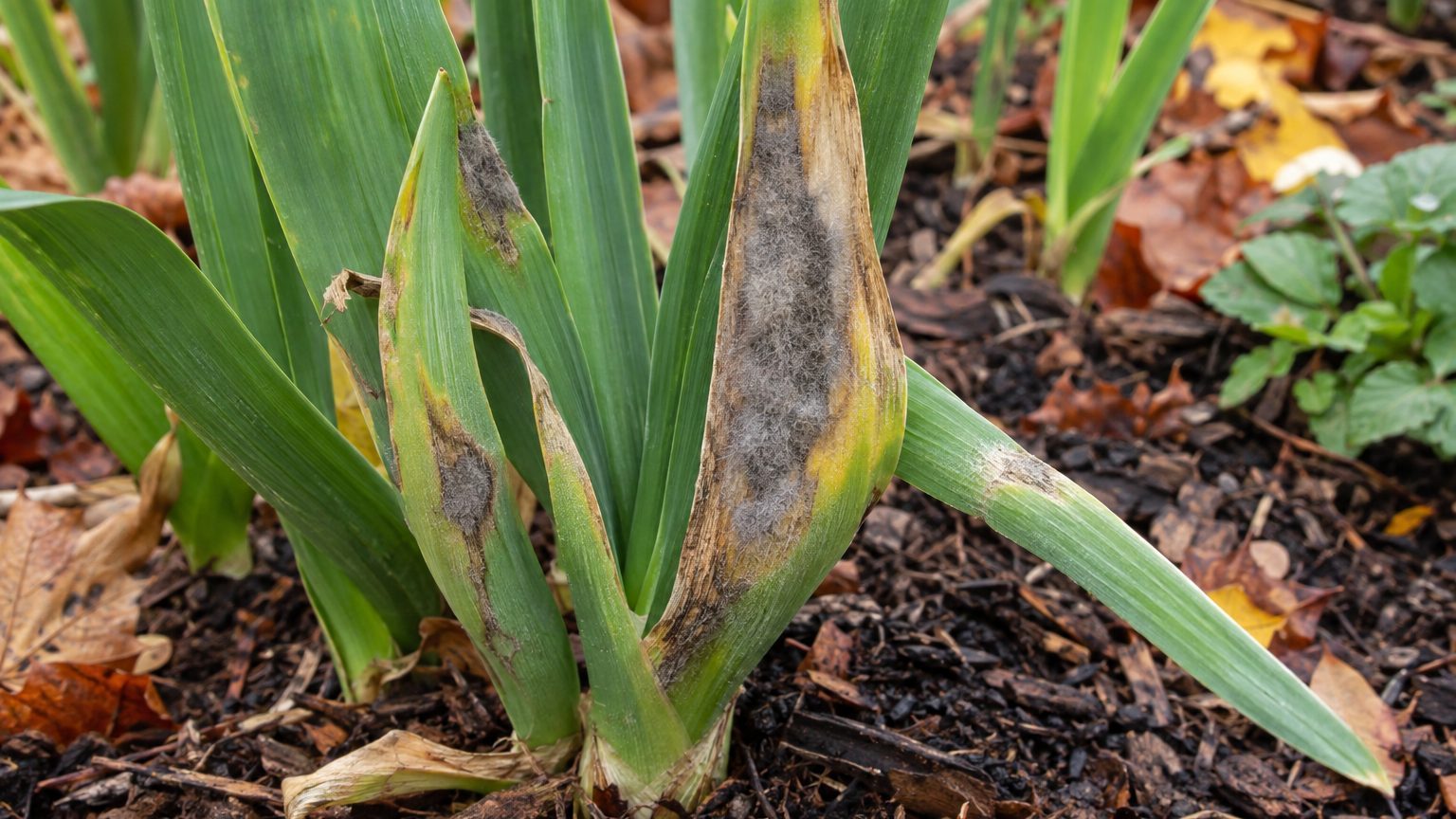
A tulip or daffodil shoot that never breaks the soil in spring, or one that pokes up and then flops, often has a rotted base underground. Root rot on spring bulbs is a soil fungus problem that starts where the roots meet the bulb. Knowing what it looks like and what feeds it keeps one bad patch from becoming a bed of failures.
Root Rot: What You See
Most of the damage happens out of sight, so the clues are what the plants fail to do and what a dug-up bulb looks like.
- The base of the bulb, the flat plate where roots emerge, is where the fungus usually attacks, so a dug bulb that is decayed there points straight to root rot.
- Shoots fail to emerge in spring, leaving gaps in a planting where bulbs went in the fall.
- Shoots emerge, then wilt soon after, as if they were short of water in damp soil.
- Plants stay leafy but fail to flower, which suggests the roots cannot feed the bud.
- Bulbs and roots that have turned grayish, dried and shriveled, sometimes with felty masses between the scales and rot working from the top down, point to a related bulb rot.
- Shoots that die in late winter before they ever show are another sign of rot below ground.
Digging up one doubtful plant and looking at its base tells you far more than the foliage can.
From the almanac
Bulbs in your state
The dates on this page depend on where you live. Your state's page carries its frost dates, its USDA zones and the year laid out month by month.
Northeast
Southeast
- Alabama
- Arkansas
- Delaware
- Florida
- Georgia
- Kentucky
- Louisiana
- Maryland
- Mississippi
- North Carolina
- South Carolina
- Tennessee
- Virginia
- West Virginia
Midwest
Southwest
West
Pacific Northwest
Canada
Root Rot or Something Else?
Bulb plants fail for several reasons, and two other rots can look a lot like root rot from above. Each has its own starting point, so look at where the decay begins and what the weather and handling were like.
Checking both clues together keeps you from pulling healthy bulbs or ignoring a real problem.
| Looks like | How to tell them apart |
|---|---|
| Brown lesions and decay on leaves, stems or flowers | Gray mold begins on dead or fading tissue such as spent petals, then moves into healthy parts, and crowded plantings with poor airflow make it worse. |
| Soft, collapsing bulb tissue | Soft-rot bacteria get in through wounds from digging, planting or hail, and rain, waterlogged soil and warm weather favor them. |
Gray bulb rot, which comes from a different fungus, can resemble root rot as well. Its felty masses between the scales and its top-down decay set it apart from a rot that begins at the base.
What Causes Root Rot, and Where It Is Worst
On narcissus, basal rot comes from the fungus Fusarium oxysporum f. sp. narcissi. It survives in the soil as microscopic spores called chlamydospores, waiting for a host. In Oregon, the fungus becomes active in early spring or early summer, once soil temperatures rise about 55 degrees Fahrenheit.
Wounds give it an easy way in, including injuries made when bulbs are harvested. Fusarium and similar fungi also overwinter on diseased plant tissue left from the year before, which is why Connecticut gardeners are told to keep beds clean.
Wet soil is the common thread, because these fungi thrive where water stands or floods, so a low corner, a bed at the bottom of a slope or heavy ground that stays soggy is where trouble tends to show up.
How to Treat Root Rot
Once a bulb is infected there is no saving it, so the work is removing it and protecting what is left.
- Pull up any plant that fails to emerge, wilts soon after emerging or does not flower, because in Connecticut the advice is to remove it rather than wait, and a rotting bulb keeps feeding the fungus.
- Bag the bulb with its roots and put it in the trash, since a diseased plant left in the garden sheds spores into the bed.
- Clear leftover plant debris from the spot, so the fungus has less diseased tissue to survive the winter on.
- Fix drainage where water stands, because soggy soil is where the fungus thrives and flooded beds invite it back.
- Work gently around nearby bulbs, so you do not nick them with a trowel and give the fungus a wound to enter.
For anything beyond cleanup, such as a treatment for the soil or the bulbs, ask your state’s extension service what is approved where you live. Labels and rules vary, and a local office can tell you what fits your bed.
How to Prevent Root Rot Coming Back
Prevention follows the bulb year, because the fungus is tied to wet soil, wounds and leftover debris.
- In early spring, check beds after rain and break up any spot where water stands, since soggy soil is what these fungi like.
- In early summer, when the leaves have turned yellow and you lift or divide bulbs, choose dry weather and handle them gently, because wounds made at harvest are a way in for the fungus.
- In fall, plant into well-drained ground and avoid bruising bulbs as they go in, so the base stays intact.
- In late fall, clean up fallen plant debris and leave diseased tissue out of the compost bin, since home bins rarely get hot enough to kill the pathogens.
Where This Comes From
The details here come from university extension and government pages, including advice written for Oregon and Connecticut. Your state’s extension service can confirm what applies where you live, including which treatments are approved locally.
Common Questions
Can You Compost Bulbs That Have Rotted?
No. Home compost bins rarely reach the temperatures needed to kill pathogens, so diseased tissue can carry the fungus into the next bed. Bag it and throw it away.
Does Planting Bulbs Close Together Cause Disease?
Crowding can. Many people plant bulbs close together like eggs in a carton, but that cuts airflow and, over time, leaves bulbs treated as perennials more open to tulip fire and gray mold. Give each bulb enough room for air to move.
How Should You Store Bulbs to Avoid Rot?
Keep storage conditions dry, since high humidity favors soft rot, and handle bulbs gently so they are not wounded when dug, packed or stored. Dig during dry weather.