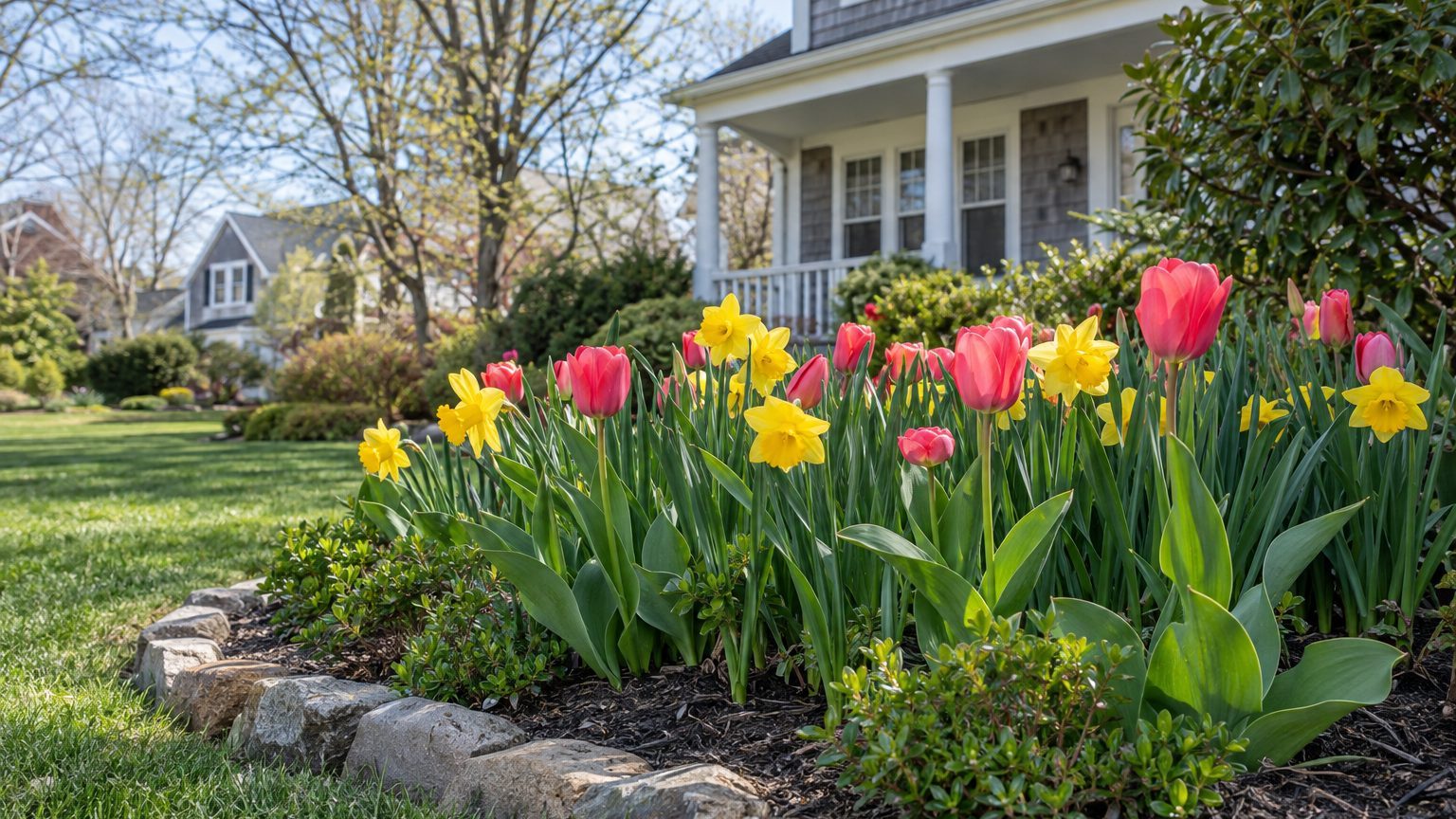
A bag of tulip and daffodil bulbs goes into Rhode Island soil in autumn, and the flowers arrive the following spring. Planting happens in October, with a fallback into November and December while the ground can still be dug. Timing matters because roots need to form before winter locks the soil, and the bulbs must not sprout too soon.
When to Plant Tulips and Daffodils in Rhode Island

Plant in October. Rhode Island sits in USDA zones 6a to 7b, so the winter cold needed to set flower buds arrives on its own. The year for one bulb runs like this.
- In early fall, buy firm, heavy bulbs and keep them somewhere cool and dry until the soil is ready.
- Through fall and winter, the cold ground does the chilling, so tulips and hyacinths go straight into the garden with no refrigerator step.
- In October, once the soil has cooled below about 60°F, set the bulbs in the ground so roots form before it freezes but the tops stay asleep.
- In November and December, plant any bulbs left over as long as the ground is not frozen, since a late bulb does better in the soil than waiting in the bag.
- After planting, once the soil starts to chill, spread a layer of mulch to steady the temperature around the bulbs.
- From March through May, shoots push up and flowers open, with the earliest hardy bulbs first and the later ones in April and May.
Frost arrives for the first time between October 24 and November 3 at the reference station, and gardens inland or on higher ground usually get it sooner, so check with your own county.
Rhode Island — the year and the numbers
- State
- Rhode Island
- USDA zones
- 6a-7b
- Last spring frost
- April 7 to April 17
- First fall frost
- October 24 to November 3
- Annual rain
- 48 in
- Lawn zone
- cool-season
- Source
- NOAA NCEI U.S. Climate Normals 1991-2020, 32F freeze probabilities · Providence
Which Spring Bulbs Do Best in Rhode Island?
Daffodils are the dependable choice here. They shrug off the cold, last for years, and animals leave them alone. Tulips grow well in the winters but are often short-lived and attract hungry animals. Alliums need no special treatment, and crocus are lovely but get eaten.
| Bulb type | How it does in Rhode Island | Why |
|---|---|---|
| Daffodils | Reliable perennial that returns for years | Hardy to zone 3, and left alone by voles, squirrels, rabbits and deer |
| Tulips | Flower well but often fade after a few seasons | Voles, squirrels, rabbits and deer eat them |
| Crocus | Good color but vulnerable | Rodents and deer go after the bulbs |
| Alliums | Easy and dependable | They need the cold of winter to bloom |
Hyacinths follow the same fall planting rule as tulips and need the same winter cold. Because deer and rodents are common visitors to Rhode Island yards, planting daffodils among the tulips and crocus gives the more tempting bulbs some cover.
When to Plant, Chill and Care for Spring Bulbs in Rhode Island
Most spring bulbs need about 12 to 16 weeks of cold to flower. A Rhode Island winter supplies that, so the work comes down to planting on time and leaving the foliage alone afterward.
| Task | Best timing in Rhode Island | Why then |
|---|---|---|
| Plant tulips, daffodils, crocus, alliums and hyacinths | October, or November and December if the ground is not frozen | Roots form before the ground freezes |
| Plant bulbs still in the bag | Whenever the soil can be dug | A late bulb beats one stored over the winter |
| Chill tulips and hyacinths | Not needed, winter does it outdoors | The cold in the ground is long enough to set buds |
| Leave the leaves after bloom | After April and May flowers, until the foliage turns yellow and then brown | The leaves feed the bulb for next year |
Take off only the faded flowers. Never cut, braid or tie green leaves, even when they flop over the lawn edge.
How Bulb Planting Time Changes Across Rhode Island
The state is small, but water and elevation still shift the calendar a little, and the difference shows up in how early the soil cools.
- Block Island and Newport: The ocean keeps the soil warmer into late fall, so planting can stretch comfortably through the fallback months of November and December.
- South County and the Narragansett Bay shore: Salt water moderates the cold here, which gives you a relaxed run through October.
- Northwest hills around Burrillville, Foster and Glocester: Higher, more open ground cools sooner and frost comes earlier, so plant at the start of October and do not count on much of a fallback.
Wherever you live, let the soil temperature guide the last bulbs into the ground.
Where to Get Bulb Advice in Rhode Island
The University of Rhode Island Cooperative Extension is the state’s land-grant resource for home gardeners, and it can help with planting questions, diagnosis and soil testing.
- Browse the extension’s gardening resources for bulb fact sheets, and go in early fall before the bulbs are bought.
- Ask the extension about a soil test if bulbs have rotted or failed in the same spot, and send the sample before planting.
- Check that the bed drains well, then plant in October.
Common Questions
How Do You Protect Tulips from Deer and Voles?
Tulips and crocus are the bulbs these animals eat, while daffodils are left alone. Daffodils are used as deer training plants to protect tender plants that deer love, and the same trick works as a planting plan in a Rhode Island bed.
Which Tulips Come Back Best?
Tulips fade quickly in many gardens. In Rhode Island, Fosteriana tulips perennialize well, which makes them a better pick when you want flowers to return.
Where Do Daffodils Grow Best in a Yard?
Daffodils naturalize well, especially in partly shady areas. Naturalizing is where they spread most easily, so lawn edges and spots under deciduous trees suit them in Rhode Island.