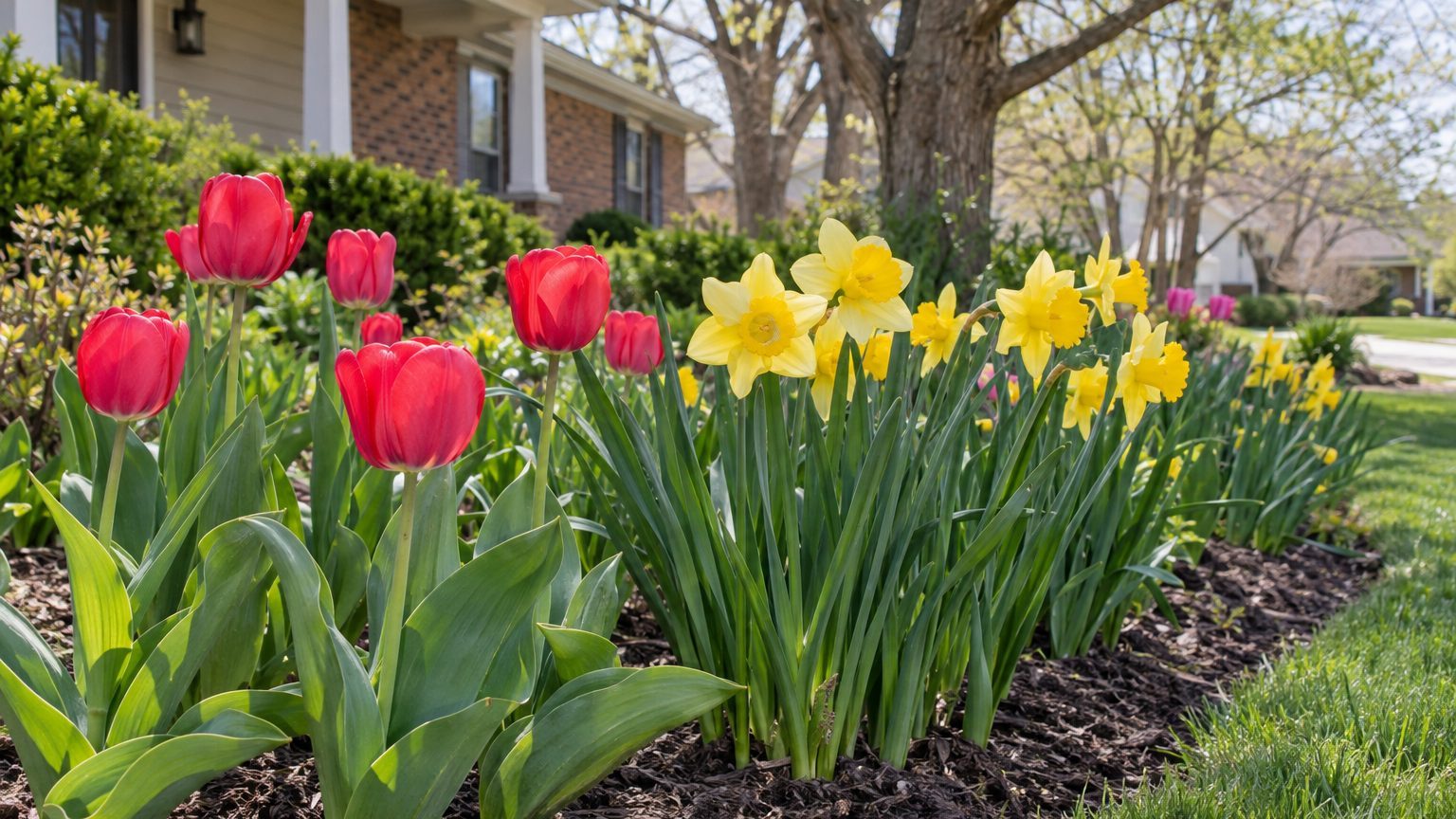
Daffodil shoots pushing through cold ground in March are one of the first signs of spring in Missouri, and they start with a bulb tucked into the soil the autumn before. Tulips and daffodils go in during autumn, and Missouri’s long fall leaves plenty of room to get them planted.
When to Plant Tulips and Daffodils in Missouri

Plant tulips and daffodils in Missouri in September and October. Bulbs left in the bag can still go in during November and even December, as long as the ground is unfrozen. Here is how a bulb’s year runs.
- In September, shop for firm, heavy bulbs and keep them in a cool, dry spot until the soil has cooled.
- Plant from September through October, once the soil has cooled to a comfortably cool autumn level, which gives roots time to form before the ground freezes without tempting the bulbs to sprout in autumn.
- In November and December, any bulbs still unplanted go in as soon as the ground can be dug, because a late bulb does better in the soil than stored over winter.
- In late fall, once the ground turns cold, spread a layer of mulch over the bed to even out the freezing and thawing.
- Through winter, the bulbs rest in cold soil, and that cold is what prepares them to flower.
- In March or early April, green shoots break the surface, the first daffodils can open from late February, and tulips flower from April through May.
In Missouri, the first fall frost tends to arrive well into autumn, so the planting window opens well ahead of it. USDA hardiness zones run from 5b to 7b across Missouri, with southern Missouri milder than the north.
Missouri — the year and the numbers
- State
- Missouri
- USDA zones
- 5b-7b
- Last spring frost
- April 6 to April 20
- First fall frost
- October 18 to October 29
- Annual rain
- 39 in
- Lawn zone
- transition-season
- Source
- NOAA NCEI 1991-2020 Climate Normals, 32F freeze probabilities · Kansas City
Which Spring Bulbs Do Best in Missouri?
Daffodils are the dependable choice in Missouri. They are vigorous, they come back year after year, and animals leave them alone. Tulips do grow here, but they are short-lived and attract hungry wildlife, so plan on replacing some.
Crocus face the same wildlife trouble as tulips. According to Iowa State University Extension, alliums need the cold of winter to bloom, and add height late in the season.
| Bulb type | How it does in Missouri | Why |
|---|---|---|
| Daffodils | Reliable perennial, lasts for years | More vigorous than tulips, and deer and rodents leave them alone |
| Tulips | Beautiful but often short-lived | Voles, squirrels, rabbits and deer eat them, and some gardeners treat them as annuals |
| Crocus | Good color, but often eaten | Voles, squirrels, rabbits and deer go for the corms |
| Alliums | Easy and bloom late in the spring bulb season | Chill period needed to bloom |
Hyacinths follow the same planting window as tulips and crocus. If voles or squirrels have raided a bed before, put daffodils in the spots where losses have been worst, and keep tulips in beds you can watch.
When to Plant, Chill and Care for Spring Bulbs in Missouri
A few jobs fill the bulb year, and each has its moment. Planting is a fall task. Chilling matters only if winter fails to deliver enough cold. Care after bloom comes down to patience with the leaves.
| Task | Best timing in Missouri | Why then |
|---|---|---|
| Plant tulips, daffodils, crocus, hyacinths and alliums | September through October, and November or December if the ground is unfrozen | Roots settle in before the soil freezes |
| Chill tulips and hyacinths in the refrigerator | Before planting, only if the winter will be too mild | Most spring bulbs need about 12 to 16 weeks of cold to flower |
| Remove faded flowers | Soon after the petals drop, in April through May | Seed formation wastes energy the bulb needs |
| Leave the leaves alone | Until they turn brown | The leaves feed the bulb for next year’s bloom |
Resist the urge to tie or cut green foliage to tidy a bed. Plant summer annuals or perennials nearby so their leaves can hide the fading bulb leaves while the bulbs recover.
How Bulb Planting Time Changes Across Missouri
Missouri stretches from cold northern counties to warmer southern ones, and that shifts where you land inside the September through October window.
- In northern Missouri, winters are colder and frost arrives sooner, so aim for the earlier part of the planting window. Settled soil in autumn means roots have time to anchor before the ground freezes hard.
- In southern Missouri, including the Ozarks and the Bootheel, milder conditions mean the soil cools later, so wait until it has cooled to that same comfortably cool autumn level before planting, and expect the ground to stay workable well into late fall.
Between those two, trust the soil more than the calendar. A bed that has cooled is ready, whatever the date.
Where to Get Bulb Advice in Missouri
University of Missouri Extension is the place to take bulb questions, from planting windows to animal damage. Every county has an extension office staffed to help local gardeners.
- The county extension office can run a soil test and tell you whether a bed drains well enough for bulbs, so stop by before planting.
- Extension staff can look at a photo or sample of a failed planting and help sort out whether wildlife, rot or poor drainage was the problem, best done in spring when the gaps show.
- Before the ground cools, pick up a soil sample bag, so the results are ready when planting time comes.
Common Questions
Can You Plant Forced Daffodils Outside in Missouri?
Yes. Daffodils are vigorous enough that bulbs forced indoors can be saved and planted in the garden once the leaves have died back. Tulips and hyacinths are less likely to rebound.
Should You Dig Up Tulips After They Bloom?
Many gardeners treat tulips as annuals and lift them in late spring to make room for other plants. If you leave them in, let the leaves turn brown first.
Can You Grow Tulips in Missouri If Voles and Rabbits Visit?
You can, but expect some losses, since voles, squirrels, rabbits and deer all eat tulips. Daffodils are left alone, so they make a sturdier backbone for the bed.