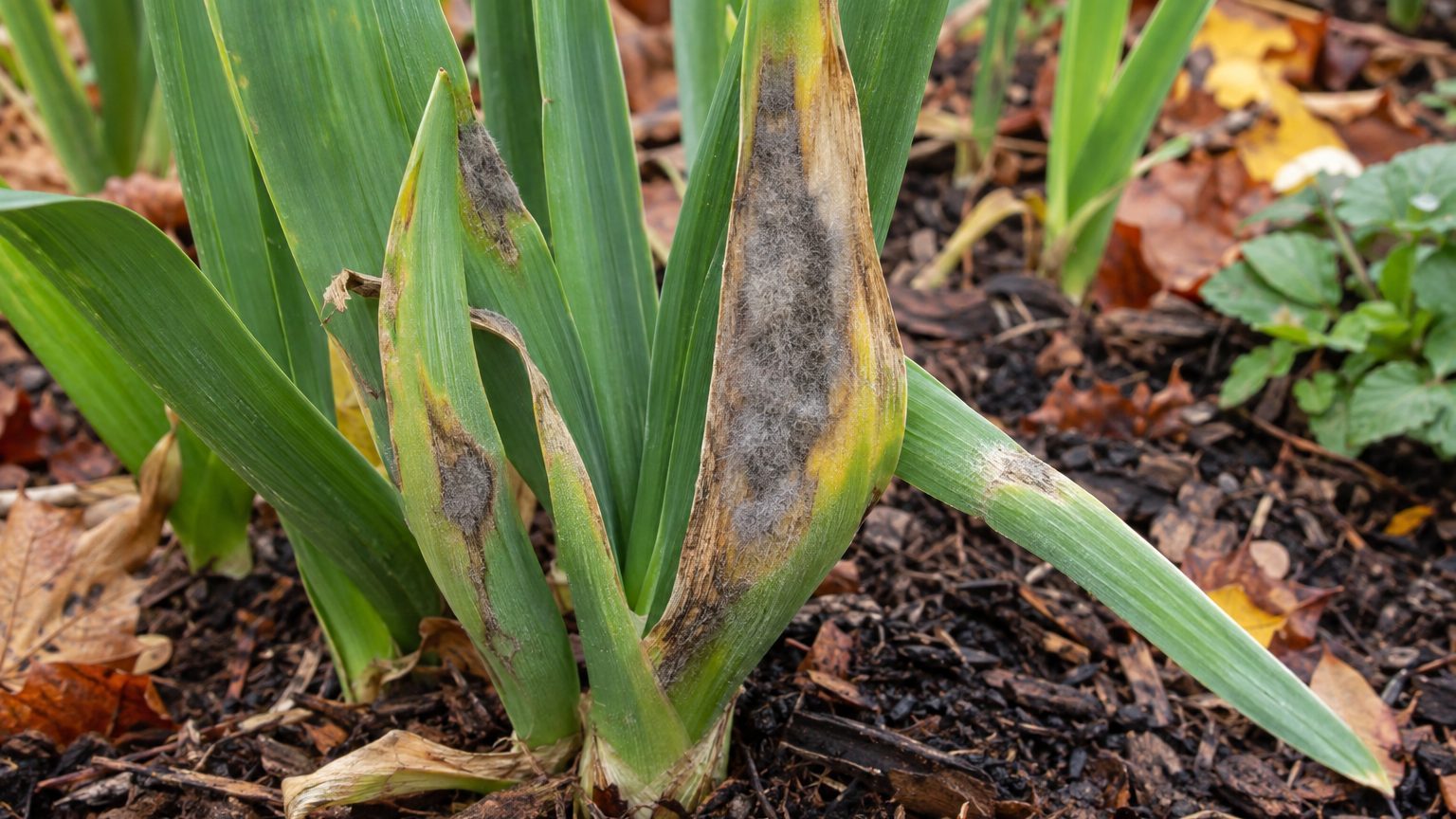
Spring bulbs that come up yellow and stunted, or a bulb that feels soft with a blue-green dusty patch when you dig it, point to blue mold, a rot caused by Penicillium fungi. It rides in on damaged or diseased bulbs rather than living in your garden soil.
Blue Mold: What You See
The signs show up on the bulb itself and, sometimes, in the leaves above it.
- Masses of blue or blue-gray fuzzy growth sit at the base or along the sides of the bulb once the disease is advanced.
- The fleshy scales look tan or gray when you cut into an infected area.
- Plants in the ground may come up yellowed and stunted, often with a decaying clove or bulb underneath.
- In advanced stages, the bulb can collapse into a watery rot, usually because bacteria or yeasts move in behind the fungus.
- Bruised or cut spots on the bulb are where the mold tends to start.
Check bulbs when you handle them for planting in fall, and look again if shoots in spring look weak. A bulb with a colored fuzz on it is already compromised, so do not plant it hoping it will recover.
From the almanac
Bulbs in your state
The dates on this page depend on where you live. Your state's page carries its frost dates, its USDA zones and the year laid out month by month.
Northeast
Southeast
- Alabama
- Arkansas
- Delaware
- Florida
- Georgia
- Kentucky
- Louisiana
- Maryland
- Mississippi
- North Carolina
- South Carolina
- Tennessee
- Virginia
- West Virginia
Midwest
Southwest
West
Pacific Northwest
Canada
Blue Mold or Something Else?
Yellow, stunted growth has many causes, and soft bulbs are not always moldy. A single clue is not enough, so pair what you see with where it sits and what the cut bulb looks like.
| Looks like | How to tell them apart |
|---|---|
| Watery, collapsing bulb | Bacterial or yeast rot can follow blue mold, so cut the bulb open and look at the base and sides for blue or blue-gray growth, and check for tan or gray scales. |
| Yellow, stunted shoots in the bed | Dig one up: blue mold comes with a decaying clove below, while a healthy bulb with weak leaves points to another problem. |
Dust-like growth on old leaves or plant litter is a different matter. Penicillium fungi are common on dead plant debris, so mold on dead tissue alone does not mean your bulbs are infected.
What Causes Blue Mold, and Where It Is Worst
Many species of Penicillium can cause blue mold. They live on plant debris and aging plant tissue, then move into bulbs through wounds, bruises, or uncured neck tissue. In onions and garlic, that is the usual entry route, and the same wound-driven pattern shows up in lily bulbs in storage.
The usual cause of trouble in the garden is diseased planting stock. The fungus does not survive long in soil, so a bed rarely stays contaminated on its own. Spores from one bad bulb can spread to healthy bulbs and cloves during handling, especially when bulbs are cracked apart for planting, and any wound gives them a way in.
The facts here do not point to a particular region, so treat blue mold as a risk anywhere bulbs are stored, handled, and planted. In Maine, yellowed and stunted plants with a decaying clove are the field symptoms described. In California, the watery rot of advanced stages is described.
How to Treat Blue Mold
Once a bulb is moldy, the job is to remove it and protect the healthy ones around it.
- Dig up any yellowed, stunted plant and check the bulb, so that you confirm blue or blue-gray growth and tan or gray scales before deciding.
- Remove infected bulbs and throw them in the trash, not the compost, so that spores do not spread to the rest of the garden.
- Handle remaining bulbs gently and set aside any with cuts or bruises, since wounds are how the fungus gets in.
- Clean your hands and tools after touching a moldy bulb, so that spores do not travel to healthy ones.
- Replant only firm, clean bulbs as soon as the ground can be dug, so that they settle in instead of sitting in storage.
The fungus does not last long in soil, so a bed where bulbs were lost can usually be replanted with healthy stock. For any fungicide, ask your state’s cooperative extension service what is approved where you live.
How to Prevent Blue Mold Coming Back
Most prevention comes down to buying clean bulbs and keeping them undamaged.
- When you buy bulbs in late summer or early fall, pick firm ones with no soft spots, cuts, or colored fuzz.
- Before planting in fall, look over each bulb and discard any that are bruised or show blue-gray growth.
- While you plant, handle bulbs and cloves carefully and avoid cracking or nicking them, because wounds are entry points for spores.
- If you store bulbs before planting, keep them somewhere dry and airy, and check them regularly for mold.
- In spring, leave the foliage until it turns yellow so the bulb feeds for next year, and remove only the plants that are weak and rotting below ground.
Careful handling does more good than anything you apply, since the wound is what lets the fungus in.
Where This Comes From
These notes draw on university extension and government plant disease pages. Your state’s cooperative extension service can confirm a diagnosis and tell you which treatments are approved where you live.
Common Questions
Can You Plant a Bulb That Has a Little Blue Mold on It?
No. Blue or blue-gray growth means the bulb is infected, and its spores can spread to healthy bulbs nearby. Cut it open if you are unsure, then discard it if you see tan or gray scales.
Will Blue Mold Stay in the Soil After You Pull a Bad Bulb?
Not for long. The fungus does not survive long in soil, so infected planting stock is the usual cause of trouble. Removing the bad bulb and replanting with clean ones is a sound approach.
Is Mold on Old Leaves a Sign Your Bulbs Are Sick?
Not by itself. Penicillium fungi are common on plant debris and aging tissue. Look at the bulb below for blue growth at the base or sides before worrying.