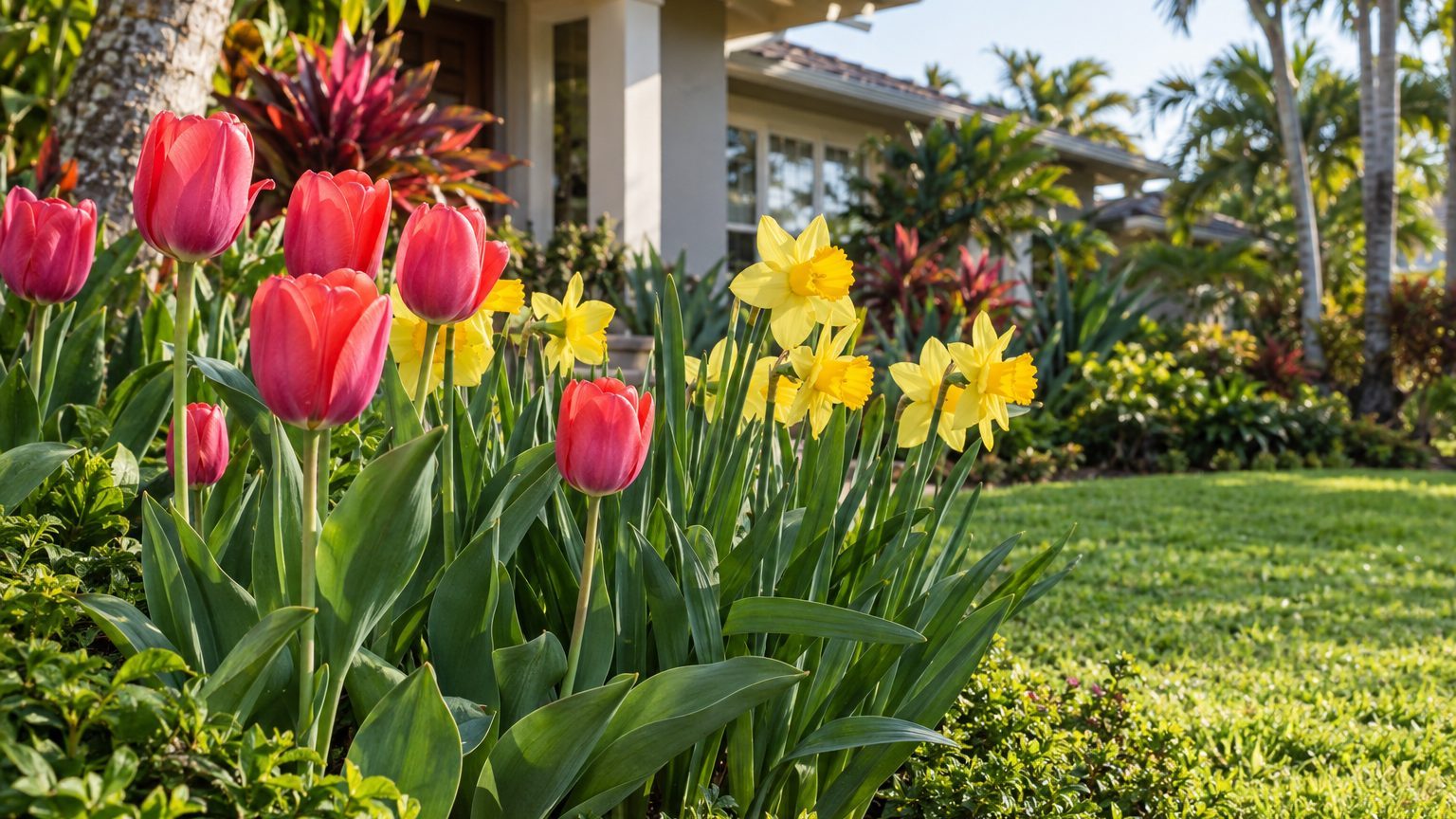
A paper bag of bulbs from the garden center promises daffodils and tulips, but Hawaii has no fall cold snap to wake them up. Lowland gardens here never see a freeze, so spring bulbs follow different rules than they do on the mainland. What matters is how much cold you can supply, and which bulbs can bloom without it.
When to Plant Tulips and Daffodils in Hawaii

Plant them in fall, once the soil has cooled, and give tulips and hyacinths a stint in the refrigerator first, because Hawaii’s winters are too mild to chill them for you. No freeze occurs where people live, so a frost date gives you nothing to count from, and the USDA hardiness zones across the islands run from 9a to 13a. A bulb’s year here looks like this:
- In early fall, buy firm, plump bulbs and check each one for soft spots or mold before it goes in your cart.
- Right after purchase, put tulips and hyacinths in the refrigerator, away from ripening fruit, since most spring bulbs need about 12 to 16 weeks of cold to flower.
- Once the soil has cooled below about 60°F (higher elevations get there first), plant the chilled bulbs so the roots can form before the shoots start.
- Right after planting, water the bed well and add a thin layer of mulch to hold moisture in dry spells and keep heavy rain from packing the surface.
- When green shoots break the surface, keep the soil lightly moist and let the leaves grow undisturbed.
Daffodils of the paper white type skip the refrigerator step entirely, but according to Iowa State University Extension, alliums need the cold of winter to bloom.
Hawaii — the year and the numbers
- State
- Hawaii
- USDA zones
- 9a-13a
- Frost
- none in an average year
- Annual rain
- 16 in
- Lawn zone
- warm-season
- Source
- NOAA NCEI 1991-2020 Climate Normals: not-computable flag for every freeze percentile at 32F and 36F, zero days per year at or below 32F, station USW00022521 — https://www.ncei.noaa.gov/access/services/data/v1?dataset=normals-annualseasonal&stations=USW00022521 · Honolulu
Which Spring Bulbs Do Best in Hawaii?
Bulbs that need a long cold rest struggle here. Tulips need a period of cool dormancy that Hawaii’s winters rarely supply, so they only flower well after a refrigerator chill, and even then they tend to be short-lived.
Bulbs that bloom without chilling are the dependable choice. Paper white narcissi and alliums head the list, and the true daffodil is less certain in warm winters.
| Bulb type | How it does in Hawaii | Why |
|---|---|---|
| Tulips | Struggle, short-lived | Winters are too warm for the cool dormancy they need |
| True daffodils | Little success expected | They want more winter cold than the islands give |
| Paper white narcissi (polyanthus type) | Do well | They bloom without a chill period |
| Hyacinths | Possible with refrigerator chilling | They need cold before planting where winters are mild |
| Alliums | Reliable | They need the cold of winter to bloom |
Other polyanthus narcissi, such as Grand soleil d’or, also have a good track record in warm-winter gardens, as do Chinese sacred lily and Pearl White lily. Crocus is better left to cooler climates, since like most spring bulbs it wants real winter cold.
When to Plant, Chill and Care for Spring Bulbs in Hawaii
Because no month is a safe marker in a frost-free climate, the timing signs below rely on the soil and the plant. The refrigerator does the work of winter, and you set the schedule.
| Task | Best timing in Hawaii | Why then |
|---|---|---|
| Plant | In fall, once the soil has cooled below about 60°F | Roots form first, and the bulbs do not sprout too early |
| Chill tulips and hyacinths | In the refrigerator, right after buying and before planting | Warm winters cannot give the cold they need to flower |
| Skip chilling | For paper whites, plant straight from the bag; for alliums, plant in fall for winter chill. | Alliums need the cold of winter to bloom |
| Leave the foliage | For as long as the leaves are green | The leaves feed the bulb for next year |
| Remove faded flowers | After bloom, taking only the spent flowers | The plant keeps its energy for the bulb, not for seed |
Leaves come off only after they have turned brown. Cutting or tying them while green starves the bulb, and the next year’s flowers will show it.
How Bulb Planting Time Changes Across Hawaii
Rainfall, elevation and exposure to the trade winds shape how a bulb bed behaves from island to island, and they matter more than any date.
- Windward coasts: Frequent rain keeps the soil wet, so raised beds or well-drained soil protect bulbs from rot. Bulbs here rarely need extra watering.
- Leeward coasts: Drier ground means regular watering after planting. Mulch helps hold the moisture bulbs need while they root.
- Higher slopes: Cooler air at elevation gives bulbs a better chance of the chill they want, and soil cools below the planting threshold sooner than at the shore. Frost itself is limited to the high volcanic summits of Mauna Kea, Mauna Loa and Haleakala, far above any garden.
Fall planting works the same way everywhere, but higher gardens can start sooner and lowland gardens should wait for the soil to cool.
Where to Get Bulb Advice in Hawaii
Hawaii’s climate varies from one valley to the next, and what thrives in one yard may fail a few miles away. A local expert can tell you how bulbs behave in your conditions and test your soil.
- The University of Hawaii Extension offers guides on growing bulbs and flowers in island conditions, so check there before you shop.
- Your county extension office can look at a sick plant or arrange a soil test, ideally before you plant.
Common Questions
Will Tulips Come Back Year After Year in Hawaii?
Rarely. Tulips are often short-lived in the garden even where winters suit them, and warm winters make that worse. Treat them as a seasonal planting and start with fresh, chilled bulbs.
Is It Too Late to Plant Bulbs That Have Been Sitting in the Bag?
No. A bulb still in the bag does better planted late than stored, so put it in the ground as soon as you can. Chill tulips and hyacinths first.
Will Animals Eat Daffodil Bulbs?
Daffodils are left alone. Voles, squirrels, rabbits and deer go after tulips and crocus, so daffodils and alliums are a safer choice if wildlife visits your yard.