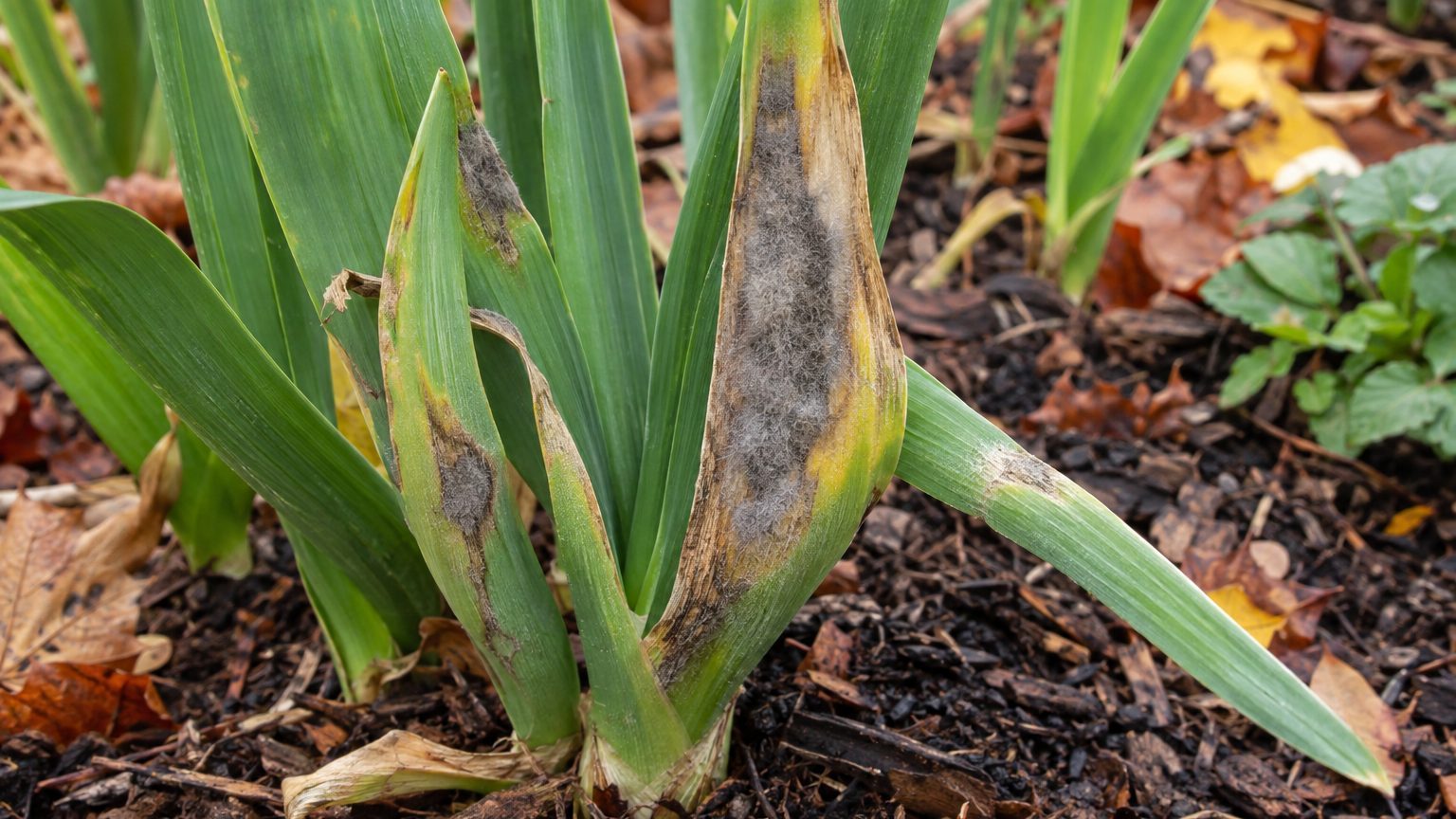
Gray, fuzzy patches on fading tulip petals or on the leaves of spring bulbs usually mean Botrytis has moved in, especially after a stretch of cool, wet weather. The fungus lives on dead and weak plant tissue first, then spreads to healthy parts. Knowing what it looks like and where it hides helps you act before the disease spreads.
Gray Mold: What You See

The disease looks different on each plant part, and its gray, fuzzy coating is a useful clue.
- A gray, fuzzy coating covers aging flower blossoms, and under moist, humid conditions a thin grayish webbing of mycelium may be visible.
- Infection usually begins as brown to gray circular spots that turn fuzzy once the fungus produces gray masses of spores.
- On tulips, large light tan patches and malformations appear on the leaves, often sunken, yellow to light tan, and ringed by a water-soaked area.
- Petal spots look white on colored petals and brown on white petals.
- Bulbs and corms can rot after infection, and in garlic a gray, fuzzy mold develops between the scales.
Touch an infected plant and a cloud of spores may puff out, so handle affected tissue gently.
From the almanac
Bulbs in your state
The dates on this page depend on where you live. Your state's page carries its frost dates, its USDA zones and the year laid out month by month.
Northeast
Southeast
- Alabama
- Arkansas
- Delaware
- Florida
- Georgia
- Kentucky
- Louisiana
- Maryland
- Mississippi
- North Carolina
- South Carolina
- Tennessee
- Virginia
- West Virginia
Midwest
Southwest
West
Pacific Northwest
Canada
Gray Mold or Something Else?
Several problems leave spots or soft tissue on bulb plants. The difference usually lies in the surface of the spot and where on the plant it sits.
Gray mold also goes by another name on tulips, which sometimes causes confusion about whether two diseases are at work.
| Looks like | How to tell them apart |
|---|---|
| Tulip fire | Spots on tulip leaves and flowers, often with dark borders that look like a burn, and sunken tan patches ringed by water-soaked tissue. This is the same Botrytis disease, so gray fuzz appears in damp, overcast weather. |
| Gray mold on garlic | Water-soaked, yellowing tissue at the neck around harvest, then gray fuzzy mold between the scales and small black structures near the neck. |
In Illinois, the disease commonly follows frost or hail injury, so a damaged plant is a likely entry point.
What Causes Gray Mold, and Where It Is Worst
The cause is a fungus, Botrytis cinerea, along with its many strains. It feeds on dead or declining tissue such as fading petals, old leaves and plant debris, then becomes more aggressive and invades healthy parts, causing brown lesions and decay.
Moisture drives infection: the wetter the plant, the more likely gray mold shows up. In Washington, cool and damp spring or summer conditions favor the disease. Poor airflow adds to its survival and growth, so crowded plantings, excessive weeds and badly chosen spots all help it along.
In Illinois, losses can be heavy during cool, wet spring weather. In Illinois, uncontrolled tulip fire can cause an almost complete loss of flowers and greatly reduce bulb yields. Misty weather or rapidly rising humidity can also trigger spore release.
How to Treat Gray Mold
Treatment starts with removing the fungus’s food supply and helping the planting dry out.
- Pick off diseased leaves and petals while they are dry, so that you do not spread spores on wet tissue.
- Bag the debris and remove it from the garden, because the fungus can overwinter in plant debris.
- Leave healthy green leaves in place until they turn yellow, since they feed the bulb for next year.
- Thin crowded plants and pull weeds around them, so that air can move and the foliage dries faster.
- Dig tulips that look crowded and check the bulbs, discarding any that are soft or rotting.
Avoid working among the plants when they are wet, and handle infected tissue gently to keep spore clouds down.
How to Prevent Gray Mold Coming Back
Prevention starts with dry cleanup and better airflow around the plants.
- Clear old debris and weeds from the bed so air can move freely around the plants.
- During bloom, remove fading flowers and petals once they dry, since the fungus colonizes dead tissue first.
- Clean away diseased leaves and petals once they are dry, because the fungus can overwinter on plant debris.
- Dig tulips when they appear crowded, especially where disease has been a problem, and replant them with room between bulbs.
- Plant bulbs with more space than the egg-carton look, since close planting makes tulips susceptible to tulip fire over time when treated as perennials.
Choose a spot with open air movement, since sheltered, stagnant corners stay damp longer.
Where This Comes From
Gray mold begins on dead or declining tissue and can then invade healthy plant parts.
Common Questions
Can Gray Mold Spread from Tulips to Other Plants?
Botrytis fungi cause disease on many different host plants, and spores can drift when infected plants are disturbed. Keeping diseased debris out of the garden limits the spread.
Is Gray Mold the Same as Tulip Fire?
On tulips the disease is usually called tulip fire because of the burn-like spots on leaves and flowers. It is caused by the same Botrytis fungus.
Can an Infected Bulb Be Saved?
Bulbs and corms can rot once infected, so soft or decayed ones are best discarded. Firm, healthy bulbs can be replanted with more space around them.