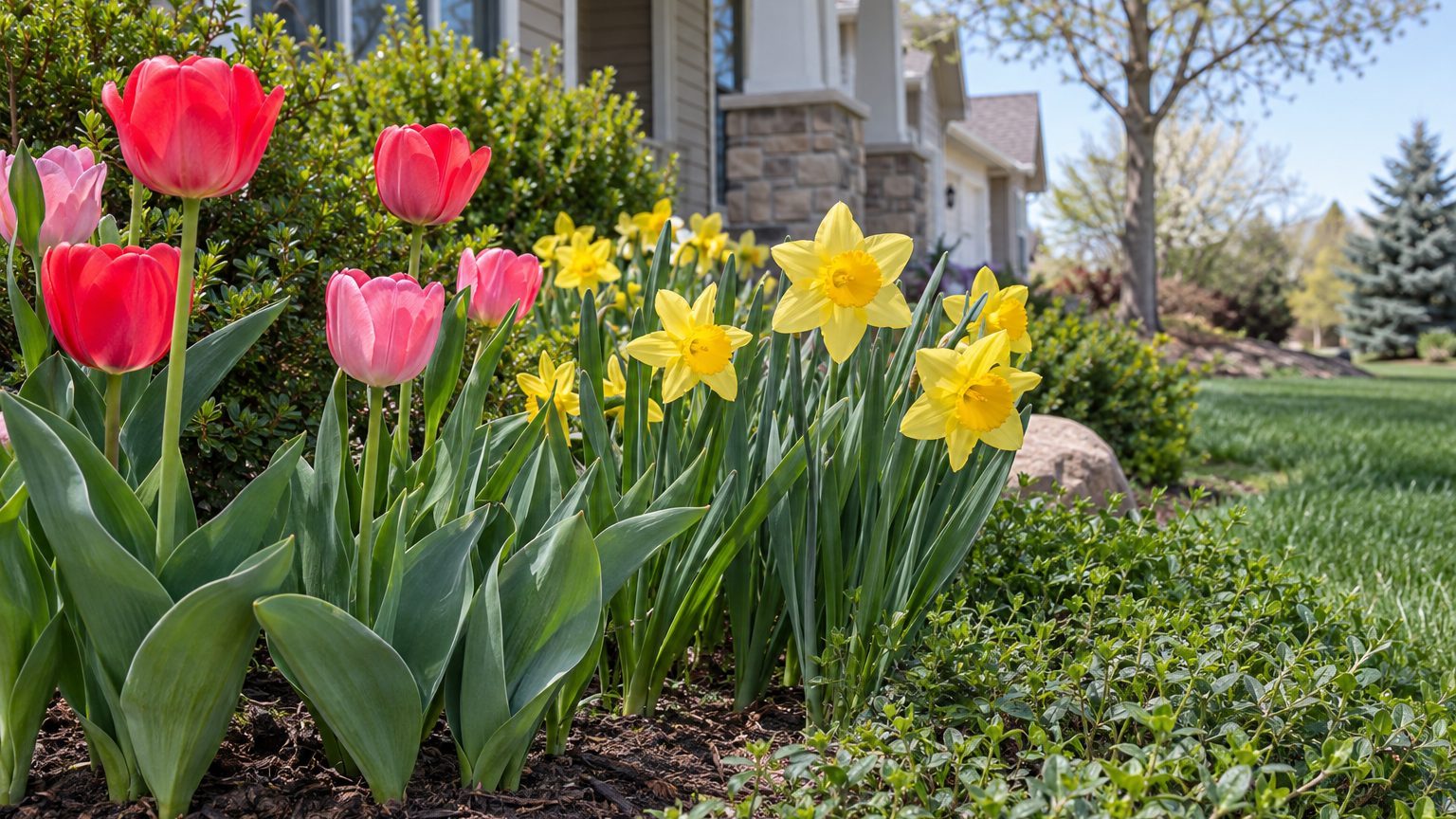
Spring color in a Colorado yard begins with a trowel and a bag of bulbs the autumn before. Tulips and daffodils go in the ground once the soil cools, and winter does the rest. The timing varies from the Front Range plains to the high country, so the details of when and where matter.
When to Plant Tulips and Daffodils in Colorado

Plant tulips and daffodils in September and October, which gives the bulbs time to root before the ground freezes. A bulb’s year in a Colorado yard runs roughly like this.
- In late summer, shop while the selection is wide, and choose bulbs that feel firm and heavy for their size.
- In September, begin planting once the soil has cooled below about 60°F, which is early enough for roots to form and late enough that the bulbs do not send up leaves in fall.
- Through October, keep planting. Around Denver, the first fall frost arrives between September 30 and October 12, and bulbs already in the ground are busy rooting below it.
- In late fall, once the ground starts to freeze, spread a layer of mulch to keep the soil evenly cold through winter thaws.
- In early spring, the first green shoots break the surface, and the leaves should be left alone from that point on.
These months fit the Front Range plains around Denver. Across the whole state, USDA hardiness zones run from 3b to 7b, so a garden at high elevation plays by somewhat different rules.
Colorado — the year and the numbers
- State
- Colorado
- USDA zones
- 3b-7b
- Last spring frost
- May 1 to May 11
- First fall frost
- September 30 to October 12
- Annual rain
- 15 in
- Lawn zone
- transition-season
- Source
- NOAA NCEI 1991-2020 Climate Normals, 32F freeze probabilities · Denver
Which Spring Bulbs Do Best in Colorado?
Daffodils, tulips, crocus, hyacinths and alliums all grow here, because Colorado winters supply the cold they need. The real difference between them is what happens after planting: some are left alone by wildlife, and some are treated as a snack.
Daffodils, also called narcissus, offer a wide variety of height, color, flower type and blooming period, which makes them an easy place to start.
| Bulb type | How it does in Colorado | Why |
|---|---|---|
| Daffodils | Dependable and long lived | Voles, squirrels, rabbits and deer leave them alone |
| Tulips | Lovely but often short-lived | Voles, squirrels, rabbits and deer eat them |
| Crocus | Pretty, but at risk where animals roam | Voles, squirrels, rabbits and deer eat them too |
| Alliums | Easy and carefree | They need the cold of winter to bloom and flower at the end of the spring succession |
Hyacinths are planted on the same fall schedule as the rest and need the same winter cold. Where deer or squirrels visit often, plant daffodils in the open and keep tulips closer to the house, or accept that some will be eaten.
When to Plant, Chill and Care for Spring Bulbs in Colorado
The bulb year has only a few jobs, and each one has a clear moment. Planting follows the calendar, while the leaf care that comes later follows what the plant itself is doing.
| Task | Best timing in Colorado | Why then |
|---|---|---|
| Plant tulips, daffodils, crocus, hyacinths and alliums | September and October | Roots become well established before the ground freezes |
| Remove faded flowers | As soon as the petals fade | The plant stops spending energy on seed |
| Leave the leaves in place | As long as they are green, until they turn brown | They feed the bulb for next year’s flowers |
Chilling in the refrigerator before planting is not part of the routine here, since a Colorado winter provides the cold on its own. Only the spent flowers come off after bloom. The foliage stays and is left to fade naturally.
How Bulb Planting Time Changes Across Colorado
Elevation does most of the sorting in Colorado, and it sets the planting moment within the window rather than moving the window itself.
- Denver and the Front Range plains: At about 5,280 feet, September and October fit the plains well. Wait for the soil to cool before planting, and then finish before the ground hardens.
- Mountain towns such as Breckenridge and Leadville: Seasons are much shorter and frost can show up even in July, so the soil cools sooner. Plant toward the early part of the window so roots have time to settle.
- Grand Junction and the Western Slope: Conditions differ again from the plains, and the local pattern of soil temperature matters more than a date on a calendar.
If the soil still feels warm in September, hold off a little rather than rushing, wherever you garden.
Where to Get Bulb Advice in Colorado
Bulb problems usually trace back to soil, drainage or timing, and local experts can sort out which one. Colorado State University Extension publishes guidance for fall-planted bulbs and corms, and the county office reaches your particular yard.
- The university’s extension pages cover planting depth, bulb choices and common problems, and they are worth reading before the September shopping trip.
- Your county extension office can help diagnose a bulb that failed to come up and can explain how to have your soil tested before planting.
Common Questions
Do Tulips Come Back Every Year in Colorado?
Often they fade after a season or two, so many gardeners replant them regularly. Daffodils last longer and are the more reliable perennial bulb.
Do You Need to Chill Tulips in the Refrigerator in Colorado?
Most spring-flowering bulbs need about 12 to 16 weeks of cold to flower. Where winters are too mild to give it, tulips and hyacinths are chilled in the refrigerator first. A Colorado winter gives the bulbs that cold, so fall planting in the ground is enough.
What If Bulbs Are Still in the Bag After October?
Plant them anyway. A bulb in the ground late has a better chance than one stored over the winter, so keep planting as long as the soil can be dug.