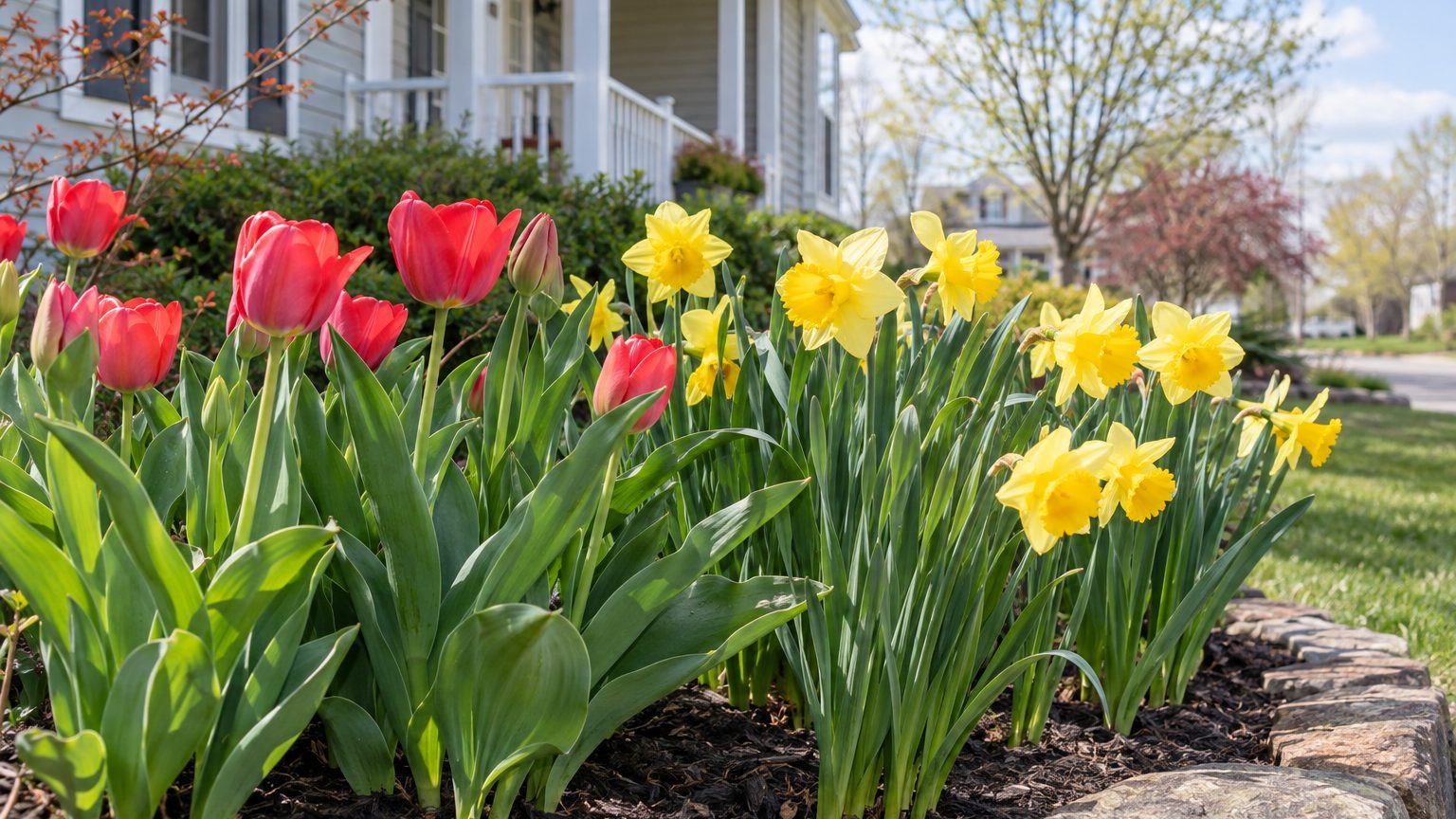
Tulip and daffodil bulbs go into New Brunswick soil in the fall, and the garden does its quiet work under snow until spring. Planting happens in a fairly narrow stretch of autumn, before the ground locks up.
When to Plant Tulips and Daffodils in New Brunswick

Plant tulips and daffodils in October, with November and December as a fallback when the ground is still workable. Here is how a bulb’s year unfolds.
- In early fall, buy bulbs while the selection is good and keep them somewhere cool and dry until the soil is ready.
- As October begins, wait for the soil to cool below about 16°C (60°F), which is early enough for roots to form before the ground freezes and late enough that the bulbs do not sprout in the fall.
- Through October, set the bulbs in the ground, pointed end up, and water them in so roots start growing.
- In November or December, plant any bulbs still in the bag as long as you can dig, since a bulb in the ground does far better than one left waiting.
- Once the ground has begun to freeze, spread a layer of mulch over the bed to even out thaws and freezes through the winter.
- When spring comes, green shoots push through the mulch ahead of blooms that open in April and May.
At Moncton, in Canadian hardiness zone 5a, the first fall frost arrives on average around October 2, and in one year out of two it comes later. Treat that as the middle of a window rather than a deadline. Dates here follow the nearest comparable climate, so confirm local timing with a garden centre, a garden society or a provincial gardening group.
New Brunswick — the year and the numbers
- State
- New Brunswick
- Hardiness zones
- 5a
- Last spring frost
- May 23
- First fall frost
- October 2
- Annual rain
- 47 in
- Lawn zone
- cool-season
- Source
- Environment and Climate Change Canada — Canadian Climate Normals 1981-2010, station MONCTON · Moncton
Which Spring Bulbs Do Best in New Brunswick?
Daffodils are the dependable choice here. They come back for years, naturalize well, and animals leave them alone. Tulips grow and flower, but they tend to be short-lived and squirrels, voles, rabbits and deer find them appealing.
Winters in the province supply the cold that spring bulbs need to flower. The real question is how much of the bed survives the critters.
| Bulb type | How it does in New Brunswick | Why |
|---|---|---|
| Daffodils | Reliable year after year, and they spread over time | Animals leave them alone, and they naturalize well, especially in partly shady spots |
| Tulips | Lovely the first spring, often fading after a few years | Tulips are often short-lived, and voles, squirrels, rabbits and deer eat them |
| Crocus | Worth planting, but expect some losses | Animals dig up and eat crocus bulbs, much as they do with tulips |
Hyacinths and alliums also suit the province. Both go in the ground in October like the others, and alliums extend the season of color to the end. A handful of daffodils tucked between tulips can discourage browsing, since deer tend to avoid them.
When to Plant, Chill and Care for Spring Bulbs in New Brunswick
The bulb year here is simple. Most of the work happens in a few weeks of autumn, and after that the bulbs need very little. Chilling in the refrigerator is a gardening step for mild-winter regions, so New Brunswick gardeners can skip it.
| Task | Best timing in New Brunswick | Why then |
|---|---|---|
| Plant tulips and daffodils | October, or November and December if the ground is not frozen | Roots form before the ground freezes, so the bulb is anchored for winter |
| Watch for bloom | April and May, with the earliest hardy bulbs opening from March | Bulbs flower when the soil has warmed and the winter cold has done its work |
| Leave the foliage | As long as the leaves are green, until they turn brown | The leaves feed the bulb and set up next year’s flowers |
After the bloom, take off only the faded flowers and let the leaves wither on their own. Tying or cutting green foliage robs the bulb of the food it needs for next spring. Bloom time and aftercare have their own page, so there is no need to go further here.
How Bulb Planting Time Changes Across New Brunswick
The province covers a lot of ground, from sheltered river valleys to wind-swept coast, and the soil cools and freezes at different speeds. Plant within the same October window everywhere, but adjust where you sit in it.
- Moncton and the southeast: Planting follows the schedule above, with October the target and November a fallback when the ground is still soft.
- Bay of Fundy coast: Water moderates the shoreline, so the ground tends to stay open longer, which gives you more room for late planting.
- Saint John River Valley: The valley soil is often warmer in spring and fall than the surrounding upland, so planting at the usual time works well here.
- Northern New Brunswick and upland districts: Cold arrives sooner and winter lingers, so plant at the start of the October window rather than waiting for November.
If your yard is on a high or exposed spot, plant a little earlier than neighbors in a sheltered lowland.
Where to Get Bulb Advice in New Brunswick
Canada has no county extension offices, so advice comes from other sources. These are good starting points for a diagnosis or a soil test.
- The provincial agriculture department can point you to soil testing services and local horticulture resources, and a visit before planting season gives the results time to come back.
- Agriculture and Agri-Food Canada publishes federal guidance on soils and growing, which is helpful when a bed has been struggling for years.
- A local garden centre or garden society can tell you how the soil is behaving in your town, so stop by in early fall and ask before you buy bulbs.
Common Questions
Do You Need to Chill Bulbs in the Refrigerator in New Brunswick?
No. Most spring-flowering bulbs need about 12 to 16 weeks of cold to flower, and New Brunswick winters provide it once the bulbs are in the ground. According to Iowa State University Extension, alliums need the cold of winter to bloom.
Why Do Tulips Fade After a Few Years?
Tulips are often short-lived in the garden, so a bed that thinned out is behaving normally. If bulbs are also missing from the soil or the beds show digging, voles and squirrels are the likelier cause. Daffodils are the better choice for a permanent planting.
Can Daffodils Grow in Partial Shade?
Yes. Daffodils naturalize well in partly shady areas, such as the edge of a tree canopy or a north-facing bed. Plant them in October like any other spring bulb and leave them to spread.