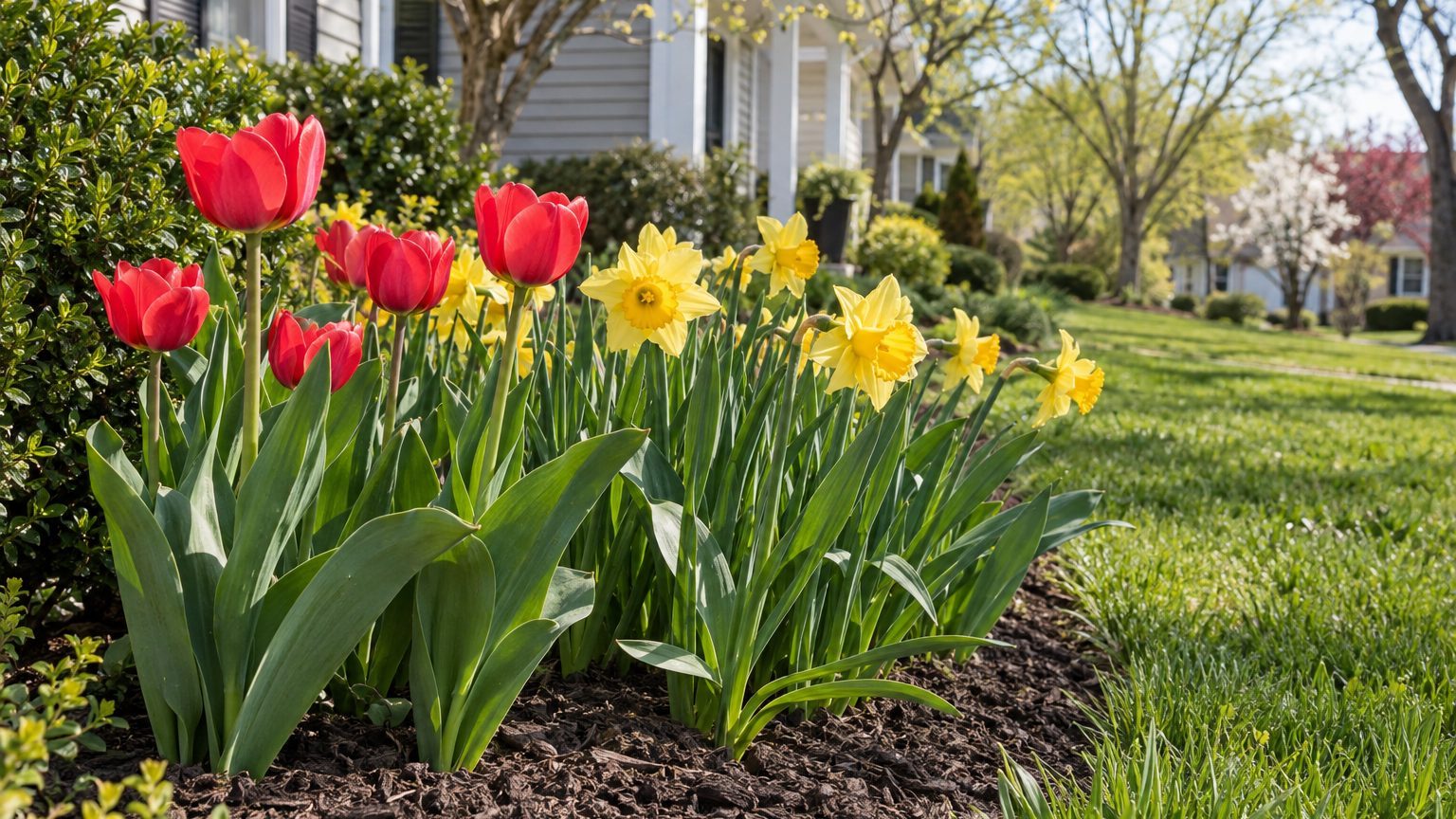
A bag of tulip bulbs looks lifeless in the garage, yet by spring those papery lumps become the first real color in an Indiana yard. Getting them there is a matter of timing, because the bulbs need roots in the ground before winter and a long stretch of cold to set their flowers. For Indiana gardeners, the job comes down to when to plant tulips and daffodils and which bulbs the squirrels and deer will leave alone.
When to Plant Tulips and Daffodils in Indiana

Plant tulips and daffodils in Indiana in September and October, and keep going into November, or even December, as long as the ground can still be dug. The bulb’s year in an Indiana yard runs like this.
- In September, buy bulbs while the selection is full, choosing ones that feel firm and heavy for their size. Bulbs bought early can wait in a cool, dry spot until the soil is ready for them.
- From late September through October, plant once the soil has turned noticeably cool. That timing lets roots form before the ground freezes, without tempting the bulbs to sprout in fall.
- In late fall, once the bulbs are in the ground, spread a layer of mulch over the bed. It softens the swings between thaw and freeze that can heave shallow bulbs upward.
- Through winter, the cold itself does the chilling. Indiana winters are cold enough that tulips and hyacinths go straight into the soil, with no refrigerator step first.
- In March or early April, the first green shoots push up through the mulch. Flowers follow as the days warm.
The first fall frost typically arrives between October 21 and October 30 at Indianapolis, so bulbs planted in September and October still have time to root first. The state spans USDA hardiness zones 5b to 7a, and southern counties run later into fall than the north.
Indiana — the year and the numbers
- State
- Indiana
- USDA zones
- 5b-7a
- Last spring frost
- April 9 to April 21
- First fall frost
- October 21 to October 30
- Annual rain
- 44 in
- Lawn zone
- cool-season
- Source
- NOAA NCEI 1991-2020 Climate Normals, 32F freeze probabilities · Indianapolis
Which Spring Bulbs Do Best in Indiana?
Daffodils and alliums are the easiest to succeed with here. Indiana gives tulips, hyacinths and crocus the winter cold they need, but tulips and crocus are the bulbs that voles, squirrels, rabbits and deer go after. Daffodils are left alone.
Soil matters less than drainage. Bulbs sitting in a wet spot over winter tend to rot, so a slightly raised bed or a sloping border serves them well.
| Bulb type | How it does in Indiana | Why |
|---|---|---|
| Daffodils | Dependable, and left alone by wildlife | Voles, squirrels, rabbits and deer pass them by |
| Tulips | Lovely, but short-lived and often eaten | Wildlife targets them, and they tend to fade after a few seasons |
| Crocus | Good color, but a favorite of hungry animals | Voles, squirrels, rabbits and deer eat them |
| Alliums | Reliable, and they flower at the end of the bulb season | They need winter cold to bloom |
Hyacinths follow the same rule as tulips, needing winter cold to flower, which Indiana supplies. A practical mix for a yard with plenty of wildlife is daffodils and alliums as the backbone, with tulips tucked into spots close to the house where you can enjoy them and protect them.
When to Plant, Chill and Care for Spring Bulbs in Indiana
A bulb that is still in the bag is better planted late than stored over the winter. In Indiana that means planting as long as the ground can be dug, even if the calendar has moved past the usual window.
| Task | Best timing in Indiana | Why then |
|---|---|---|
| Plant | September to October, and in November or December if the ground is still unfrozen | Roots settle before the ground locks up for winter |
| Chill | Outdoors through winter, with no refrigerator step | Most spring bulbs need about 12 to 16 weeks of cold to flower |
| Leave the foliage | After bloom, for as long as the leaves are green | The leaves feed the bulb for next year’s flowers |
Remove only the faded flowers and leave the leaves in place until they turn brown. Tulip and daffodil foliage looks untidy once the show is over, but cutting or tying it down while green starves the bulb. Planting perennials or annuals nearby is a good way to hide the fading leaves.
How Bulb Planting Time Changes Across Indiana
Indiana is long enough from north to south that the soil cools at different speeds, which shifts where you land inside the planting window.
- Northern Indiana: Soil cools earlier here, so aim for the front part of the window, late September and the first part of October, so roots have time to settle before the ground hardens.
- Central Indiana around Indianapolis: This is the middle of the road. September and October planting works well, and the cooling soil is the signal to start.
- Southern Indiana: Fall arrives later and the soil stays warm longer, so waiting until later in October, or even into November, keeps bulbs from sprouting too early.
Wherever you garden, the soil’s temperature is a better guide than the date on the calendar.
Where to Get Bulb Advice in Indiana
When a bed disappoints or a bag of bulbs raises questions, Purdue Extension is the state’s source of gardening help, and every county has an office with local staff.
- The county extension office can test your soil and help diagnose a bed where bulbs rotted or failed to bloom, so go before you replant.
- Purdue’s yard and garden resources cover bulb planting in detail, and they are worth a read before you shop.
- Any bulb still sitting unplanted can go in the ground as soon as the soil can be dug, so get the trowel out today.
Common Questions
Do Tulips Come Back Every Year in Indiana?
Sometimes, but tulips are often short-lived in the garden. Many gardeners treat them as a few-season planting and replace them as the display thins. Daffodils last longer and are the more reliable perennial bulb, so they make a better long-term investment.
Can You Plant a Forced Daffodil Outdoors in Indiana?
Yes. Daffodils are the exception among forced bulbs, and a potted daffodil that finished blooming indoors can usually be saved and planted outside. Put it in the ground once the ground can be dug. Forced tulips are far less likely to return.
How Do You Keep Squirrels and Deer from Eating Tulips in Indiana?
Daffodils are left alone, so planting them around the edges of a tulip bed gives some cover. A cover of wire mesh pinned over the planting area after you finish also keeps squirrels from digging. Planting tulips close to the house, where animals are warier, helps too.