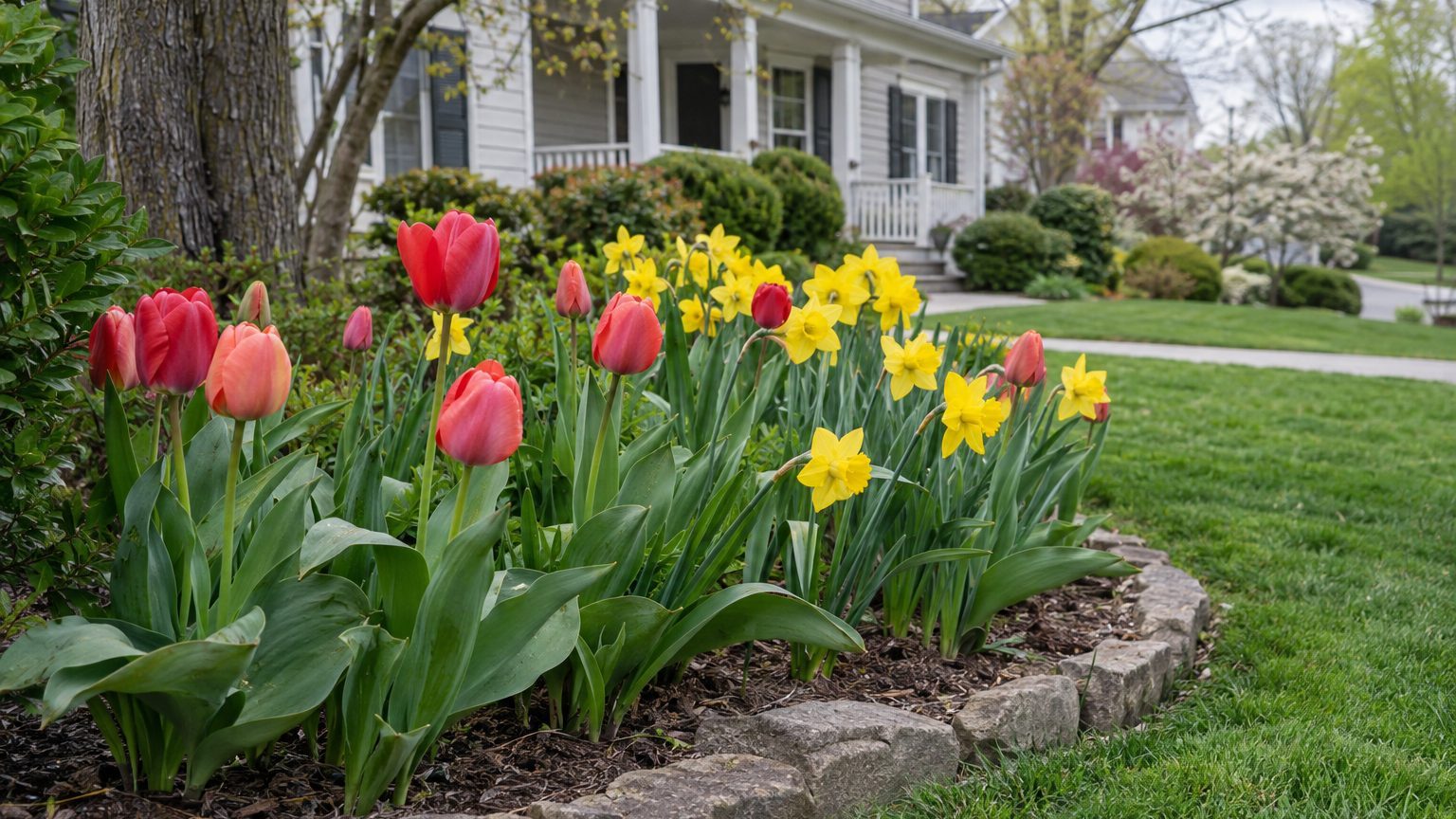
Green tulip and daffodil shoots pushing through the leaf litter are the payoff for work done months earlier, when the soil was cooling and the garden looked finished. Connecticut gardeners have a clear window for that work. Here is when spring bulbs go in the ground, which ones hold up in Connecticut yards, and how the timing shifts from the shoreline to the hills.
When to Plant Tulips and Daffodils in Connecticut

October is the month to plant tulips and daffodils in Connecticut, and November and December still work if the ground can be dug. A bulb’s year here moves through distinct stages, from planting to dormancy.
- In early fall, buy bulbs while the selection is full, and pick ones that feel firm and heavy for their size. Keep them somewhere cool and dry until planting day.
- Through the fall, no refrigerator step is needed for tulips or hyacinths, because Connecticut winters deliver the cold the bulbs need to flower.
- In October, plant once the soil has cooled below about 60°F, which is when the bulbs can settle in without waking up.
- In late November and December, finish any leftover bulbs if the ground has not frozen, since a late planting still beats an unplanted bulb.
- In late fall, after the planting, spread a layer of shredded leaves over the bed. In March the earliest hardy bulbs start to show, and tulips and daffodils then bloom in April and May.
At Bridgeport, on the Long Island Sound shore, the first fall frost arrives between October 28 and November 10. Connecticut spans USDA hardiness zones 6a to 7b, and inland towns run colder than the shore.
Connecticut — the year and the numbers
- State
- Connecticut
- USDA zones
- 6a-7b
- Last spring frost
- April 2 to April 12
- First fall frost
- October 28 to November 10
- Annual rain
- 44 in
- Lawn zone
- cool-season
- Source
- NOAA NCEI 1991-2020 Climate Normals, 32F freeze probabilities · Bridgeport
Which Spring Bulbs Do Best in Connecticut?
Daffodils, tulips, crocus, hyacinths and alliums can all grow here, because winters give them plenty of cold. The real difference comes from wildlife and from how long each bulb lasts in the ground.
Voles, squirrels, rabbits and deer all go after tulips and crocus. Daffodils get left alone, which makes them the safer pick for a yard that sees deer.
| Bulb type | How it does in Connecticut | Why |
|---|---|---|
| Daffodils | Reliable, lasting for years | Longer-lived than tulips, and animals leave them alone |
| Tulips | Beautiful but often short-lived | Voles, squirrels, rabbits and deer eat them |
| Crocus | Grows well, but often eaten | Voles, squirrels and rabbits go after the bulbs |
| Alliums | Easy, and they close out the season | They need winter cold to bloom |
Hyacinths go in at the same time and in the same way as tulips, with no refrigerator chilling needed here. Because bulbs bloom in a long succession, a mix of types keeps the beds in color from the first snowdrops to the last alliums.
When to Plant, Chill and Care for Spring Bulbs in Connecticut
The calendar for bulbs is short. One planting window in the fall and one stretch of patience after bloom cover nearly everything.
Chilling at home is not part of the routine in this state, since the soil does that job through winter. What matters is the timing of planting and what you leave alone after the flowers fade.
| Task | Best timing in Connecticut | Why then |
|---|---|---|
| Plant tulips, daffodils, crocus, hyacinths and alliums | October | Roots form before the ground freezes |
| Plant bulbs that are left over | November or December, while the ground can be dug | A late bulb in the ground does better than one in storage |
| Remove faded flowers | Soon after the petals drop | The plant stops spending energy on seed |
| Leave the leaves in place | As long as they are green, until they turn brown | The leaves feed the bulb for next year’s bloom |
Resist the urge to braid, tie or cut the foliage while it is green. Tuck annuals or perennials in around the fading leaves, so the yellowing blades hide behind new growth.
How Bulb Planting Time Changes Across Connecticut
Planting time slides a little depending on how close you are to the water and how high your land sits.
- Connecticut shoreline: The Long Island Sound coast is milder than the inland and northern parts of the state, so soil cools later and frost arrives later. Planting can run through October and the later fallback months without much worry.
- Inland Connecticut: Towns away from the water freeze earlier in fall, so aim for the front of the October window and do not let the planting drift.
- Litchfield Hills: The northwest corner of the state is colder than most other areas, with frost that comes noticeably earlier. Plant at the start of October, and keep the late-season fallback for emergencies only.
Wherever you live, the soil at the moment of planting is a better guide than the date on the calendar.
Where to Get Bulb Advice in Connecticut
Local help can sort out a bed that never performs or a pest that keeps taking bulbs. UConn Extension is the state’s source for garden questions.
- The UConn Extension website holds plant care guidance written for Connecticut yards, and it is worth a visit before ordering bulbs in late summer.
- Your county extension office can help diagnose a bed where bulbs fail, and it can point you to a soil test before fall planting.
Common Questions
Which Spring Bulbs Open First and Last in Connecticut?
Spring bulbs bloom in a long succession. Snowdrops and winter aconites start the season, and ornamental onions, the alliums, finish it.
What Happens If You Plant Bulbs Too Early?
Bulbs set into warm soil may sprout in the fall, and that soft top growth is what the winter cold then damages. Waiting until the soil drops below about 60°F keeps the bulbs asleep until spring.
Should You Store Leftover Bulbs Over the Winter?
No. A bulb still in the bag is better planted late than stored. Put it in the ground for as long as you can dig, and plant it in a spot with good drainage.