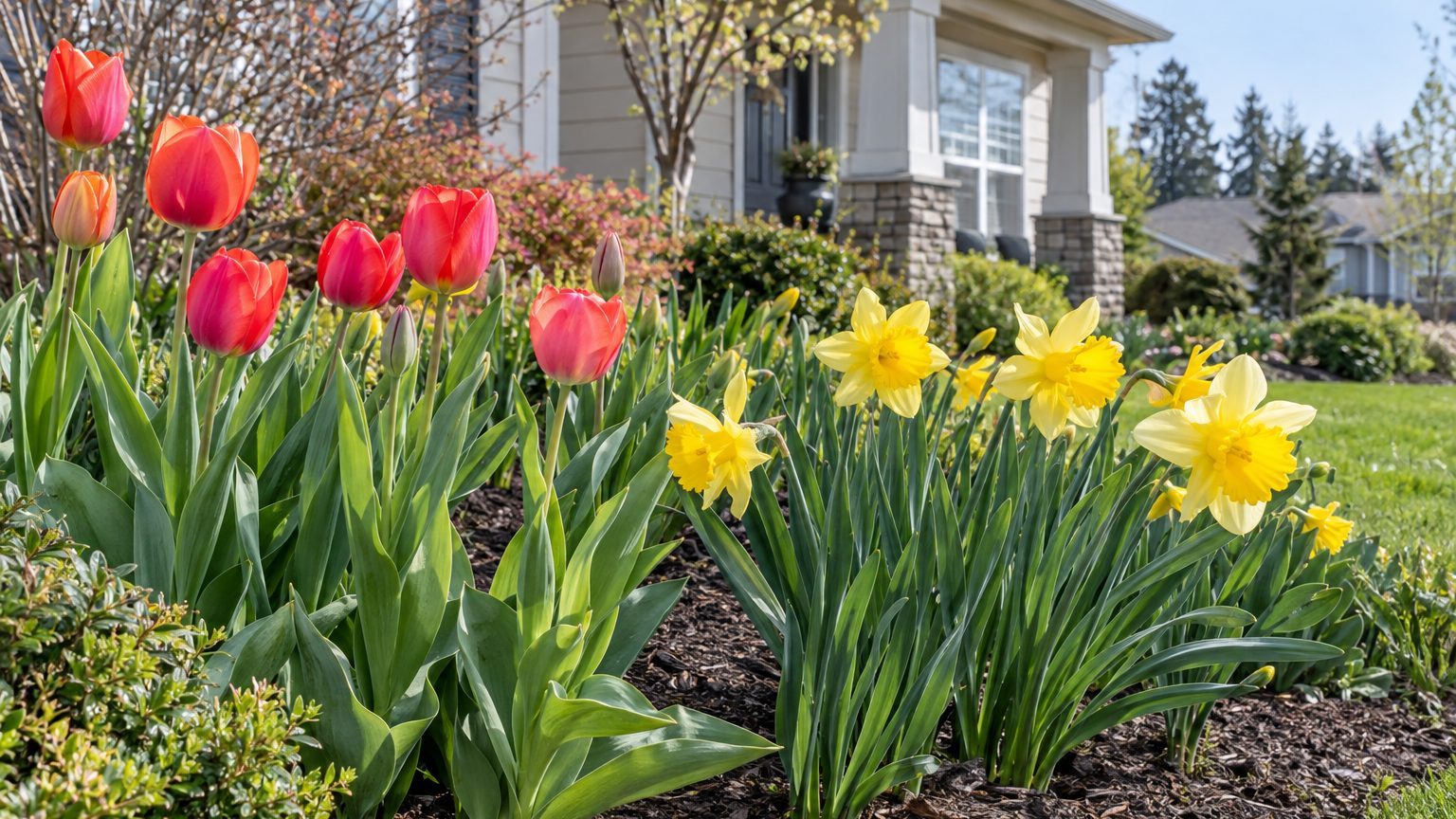
Spring bulbs go into cool autumn soil, and the flowers they send up in March are decided months earlier, while the garden looks finished. Gardeners in British Columbia plant them in the fall and wait for the payoff. Knowing which months suit your corner of the province, and which bulbs reward the effort, saves a lot of guessing.
When to Plant Tulips and Daffodils in British Columbia

Plant tulips and daffodils in October and November, with late September for colder interior gardens and December as a fallback while the soil can still be dug. A bulb’s autumn runs roughly like this:
- In September, shop for bulbs that feel firm and heavy, and keep them somewhere cool and dry until the soil is ready.
- In October and November, set the bulbs in the ground so their roots can form before winter settles in.
- Right after planting, spread a layer of mulch over the bed to hold moisture and keep the soil temperature steady through the wet months.
- In December, a bag of bulbs left over can still go in, as long as the soil is workable and not frozen hard.
- In March, the first green shoots push up, and hybrid tulips open from late March to early May.
At Vancouver, the first fall frost arrives around November 10 on average, so some years it comes sooner and some years later. The city sits in Canadian hardiness zone 9a, a rating built on several climate variables that does not match any USDA zone, so judge your own garden by its soil and local weather.
British Columbia — the year and the numbers
- State
- British Columbia
- Hardiness zones
- 9a
- Last spring frost
- March 18
- First fall frost
- November 10
- Annual rain
- 47 in
- Lawn zone
- transition-season
- Source
- Environment and Climate Change Canada — Canadian Climate Normals 1981-2010, station VANCOUVER INT'L A · Vancouver
Which Spring Bulbs Do Best in British Columbia?
Tulips, daffodils, crocus, hyacinths and alliums can all be grown here, and the real difference is what comes to eat them. Deer and rodents treat the bulbs very differently, so the right mix depends partly on who visits your yard after dark.
| Bulb type | How it does in British Columbia | Why |
|---|---|---|
| Hybrid tulips | Reliable color, though deer enjoy them | Darwin hybrids and Emperor tulips are bred to return for several years |
| Species tulips | Small, hardy and good for naturalizing | Less showy than big hybrids, but more likely to come back each year |
| Daffodils | Steady performers that deer leave alone | Daffodil sap holds needle-sharp crystals of calcium oxalate that burn the mouth |
| Crocus | Good where deer roam, less so where slugs thrive | Deer-resistant, though not slug-resistant |
According to Iowa State University Extension, alliums need the cold of winter to bloom, and they are an easy addition to a mixed bed. Hyacinths follow the same planting window as tulips. Squirrels, voles and rabbits also go after tulips and crocus, so a bed with daffodils woven through it gives you some insurance.
When to Plant, Chill and Care for Spring Bulbs in British Columbia
Most spring-flowering bulbs need about 12 to 16 weeks of cold to flower. Where a winter is too mild to deliver that, tulips and hyacinths are chilled in the refrigerator before they go into the ground.
| Task | Best timing in British Columbia | Why then |
|---|---|---|
| Plant bulbs | October and November, once the soil has cooled below about 60°F (roughly 15°C) | Roots form before the ground freezes, and the bulbs do not sprout in the fall |
| Plant late arrivals | September in the colder interior, or into mid-December while the soil is workable | Cold districts need the head start, while mild ones can wait |
| Chill tulips and hyacinths | Before planting, only where winters are too mild | The bulbs still need their cold period to flower |
| Leave the foliage | After bloom, while the leaves are green | The leaves feed the bulb for next year’s flowers |
After the petals fade, remove only the spent flowers and let the leaves stay until they turn brown. Do not tie or cut green leaves, however untidy the bed looks for now.
How Bulb Planting Time Changes Across British Columbia
British Columbia is not one climate, so the planting window slides depending on where the garden sits. Cold arrives sooner inland and farther north, and the planting date moves with it.
- Vancouver and the Lower Mainland: The main window of October and November fits here, and December planting works if the soil can still be dug.
- The Okanagan and the colder interior: Start in late September and carry on through October, so roots have time to settle before the ground freezes.
- The Cariboo and northern B.C.: Frost comes sooner than on the coast, so plant at the early end of the range and do not wait for November.
On any given property, a low spot that collects cold air will behave like a colder district, so plant those beds a little earlier.
Where to Get Bulb Advice in British Columbia
The timing here follows the nearest comparable climate, so confirm local dates with a nearby source. A few places give advice grounded in your neighbourhood.
- The Government of British Columbia agriculture and seafood pages are the provincial starting point for farm and plant questions, and they are worth a look before the planting season begins.
- A local garden centre or a garden society can tell you which week neighbours plant bulbs, so visit in late summer when the bulbs first arrive.
- Provincial gardening groups and master gardener clubs can help diagnose a failed bed or a soil question, and autumn is a good time to ask.
Common Questions
Will Tulips Come Back Every Year in British Columbia?
Often not. Tulips are short-lived in many gardens, while daffodils last longer and are the more dependable perennial bulb. Darwin hybrids and Emperor tulips return better than most, and species tulips are more likely to come back each year.
Do Alliums Need to Be Chilled Before Planting?
No. Alliums need the cold of winter to bloom, so they go into the ground in the fall, in the same window as tulips and daffodils.
Can You Plant Bulbs That Are Still in the Bag?
Yes. A bulb that is still in the bag does better planted late than stored over the winter, so plant it as long as the ground can be dug.