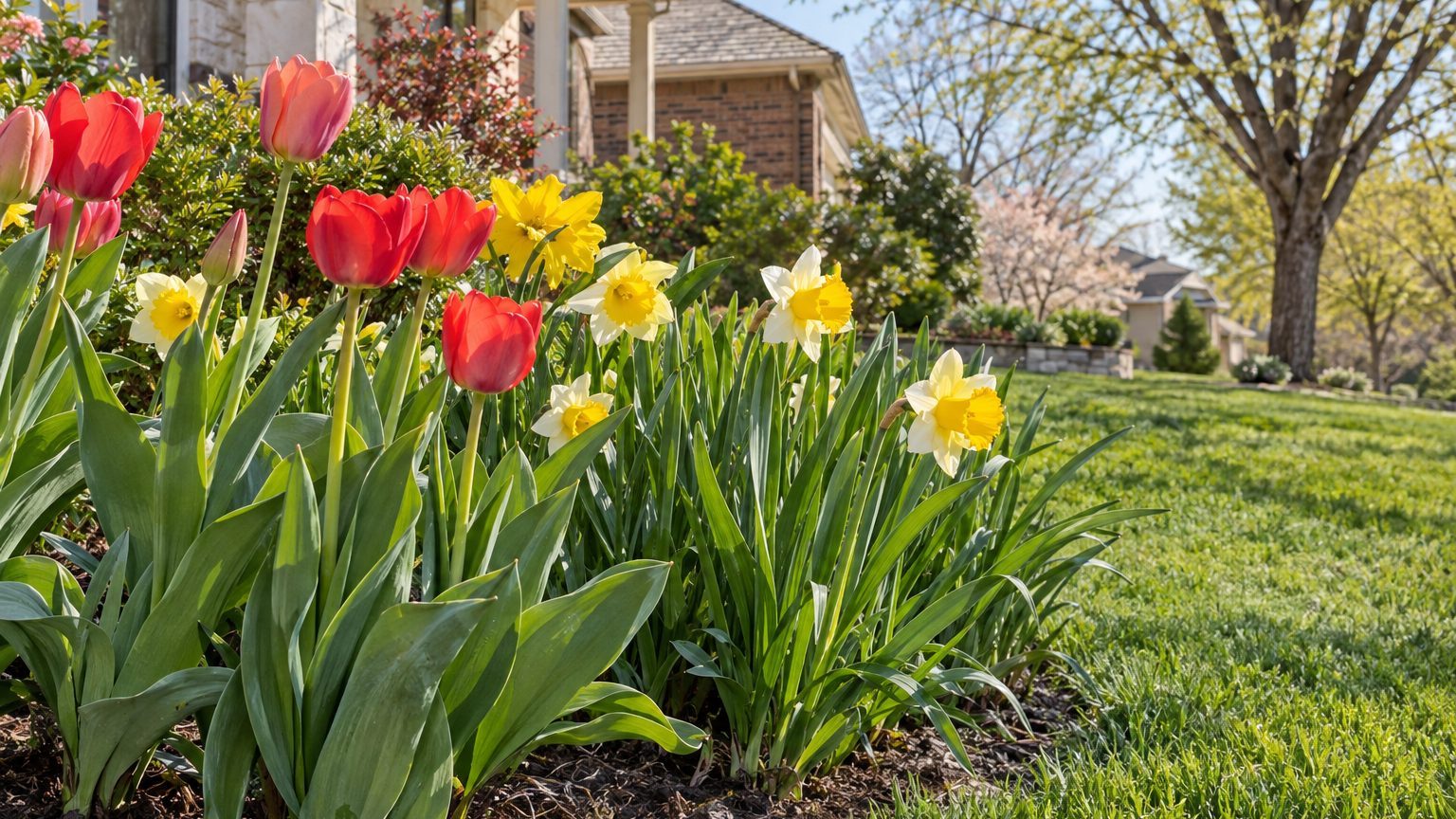
Daffodil shoots pushing through cold ground in late winter are the payoff for a small job done the autumn before. In Oklahoma, that job fits a fairly narrow stretch of the fall calendar. Tulips and daffodils share it, though they behave differently once the ground cools and the winter sets in.
When to Plant Tulips and Daffodils in Oklahoma

Plant tulips and daffodils in November, with October and December as workable fallbacks when your schedule slips. A bulb’s autumn runs through a few clear moments, and each one sets up the spring show.
- In early fall, buy bulbs while the selection is full, and pick firm ones with no soft spots or mold. Keep them somewhere cool and dry until planting day.
- In October, tulip and hyacinth bulbs that need a cold start go into the refrigerator if your winters run mild. Daffodils and alliums skip this step.
- In November, plant once the soil has cooled and daytime warmth no longer reaches the bed. The roots then have time to form before the ground turns hard, and the tops stay underground instead of sprouting in the fall.
- In December, you can still plant any bulbs that missed the November window, as long as the ground can be dug.
- After the soil has settled, spread a layer of mulch over the bed to even out the swings between warm days and hard freezes.
- From late winter into spring, the first green tips appear, and flowers follow from February through April.
In Oklahoma City, the first fall frost typically lands between October 29 and November 8. Gardens outside the city often get frost sooner, so check with your county office for your own area. Oklahoma sits across USDA hardiness zones 6a to 8a, which is why a Panhandle bed and a southern Oklahoma bed do not run on the same clock. No local bulb-timing page exists for the state, so these months follow the nearest comparable climate. Confirm the timing with a local garden center or garden society.
Oklahoma — the year and the numbers
- State
- Oklahoma
- USDA zones
- 6a-8a
- Last spring frost
- March 28 to April 10
- First fall frost
- October 29 to November 8
- Annual rain
- 36 in
- Lawn zone
- transition-season
- Source
- NOAA NCEI U.S. Climate Normals 1991-2020, 32F freeze probabilities · Oklahoma City
Which Spring Bulbs Do Best in Oklahoma?
Daffodils are the dependable choice here. They multiply, need no pre-chilling, and the critters leave them alone. Alliums also do well, since they need the cold of winter to bloom.
Tulips are the finicky ones. They are often short-lived in the garden, and voles, squirrels, rabbits and deer treat them as a snack, along with crocus.
| Bulb type | How it does in Oklahoma | Why |
|---|---|---|
| Daffodils | Return and multiply year after year | No chilling needed, and deer and rodents leave them alone |
| Tulips | Often short-lived, so plan to replant | They need 12 to 16 weeks of cold, and animals eat them |
| Hyacinths | Fine when given enough cold | Where winters are mild, they are chilled in the refrigerator before planting |
| Crocus | Pretty, but a target for pests | Voles, squirrels, rabbits and deer eat them |
| Alliums | Easy to bring into bloom | They need the cold of winter to bloom |
For a classic large yellow daffodil that returns and multiplies, ‘St.Keverne’ is a proven performer in southern gardens. If deer or squirrels visit your yard, lean on daffodils and alliums and treat any tulips as a bonus.
When to Plant, Chill and Care for Spring Bulbs in Oklahoma
Three jobs run the bulb year here: planting, chilling where needed, and leaving the foliage alone after bloom. Each has its own timing, and the signs matter more than the exact date on the calendar.
| Task | Best timing in Oklahoma | Why then |
|---|---|---|
| Plant | November, once the soil has cooled down noticeably from its summer warmth. October or December also works. | Roots form before the ground freezes, and the bulbs do not sprout in the fall. |
| Chill | In the refrigerator before planting, only if winter is too mild to give enough cold | Most spring bulbs need about 12 to 16 weeks of cold to flower, and tulips and hyacinths are the ones that get chilled. |
| Leave the foliage | After bloom, from February through April, until the leaves turn brown | The leaves feed the bulb for next year’s flowers. |
After bloom, remove only the faded flowers and leave the leaves in place. Never cut or tie green leaves. A bulb still in the bag is better planted late than stored over the winter, so plant as long as the ground can be dug.
How Bulb Planting Time Changes Across Oklahoma
The state spans a wide stretch of winter cold, and that shifts when soil cools enough to plant.
- The Panhandle: Colder winters and higher ground mean the soil cools sooner. Plant as soon as it passes the cooling mark rather than waiting for the end of the window.
- Southern Oklahoma along the Red River: Winters run milder, so the soil cools later. Aim for the later part of the planting window, and expect tulips and hyacinths to need the refrigerator chill.
- The Ouachita Mountains in the southeast: Elevation brings earlier frost than the lowlands around them. Plant in the first half of the window.
Greater Oklahoma City and Tulsa fall between these extremes, so the standard November timing fits them well.
Where to Get Bulb Advice in Oklahoma
Oklahoma State University Extension publishes local gardening guidance, and every county has an office that can look at your specific yard.
- The extension website has fact sheets on bulbs and fall planting, worth reading before you shop.
- Your county office can run a soil test and help diagnose problems like poor drainage or pests, so book one before planting day.
- If a few bulbs fail after bloom, take photos of the plants and soil to the office for a closer look.
Common Questions
Which Way Up Do You Plant a Bulb?
Set the pointed end up and the flatter, rooty end down. If a bulb’s orientation is unclear, plant it on its side and the shoot will find its way up.
Should You Water Bulbs After Planting?
Water once after planting to settle the soil around the bulbs and start root growth. After that, regular fall rain is usually enough, and soggy ground does more harm than dry ground.
Do Daffodil Bulbs Need to Be Dug Up After Bloom?
No. Daffodils can stay in the ground year after year, and the clumps grow thicker over time. Lift and divide a clump only when the flowers thin out.