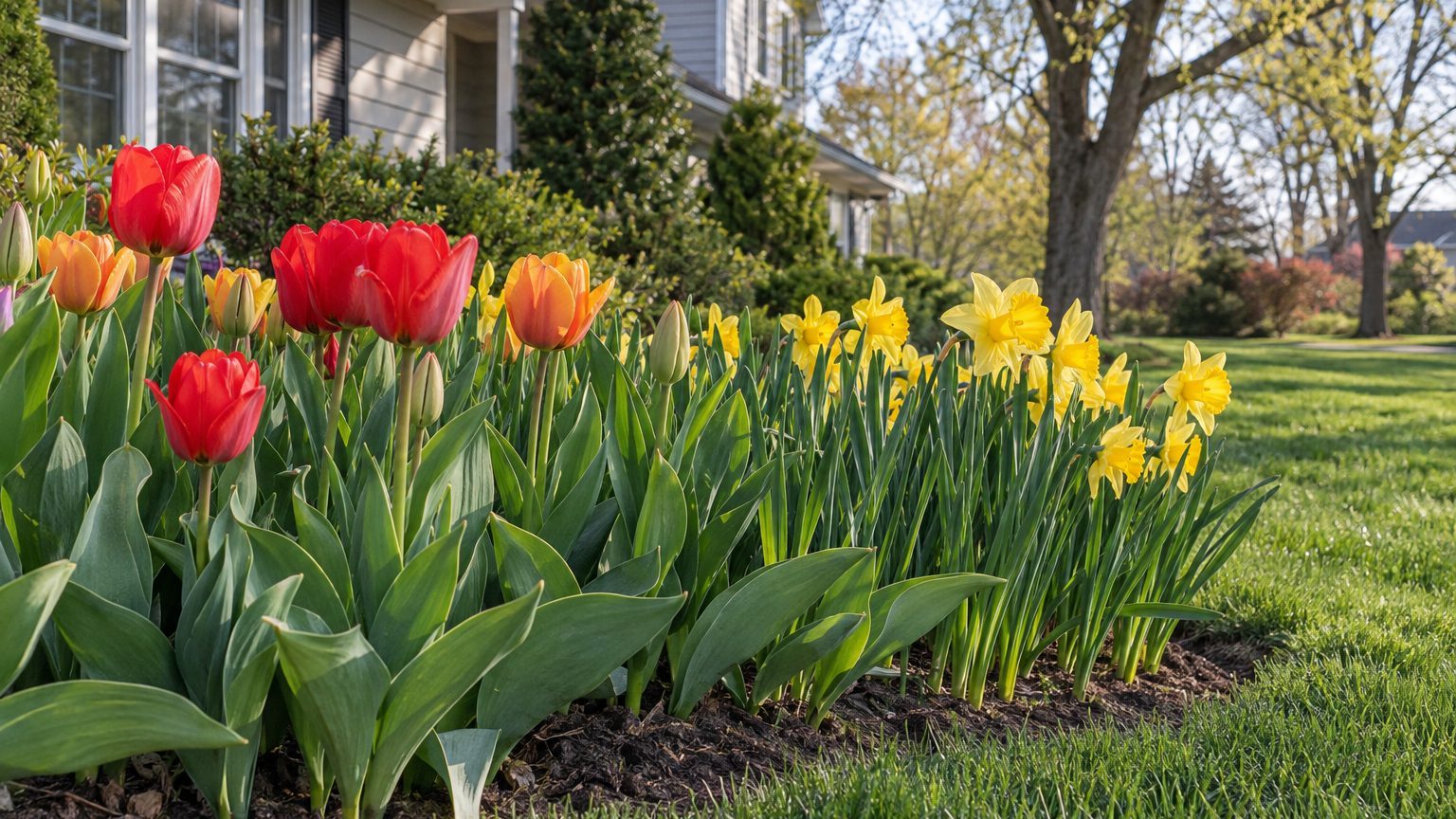
Green tulip and daffodil tips pushing through cold Wisconsin ground in early spring were settled the autumn before. The bulbs went in while the soil was cooling and the roots still had time to grow. Timing, the right bulb for heavy Wisconsin soil, and a few yearly habits decide how many come back.
When to Plant Tulips and Daffodils in Wisconsin

Plant tulips and daffodils in September and October, with mid-September through mid-October as the core of that window. A bulb’s year here runs like this.
- In September, buy bulbs while the selection is full, and pick ones that feel firm and heavy, with no soft spots or mold.
- From mid-September through mid-October, plant once the soil has cooled, so roots form before winter but the tops stay asleep.
- Once the ground starts to freeze, spread a layer of mulch over the bed to keep the soil temperature steady through freeze and thaw.
- Through winter, the bulbs sit in cold ground and do their own chilling, with no refrigerator step needed.
- In early spring, green tips break the surface, and the flowers follow in April and May.
In Milwaukee, along the Lake Michigan shore, the first fall frost usually arrives between October 17 and October 29. Wisconsin spans USDA hardiness zones 3b to 6a, so a gardener near Superior and one near the Illinois line work on different clocks.
Wisconsin — the year and the numbers
- State
- Wisconsin
- USDA zones
- 3b-6a
- Last spring frost
- April 16 to April 29
- First fall frost
- October 17 to October 29
- Annual rain
- 35 in
- Lawn zone
- cool-season
- Source
- NOAA NCEI 1991-2020 Climate Normals, 32F freeze probabilities · Milwaukee
Which Spring Bulbs Do Best in Wisconsin?
Daffodils and alliums are the most dependable choices here, and tulips come with a catch. Most hardy bulbs evolved in desert or Mediterranean climates, so many of them, especially hybrid tulips, are not well adapted to wet, heavy clay soil and may return for only a few years.
Winter cold is not the problem. Wisconsin gives bulbs plenty of it, so the question is how long each type lasts in your soil.
| Bulb type | How it does in Wisconsin | Why |
|---|---|---|
| Daffodils | Long-lived, the more reliable perennial bulb | They tend to last longer than tulips in Wisconsin soils |
| Hybrid tulips | Often short-lived, may return for only a few years | Years of hybridizing weakened their ability to come back, and clay soil does the rest |
| Species tulips | A better bet for repeat bloom | The shorter types with smaller flowers cope better than showy hybrids |
| Alliums | Easygoing and reliable | They are not picky and need the cold of winter to bloom |
Crocus and hyacinths grow here too, and they follow the same fall planting schedule as everything else. If you want big hybrid tulips, enjoy them, but think of them as a season of color rather than a permanent planting.
When to Plant, Chill and Care for Spring Bulbs in Wisconsin
Most spring-flowering bulbs need about 12 to 16 weeks of cold to flower. A Wisconsin winter delivers that on its own, so tulips and hyacinths can go straight from the bag into the ground without a stint in the refrigerator.
Planting follows the soil. Wait until it has cooled below about 60°F, and keep going while the ground can still be dug and is not frozen solid.
| Task | Best timing in Wisconsin | Why then |
|---|---|---|
| Plant bulbs | September and October, mid-September through mid-October | Soil at 50-55°F or lower lets roots form before the ground locks up |
| Chill bulbs | Winter, in the ground | Outdoor cold supplies all the chilling the bulbs need |
| Leave the foliage | After bloom, for as long as the leaves are green | The leaves feed the bulb for next year’s flowers |
| Enjoy the flowers | April and May | Tulip bloom peaks from late April to mid-May |
After the petals drop, take off only the faded flowers. Let the leaves stay until they turn brown, then clear them away. Cutting or braiding green leaves starves the bulb.
How Bulb Planting Time Changes Across Wisconsin
Lake Michigan and distance from the southern border pull the planting window earlier or later, while the months for the state as a whole stay the same.
- Lake Michigan shore: The lake holds off the first fall freeze, so the ground stays workable a little longer and planting can run toward the end of the window.
- Inland southern Wisconsin: Frost typically arrives in early October, so aim for the middle of the window and do not let planting drift.
- Northern Wisconsin: Freezes arrive far earlier than in the south, so plant at the front of the window, in mid-September, to give roots time before the ground hardens.
Whatever your location, the soil tells you more than the calendar. If it has cooled and still crumbles under a trowel, it is planting time.
Where to Get Bulb Advice in Wisconsin
University of Wisconsin Extension has a garden resource for nearly every bulb question, and your county office can look at problems in person. Both are worth a call before replacing a bed that has stopped blooming.
- The University of Wisconsin Extension site carries planting guides for spring bulbs, and it is the place to read up before buying in September.
- Your county extension office can run a soil test and help diagnose a bed where tulips have faded, so visit it in late summer before planting.
- A bulb still unplanted goes in as soon as the ground can be dug.
Common Questions
Is It Too Late to Plant Bulbs After the First Fall Frost?
Not necessarily. A frost date marks frost risk, not the end of planting. Bulbs can go in until a couple of weeks before the ground freezes, as long as you can still dig.
Will Annuals Planted Next to Bulbs Hurt Them?
They can. Annuals that need a lot of water, set on top of or right beside bulbs, keep heavy clay wet, and that shortens the life of tulips especially. Give bulbs their own bed or pair them with neighbors that like drier feet.
How Do You Protect Tulips and Crocus from Animals?
Voles, squirrels, rabbits and deer eat tulips and crocus, while daffodils are left alone. Planting daffodils around the edge of a bed, or in spots where animals pass often, gives you spring color that survives them.