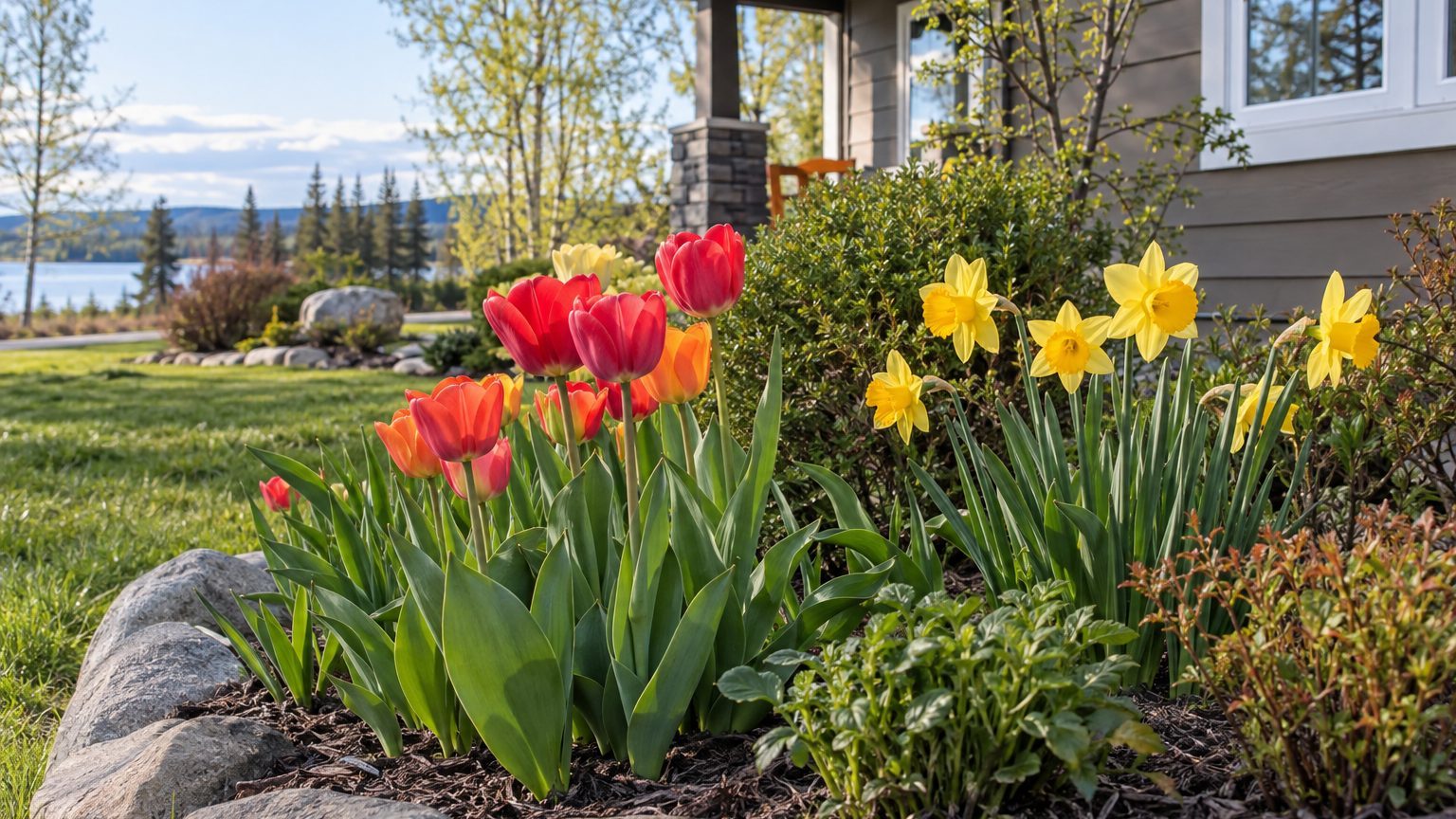
A bag of tulip and daffodil bulbs on a garden-centre shelf in late summer is the signal to start in the territory, because the planting window is short and closes as the ground cools. In Northwest Territories, bulbs go in during late summer, well before the soil freezes. Timing, bulb choice and local differences all shape how a spring display turns out.
When to Plant Tulips and Daffodils in Northwest Territories

Plant tulips and daffodils in August and September, with late August to early September the target. The bulb’s year here runs in a few clear steps.
- In August, buy bulbs while the garden centre stock is fresh and firm, and keep them somewhere cool and dry until the soil is ready.
- Winters in the territory supply all the cold that spring bulbs need, so tulips and hyacinths skip the refrigerator chilling that mild regions require.
- From late August to early September, plant the bulbs, or wait until the soil sits in the low to mid 50s °F (roughly 11 to 13°C).
- As autumn turns cold, spread a layer of mulch over the bed once the surface begins to stiffen, so the soil stays evenly frozen through winter.
- In spring, after the snow melts and the soil thaws, the first green tips push up through the mulch, which you can pull back gently.
The first fall frost arrives around September 18 at Yellowknife, so a planting made earlier gives roots time to settle. Yellowknife sits in Canadian hardiness zone 1b, which is a different system from the USDA zones. No local bulb-timing guide exists for the far north, so these dates follow the nearest comparable climate. Confirm local timing with a garden centre, a garden society or a territorial gardening group.
Northwest Territories — the year and the numbers
- State
- Northwest Territories
- Hardiness zones
- 1b
- Last spring frost
- May 25
- First fall frost
- September 18
- Annual rain
- 11 in
- Lawn zone
- cool-season
- Source
- Environment and Climate Change Canada — Canadian Climate Normals 1981-2010, station YELLOWKNIFE A · Yellowknife
Which Spring Bulbs Do Best in Northwest Territories?
Daffodils are the safest bet, since voles, squirrels, rabbits and deer leave them alone. Alliums, scilla, snowdrops and sometimes grape hyacinth also winter over well in a climate like this one. Tulips can work, but they are less certain.
Planting spring bulbs here means choosing plants that shrug off a hard winter and hungry wildlife. The choice matters more than any other decision you make.
| Bulb type | How it does in Northwest Territories | Why |
|---|---|---|
| Daffodils | Reliable, lasts for years | More dependable as a perennial, and animals leave them alone |
| Tulips | Worth a try, less certain | Voles, squirrels, rabbits and deer eat them |
| Alliums | Good choice, such as ‘Purple Sensation’ | They need the cold of winter to bloom |
| Scilla | Tends to winter over well | Hardy in a cold climate like this |
| Snowdrops | Hardy | They handle a long, cold winter |
| Grape hyacinth | Sometimes comes back | Hardiness is borderline in the far north |
Crocus bring the same trouble as tulips, since voles and rabbits eat them, so protect the bed or accept some losses. Hyacinths need winter cold, which the territory provides, though they are less proven in zone 1b. Start with daffodils and alliums for the surest results.
When to Plant, Chill and Care for Spring Bulbs in Northwest Territories
The year is simple here. Planting happens in late summer, chilling is handled by the winter itself, and the only aftercare is patience with the leaves. These gestures keep the bulb strong from one spring to the next.
| Task | Best timing in Northwest Territories | Why then |
|---|---|---|
| Plant | August to September, ideally late August to early September | Roots form before the ground freezes, and bulbs do not sprout in fall |
| Chill | Not needed, the winter does it | Spring bulbs need about 12 to 16 weeks of cold, and the territory gives that outdoors |
| Leave the foliage | After bloom, until the leaves turn brown | The leaves feed the bulb for next year |
After flowering, remove only the faded blooms and leave the leaves alone, even if they flop and look untidy. Cutting or tying green leaves robs the bulb of the energy it stores for next spring.
How Bulb Planting Time Changes Across Northwest Territories
The territory is huge, and one planting date does not fit every community. Reference dates come from Yellowknife, so gardeners elsewhere should lean earlier or later depending on where they live.
- Inuvik: Cold arrives sooner this far north, so aim for the early end of the planting window and get bulbs in the ground as soon as they arrive.
- Yellowknife: The reference city for these dates, where late August to early September suits most beds, and the big lake nearby softens the edges of the season.
- Fort Smith: Farther south, the ground stays workable longer, so planting can slide toward the later part of the window.
Northern and upland districts run weeks behind the reference city in spring and ahead of it in fall, so watch your own soil rather than the calendar alone.
Where to Get Bulb Advice in Northwest Territories
Canada has no county extension offices, so advice comes from the territorial government’s agriculture program, local garden societies and garden centres. They know which bulbs survive locally and can help with a soil question.
- The Northwest Territories Department of Industry, Tourism and Investment agriculture services can point you to growing resources, and spring or summer is a good time to ask before ordering bulbs.
- A local garden centre can tell you what stock is arriving and when, which helps you plan the late-summer planting.
- A garden society or territorial gardening group shares what has worked in nearby yards, so check in before the soil cools and the planting window opens.
Common Questions
Can You Plant Bulbs That Are Still in the Bag Late?
Yes. A bulb left in the bag is better planted late than stored over the winter, so plant as long as the ground can still be dug.
Why Do Tulips Fade After a Few Years?
Tulips are often short-lived in the garden. Daffodils last longer and are the more reliable perennial bulb, so treat tulips as a bonus rather than a permanent planting.
Can You Mix Bulbs for a Longer Season of Color?
Yes. Spring bulbs bloom in a long succession, from snowdrops and winter aconites at the start of the season to alliums at the end. Mixing types in one bed stretches the show.