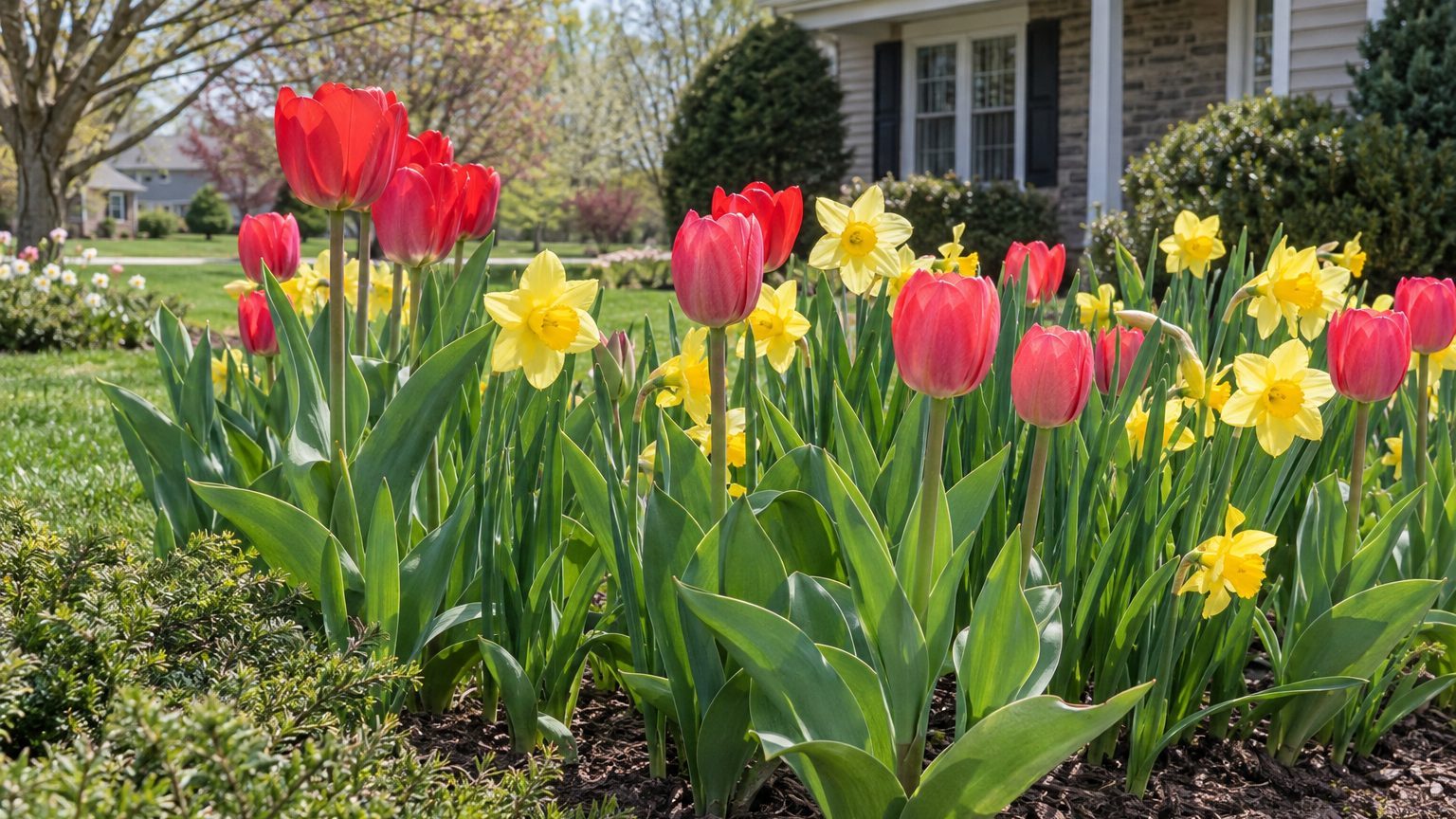
Tulip and daffodil bulbs go into Delaware soil in the fall, and the green tips that push up in late winter and spring are the payoff for that one afternoon of digging. The page covers when to plant, which bulbs earn their spot, and how the yard changes from one end of the state to the other.
When to Plant Tulips and Daffodils in Delaware

October is the month to plant tulips and daffodils in Delaware, and September or November works when the soil cools a little early or late. Here is how a bulb’s year unfolds in a Delaware yard, in zones 7a to 8a on the USDA system.
- In September, buy bulbs while the garden center shelves are full, and choose firm ones with no soft spots or mold.
- Through September and into early October, keep the bulbs somewhere cool and dry, since they are not ready for soil that is still warm.
- In October, plant them once the soil has cooled down to a comfortably cool level, which gives roots time to form before the ground freezes without tempting the bulbs to sprout in the fall.
- In November, plant any stragglers and spread a layer of mulch over the bed, which evens out the soil temperature through the winter.
- From February into spring, the first shoots break the surface, and bloom runs through March, April and May.
Fall frost tends to arrive between October 26 and November 7 at the Wilmington reference station, and gardens outside the city often see it sooner. A bulb still in the bag goes in as long as the ground can be dug, because late planting beats storing it over the winter.
Delaware — the year and the numbers
- State
- Delaware
- USDA zones
- 7a-8a
- Last spring frost
- April 3 to April 14
- First fall frost
- October 26 to November 7
- Annual rain
- 45 in
- Lawn zone
- cool-season
- Source
- NOAA NCEI 1991-2020 Climate Normals, 32F freeze probabilities · Wilmington
Which Spring Bulbs Do Best in Delaware?
Daffodils are the most dependable choice in Delaware. They return year after year, they never need digging, and deer and rabbits leave them alone. Tulips and crocus bloom beautifully but are a favorite snack for voles, squirrels, rabbits and deer.
Winters here give bulbs the cold they need, so tulips can go straight into the ground without a stop in the refrigerator.
| Bulb type | How it does in Delaware | Why |
|---|---|---|
| Daffodils | Dependable, returns for years | Hardy perennial bulb that animals avoid |
| Tulips | Lovely, but often short-lived | Voles, squirrels, rabbits and deer eat them |
| Crocus | Good where animals are kept out | Edible to voles, squirrels, rabbits and deer |
| Hyacinths | Good in yards with deer or squirrels | Animals tend to pass them by |
| Alliums | Good in yards with deer or squirrels | Animals tend to pass them by, and they need the cold of winter to bloom |
Fritillaria and scilla also appear on lists of bulbs that deer and squirrels dislike, so they suit a yard where tulips keep disappearing. If animals visit your beds often, plant daffodils, hyacinths and alliums and treat tulips as a seasonal treat.
When to Plant, Chill and Care for Spring Bulbs in Delaware
The bulb year in Delaware has only a few jobs, and each one follows the season or a sign in the soil. Planting is the one with a clear month. The others follow what the bulbs and the weather are doing.
| Task | Best timing in Delaware | Why then |
|---|---|---|
| Plant tulips, daffodils, crocus, hyacinths and alliums | October, or September and November if needed | Cool soil lets roots grow without top growth |
| Chill bulbs | Not needed, because winter does it | Most spring bulbs want 12 to 16 weeks of cold, and Delaware winters supply it |
| Leave the foliage after bloom | Until the leaves turn brown | Green leaves feed the bulb for next year |
Alliums need the cold of winter to bloom. After the flowers fade, remove only the spent blooms and leave the leaves in place. Tying or cutting green foliage robs the bulb of the energy it stores for next spring.
How Bulb Planting Time Changes Across Delaware
Delaware is a small state, but the planting window still shifts a little between its three counties and their very different landscapes.
- Wilmington and northern New Castle County: The soil cools first here, so planting can start toward the early end of the window, and gardens away from the city may see frost sooner than the airport does.
- Dover and central Kent County: Soil cools at a middle pace, which makes October a comfortable fit for most beds.
- Sussex County and the beaches near Rehoboth: Coastal air keeps the soil milder for longer, so planting can slide later toward November.
Wherever you garden, wait for the soil itself to cool rather than trusting the date on the calendar.
Where to Get Bulb Advice in Delaware
The University of Delaware Cooperative Extension answers bulb questions, and each county has an office with local gardeners who know your soil.
- The county extension office can help identify a bulb problem when you bring a sample, and it is worth a visit in spring when the shoots show trouble.
- A soil test through the office tells you what your bed holds, and it is best done before planting in September or October.
Common Questions
Can You Plant Tulips in December in Delaware?
Yes, as long as the ground can still be dug. Roots form slowly in cold soil, but a bulb in the ground does better than one left in a bag.
How Deep Should You Plant Daffodil Bulbs?
Plant with the pointed end up, in a hole deep enough that soil covers the bulb well. A common rule is about three times the bulb’s height.
Do Daffodils Need to Be Dug Up Each Year?
No. Daffodils are hardy perennial bulbs that return on their own, and they are good for naturalizing in scattered clumps across a bed or lawn edge.