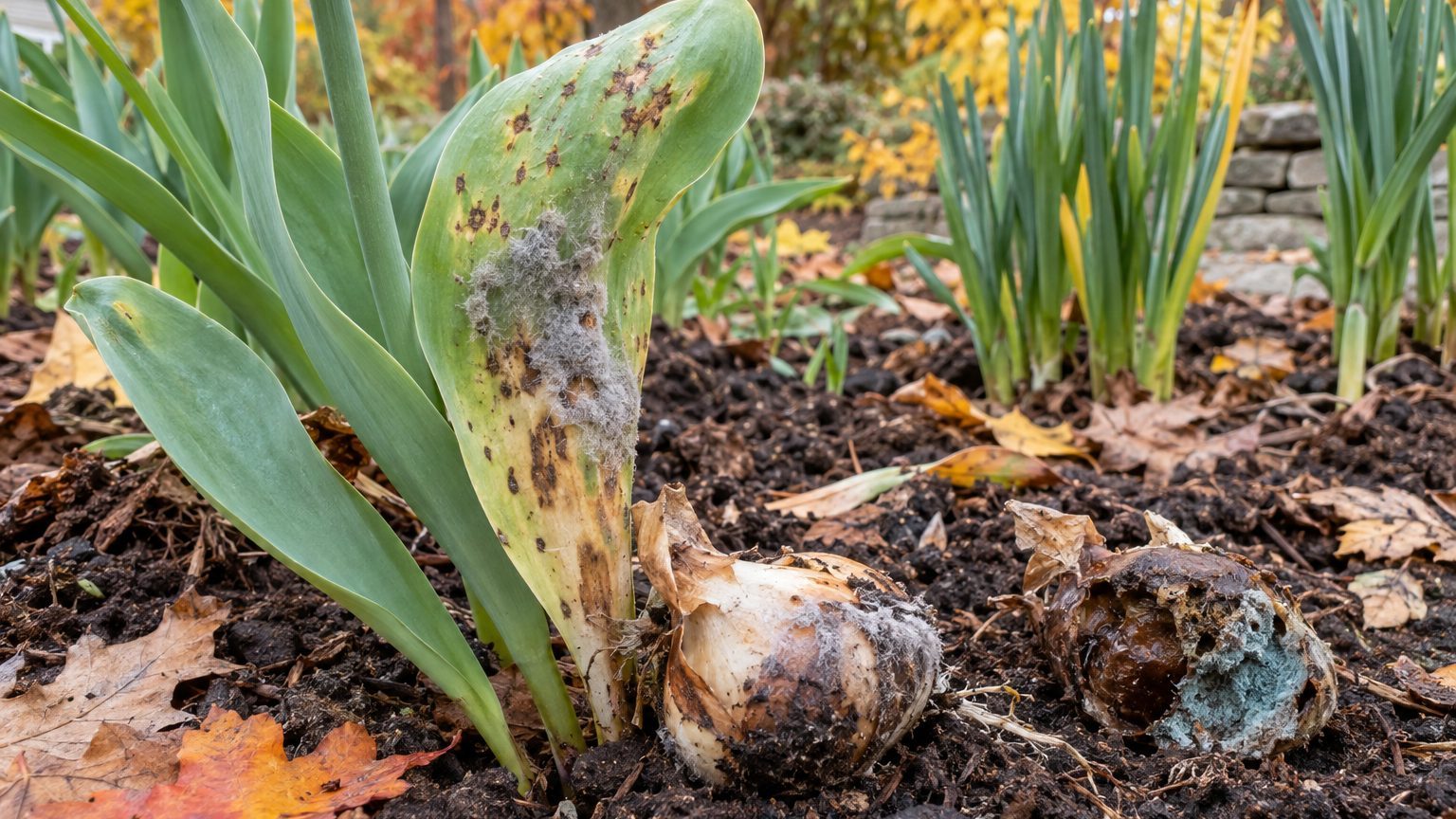
Shoots that come up twisted, bulbs that turn soft in the soil, a gray fuzz on spring leaves: bulb diseases show up in the yard long before they threaten a whole bed. Gray mold, basal rot and blue mold each leave a different mark. Each also calls for a different decision about what stays in the ground.
How Do You Recognize a Bulb Disease?
A diseased bulb usually gives itself away by not behaving like its neighbors. Shoots may never emerge, leaves may come up stunted or deformed, or growth may appear and then wilt soon after. The look changes with the type of bulb, and damp soil and cool, wet spring weather make every one of these problems worse.
Taken together, these signs narrow down the cause. A gray fuzzy coat on leaves or flowers in a damp spring points to gray mold. A bulb that feels soft and water-soaked when you dig it points to rot, and a white or pink fungus on the outside of a bulb is reason enough to set it aside.
The State selector just below this section takes you to the page for your State, where the months for each job are laid out.
From the almanac
Bulbs in your state
The dates on this page depend on where you live. Your state's page carries its frost dates, its USDA zones and the year laid out month by month.
Northeast
Southeast
- Alabama
- Arkansas
- Delaware
- Florida
- Georgia
- Kentucky
- Louisiana
- Maryland
- Mississippi
- North Carolina
- South Carolina
- Tennessee
- Virginia
- West Virginia
Midwest
Southwest
West
Pacific Northwest
Canada
How to Prevent Bulb Diseases

Prevention starts before the bulb touches the soil and carries on through the first weeks of spring, so the order of the jobs matters.
- Inspect every bulb before planting and discard any with white or pink fungus on it, as Pennsylvania guidance puts it, so that the disease never enters the bed.
- Choose a sunny spot with good air circulation, so that leaves dry quickly after rain and gray mold has little chance to settle.
- Keep the soil from staying soggy, because bulbs other than snowdrop, checkered lily and camas tend to rot when overly wet, as in Washington.
- Hold back on nitrogen fertilizer, since in Utah an overfed planting is considered more open to trouble than a lightly fed one.
- Check the bed as shoots emerge in spring, and pull up and discard any plant that is stunted, tightly curled, wilting or failing to flower, so that it cannot pass the problem to healthy neighbors.
- Clear away diseased leaves and stems instead of leaving them on the ground, because fungi such as Fusarium can survive winter in the soil on last year’s diseased tissue.
Healthy plants keep their green leaves until they yellow on their own, since that foliage feeds the bulb for next year. Removal applies only to plants that are clearly diseased. Where a bed has had a serious rot, Utah guidance is to avoid replanting that spot for at least three years.
Bulb Diseases by Bulb Type
The same fungus does not look the same on every bulb. A tulip shows trouble in its young leaves, a daffodil often shows it only when you cut the bulb open, and garlic shows it as soft spots on the cloves.
The signs below come from extension guidance written for different places, so treat them as a guide to what to look for in your own yard.
| Bulb Type | What changes | Why it matters |
|---|---|---|
| Tulip | Leaves emerge stunted and tightly curled in early spring, or fail to emerge, and shoots may curl to one side | In Utah and Pennsylvania these are early signs of disease in the bulb itself |
| Tulip (tulip fire) | Blighted, stunted plants appear from diseased bulbs planted by accident | In Illinois, cool, wet spring weather can then cause an almost complete loss of flowers |
| Daffodil | Layers of coarse white mold cover the bulb (crown rot) | In Florida, infected plants come out and the soil is avoided for two to three years |
| Daffodil (nematodes) | Darkened scales give a ringed look in cross section, with yellowish pockets inside | In Florida, infested bulbs do not grow or fail to flower |
| Garlic | Bulbs and cloves develop soft, water-soaked spots (blue mold) | In Maine, this is the first sign to look for when handling cloves |
| Summer and fall bulbs | Flowers may show variegation, leaves yellow streaks, and plants stay smaller and weaker | In South Carolina, these plants are a poor bet for blooms |
For you, the practical difference is where to look. Tulips tell you in spring through their leaves, daffodils may need a bulb cut open, and garlic needs a hands-on check of every clove. In New Jersey, most spring flowering bulbs have been selected for tolerance or resistance to the serious soil-borne diseases, which is one more reason to buy sound bulbs and avoid diseased ones. Tulip break virus and mosaic virus also turn up alongside gray mold in North Carolina, so a strangely patterned tulip is worth a second look.
Bulb Disease Mistakes to Avoid
Composting Diseased Plants

Most home compost bins never get hot enough to kill the fungi that cause bulb rots. Finished compost can then carry the problem right back into the bed. Bag the diseased bulbs and foliage with household trash instead, or dispose of them as local rules allow.
Planting Bulbs with Visible Mold

A bulb with white or pink fungus on it may look salvageable, but planting it brings the disease into clean soil. In Illinois, the stunted, blighted plants that grow from diseased bulbs planted by accident are the usual source of each spring’s infection. Sort bulbs by hand before planting, and discard any that look suspect.
Waiting for Sick Plants to Recover
A tulip that comes up stunted or wilts soon after emerging will not bounce back. In Connecticut, plants hit by soil-borne fungal disease are not expected to recover, so the better move is to pull the plant up and discard it right away. Doing so protects the bulbs around it, and the bed gets a clean start the next season.
Bulb Diseases in Your State
The trigger is simple: a shoot that comes up curled, a plant that wilts soon after emerging, or a bulb that turns soft and moldy. When you see any of these, act on that plant. The months for each State are on that State’s page.
- Go to your State’s page when you are sorting bulbs for planting, to see when that job falls where you live.
- Return to it in early spring, when shoots emerge and any stunted or curled plants need to be pulled out.
Common Questions
Why Do Bulb Problems Come Back in the Same Spot?
Fungi such as Fusarium can overwinter in the soil on diseased plant tissue, and diseased bulbs planted by accident start fresh infections each spring. A bed that grew sick plants keeps some of the risk until the debris is gone and the spot has rested.
Does Dipping Bulbs Before Planting Help?
In Kentucky, the advice is to dip bulbs in water and then treat them with a fungicide, as a way to head off tulip and daffodil disease in fall. Read the label of any product carefully, and ask your county extension office which options suit your State.
Is a Streaked or Patterned Flower Always a Fungal Disease?
No. Variegated flowers and yellow-streaked leaves, as noted in South Carolina for summer and fall bulbs, can mean a different kind of problem than gray mold or rot. Check the bulb itself for soft spots or fungus before deciding what you are dealing with.