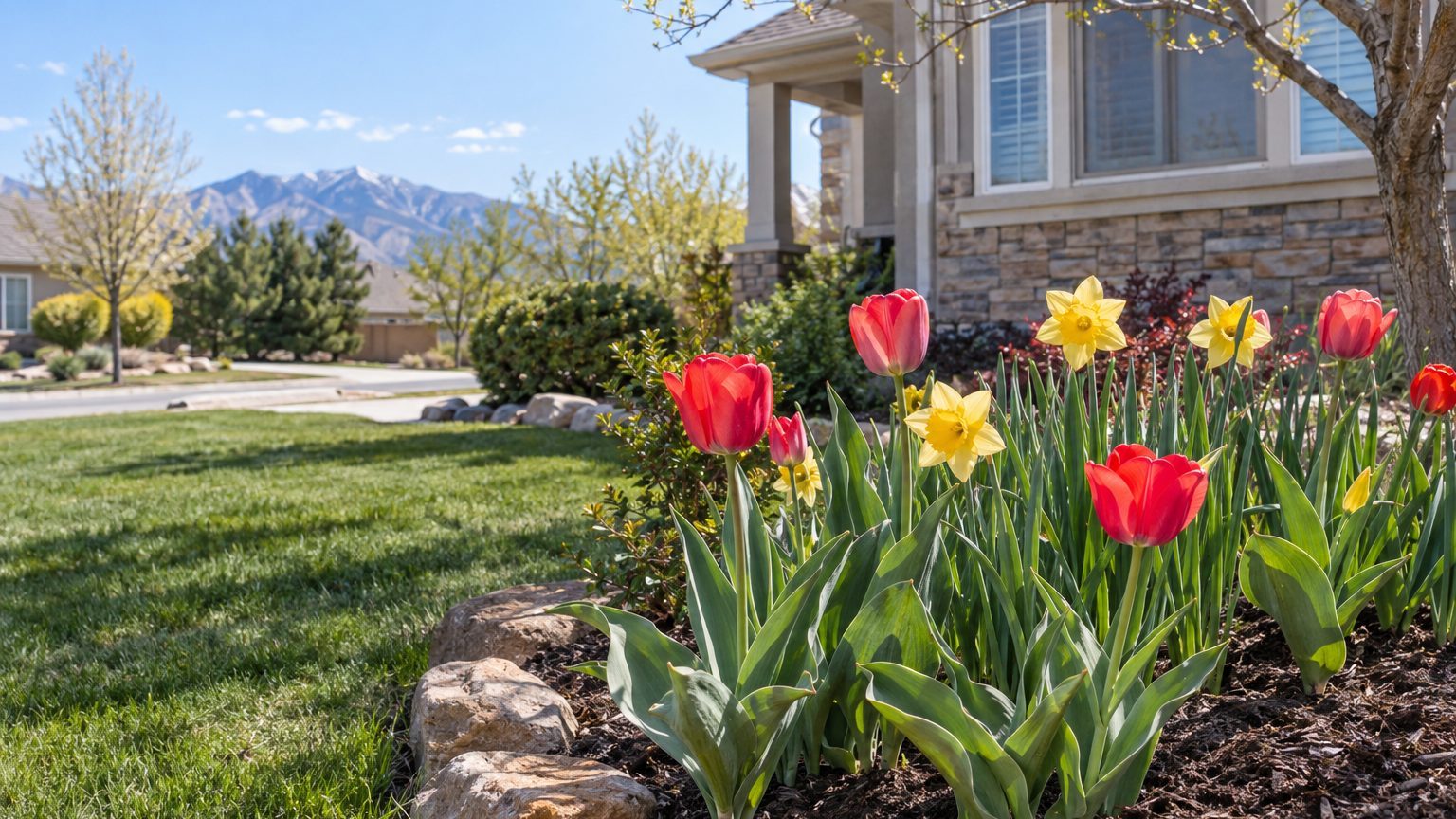
Daffodil shoots break through cold Nevada ground long before the garden looks awake, and the roots behind them were set months earlier. Spring bulbs go in during autumn, once the soil has cooled.
When to Plant Tulips and Daffodils in Nevada

Plant tulips and daffodils in September and October. A bulb’s first year runs on a few clear moments, and the state’s wide spread of hardiness zones, from 4a to 10a in the USDA system, moves each one earlier or later depending on your elevation.
- In early September, buy bulbs while the selection is full, and choose ones that feel firm and heavy. Store them somewhere cool and dry until the ground is ready.
- Where winters are mild, as in the low desert around Las Vegas, put tulips and hyacinths in the refrigerator before planting, because the ground will not give them enough cold on its own.
- Through September and October, plant once the soil has cooled below about 60°F. That gives roots time to form before the ground freezes, without pushing leaves up too soon.
- After planting, spread a layer of mulch over the bed. It keeps the soil temperature steady through winter and slows the swings that can heave young bulbs.
- When winter loosens its grip, the first green tips appear, and the flowers follow on a schedule set by your elevation.
Because Nevada ranges from desert floors to mountain towns, local frost dates differ by months from one place to the next. Your county extension office can tell you what is normal for your street.
Nevada — the year and the numbers
- State
- Nevada
- USDA zones
- 4a-10a
- Last spring frost
- January 7 to February 1
- First fall frost
- December 8 to December 23
- Annual rain
- 4 in
- Lawn zone
- warm-season
- Source
- NOAA NCEI U.S. Climate Normals 1991-2020, 32F freeze probabilities · Las Vegas
Which Spring Bulbs Do Best in Nevada?
Daffodils and alliums are the easiest to grow here, tulips and hyacinths work with a little help, and crocus succeed wherever animals leave them alone. Tulips and daffodils are fairly adaptable if the soil drains well and the bed gets full sun.
The difference between them comes down to winter cold. Bulbs that need a long chill struggle in the warmer parts of the state, while those that skip it adjust easily.
| Bulb type | How it does in Nevada | Why |
|---|---|---|
| Daffodils | Reliable, and they come back for years | They are the more dependable perennial bulb |
| Tulips | Good the first spring, often short-lived after that | They need cold to flower and tend to fade over time |
| Alliums | They need the cold of winter to bloom | They need the cold of winter to bloom |
| Hyacinths | Fine with refrigerator chilling in mild areas | Mild winters cannot supply the cold they need |
Crocus are worth planting in spots where voles and squirrels do not roam, since those animals tend to dig them up. In the desert, lean on daffodils and alliums, and treat tulips as a seasonal treat that you replant.
When to Plant, Chill and Care for Spring Bulbs in Nevada
Bulb work in Nevada clusters into three gestures, and each has its own signal. Planting follows the month, chilling follows the climate, and leaf care follows the plant itself.
| Task | Best timing in Nevada | Why then |
|---|---|---|
| Plant | September and October | Roots settle in cooling soil before the cold arrives |
| Chill tulips and hyacinths | In the refrigerator before planting, only where winters are mild | Most spring bulbs need about 12 to 16 weeks of cold to flower |
| Leave the foliage | After bloom, while the leaves are still green | The leaves feed the bulb for next spring |
Let the foliage stay until it turns brown, and remove only the faded flowers. A bulb that is still in the bag is better planted late than stored over winter, so put it in as long as the ground can be dug. Garden beds at higher elevation freeze hard, so get those bulbs in first.
How Bulb Planting Time Changes Across Nevada
Elevation does most of the sorting in Nevada, because the same calendar month feels very different in the desert and in the mountains.
- Las Vegas: The low desert holds warmth well into autumn, so the soil takes longer to cool. Plant toward the end of the window, and chill tulips and hyacinths first.
- Reno and Carson City: Cold arrives earlier here than in the south, so plant near the start of the window to give roots time to form before the ground freezes.
- Lake Tahoe and other mountain areas: Winter comes early and stays long, so get bulbs in as soon as the window opens and mulch the bed afterward.
Your own yard may run warmer or cooler than the town around it, and a sheltered south wall can shift the timing by a little.
Where to Get Bulb Advice in Nevada
Local advice matters in a state with so many climates. Two sources are close at hand for questions about planting dates, soil, or a bulb that did not come up.
- University of Nevada, Reno Extension offers gardening guidance for the state, and it is a good first stop before you order bulbs.
- Your county extension office can run a soil test or diagnose a failed planting, so call before the soil cools and the planting window opens.
Common Questions
Should You Amend the Soil Before Planting Bulbs in Nevada?
Yes, if the soil is heavy or drains slowly. Working compost into the planting hole loosens the soil and adds organic matter, and it helps with drainage. Choose a spot in full sun and avoid low areas that stay wet in spring.
Will Animals Eat Spring Bulbs in Nevada?
Voles, squirrels, rabbits and deer eat tulips and crocus, while daffodils are left alone. If animals visit your yard, daffodils are the safer choice for the front bed.
When Do Tulips and Daffodils Flower in Nevada?
Hardy spring bulbs bloom anywhere from January to May, depending on the variety and on how high or low your yard sits.