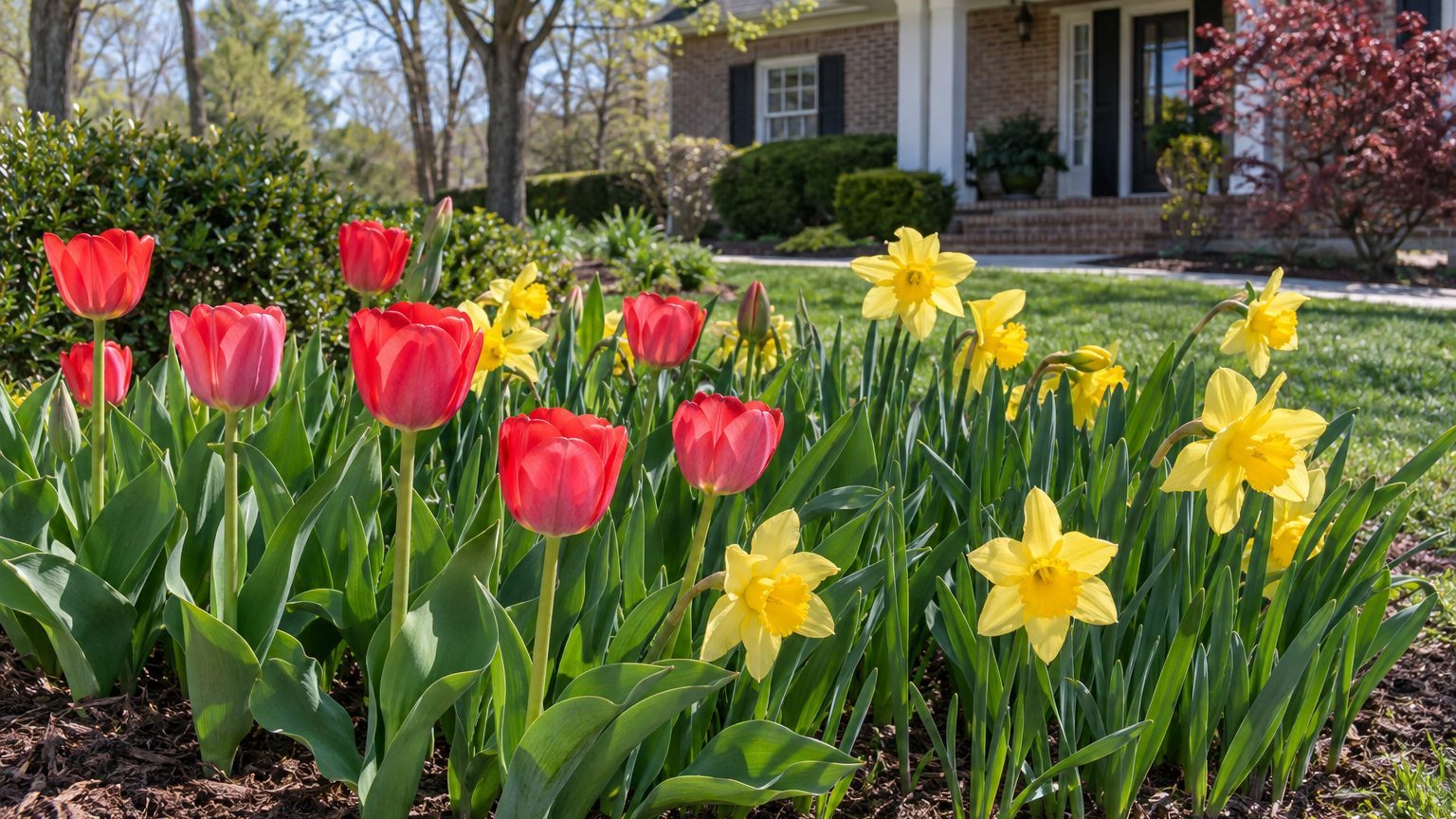
Daffodil leaves poking through the pine straw in late winter are a South Carolina sight, and they trace back to a few minutes of work in the cool months of the year before. Spring bulbs here go in during the cool months, and the exact timing shifts with the coast, the Midlands and the Upstate.
When to Plant Tulips and Daffodils in South Carolina

Plant tulips and daffodils in November and December, with January and October as fallbacks when the season gets away from you. A bulb’s year here moves through a series of distinct moments.
- In early fall, buy bulbs while the choice is wide and keep them somewhere cool and dry, out of a hot garage, until the ground is ready.
- Through autumn, tulips and hyacinths spend time in the refrigerator, because South Carolina winters are mild and cannot supply all the cold they need.
- In November and December, plant once the soil has cooled below about 60°F, so roots form but the bulbs do not sprout early. Refrigerated bulbs can go in even into early January.
- Right after planting, spread a loose layer of mulch such as shredded leaves or pine straw to even out soil temperature through the winter.
- In late winter, the first green shoots break the surface, and the mulch can stay where it is.
In Charleston, the first fall frost usually arrives between November 20 and December 5. South Carolina spans zones 7a to 9a on the USDA hardiness system, so bulbs in the mountains and on the coast meet quite different winters.
South Carolina — the year and the numbers
- State
- South Carolina
- USDA zones
- 7a-9a
- Last spring frost
- February 28 to March 17
- First fall frost
- November 20 to December 5
- Annual rain
- 53 in
- Lawn zone
- warm-season
- Source
- NOAA NCEI 1991-2020 Climate Normals, 32F freeze probabilities · Charleston
Which Spring Bulbs Do Best in South Carolina?
Daffodils do best here by a wide margin. Winters are mild, so tulips give less, and according to Iowa State University Extension, alliums need the cold of winter to bloom.
Clemson Cooperative Extension calls daffodils the most successful of the popular spring bulbs for naturalizing in the South, and their reliability reaches across South Carolina.
| Bulb type | How it does in South Carolina | Why |
|---|---|---|
| Daffodils (jonquil hybrids, tazetta hybrids, poeticus, species daffodils) | Grow reliably throughout the state and return year after year | Daffodils last longer than tulips and are the more reliable perennial bulb |
| Standard tulips | Usually one season of color, then treated like annuals | Winters are too mild for them to settle in, so they are often dug and discarded after bloom |
| Single Late tulips | One of the best tulip groups for warm climates | Long, strong stems and deep, cup-shaped blooms in many colors |
| Species tulips | A few naturalize in the South | Some come from warm climates and flower without a cold period |
| Alliums | Needs winter cold to bloom | They need the cold of winter to bloom |
Hyacinths follow the tulip routine, with a refrigerator stay before planting. Crocus can bloom here too, but voles, squirrels, rabbits and deer eat both crocus and tulips, so plant them where you can watch for damage. Daffodils are left alone by those animals.
When to Plant, Chill and Care for Spring Bulbs in South Carolina
Three jobs shape the bulb year, and each has a clear moment. Planting is the one with months attached. Chilling and leaf care follow signs you can read in the garden and the kitchen.
Most spring bulbs need about 12 to 16 weeks of cold to flower, and a South Carolina winter often falls short of that for tulips and hyacinths.
| Task | Best timing in South Carolina | Why then |
|---|---|---|
| Plant tulips, daffodils, crocus, alliums and hyacinths | November to December, with January and October as fallbacks | Cooler soil gives roots time to grow without pushing top growth too soon |
| Chill tulips and hyacinths | In the refrigerator before planting, so they go in the ground in November, December or early January | The mild winter cannot supply the cold these bulbs need to flower |
| Plant coastal bulbs | Late December or early January near the coast | Coastal soil stays warm longer, so waiting avoids early sprouting |
| Leave the leaves after bloom | As long as they stay green, until they turn brown | The leaves feed the bulb for next spring |
After bloom, remove only the faded flowers and leave the foliage standing. Never tie it up or cut it back while it is still green, however untidy it looks.
How Bulb Planting Time Changes Across South Carolina
The state stretches from mountain foothills to barrier islands, and the soil cools on a different schedule in each.
- Upstate: Winters run colder and the season is tighter at both ends, so the soil cools sooner. Aim for the early part of the November to December window and keep refrigerated tulips on a normal schedule.
- Charleston and the coast: Peninsular Charleston is milder than the airport readings suggest. In South Carolina’s coastal areas, most bulbs do better planted in late December or early January, once the ground has finally cooled.
If you live between the two, in the Midlands, plant in the middle of the window and let soil temperature make the final call.
Where to Get Bulb Advice in South Carolina
Local soil, drainage and wildlife vary from one county to the next. For questions about your own yard, two kinds of help are close by.
- Clemson Cooperative Extension publishes bulb guidance written for South Carolina, and it is the first stop before you buy.
- Your county extension office can run a soil test, which is worth doing in late summer or early fall before planting day.
- Staff there can also help diagnose a failed planting, if you bring a bulb or a photo of the bed.
Common Questions
Can You Plant Bulbs That Are Still in the Bag in January?
Yes. A bulb still in the bag is better planted late than stored over the winter, so plant as long as the ground can be dug.
Which Spring Bulbs Do Deer and Rabbits Leave Alone?
Daffodils. Tulips and crocus are the ones voles, squirrels, rabbits and deer go after.
Are Tulips Worth Planting If They Rarely Come Back?
They are, as a one-season show. Plant them in a bed you can refresh each year, or choose Single Late tulips or species tulips if you want them to return.