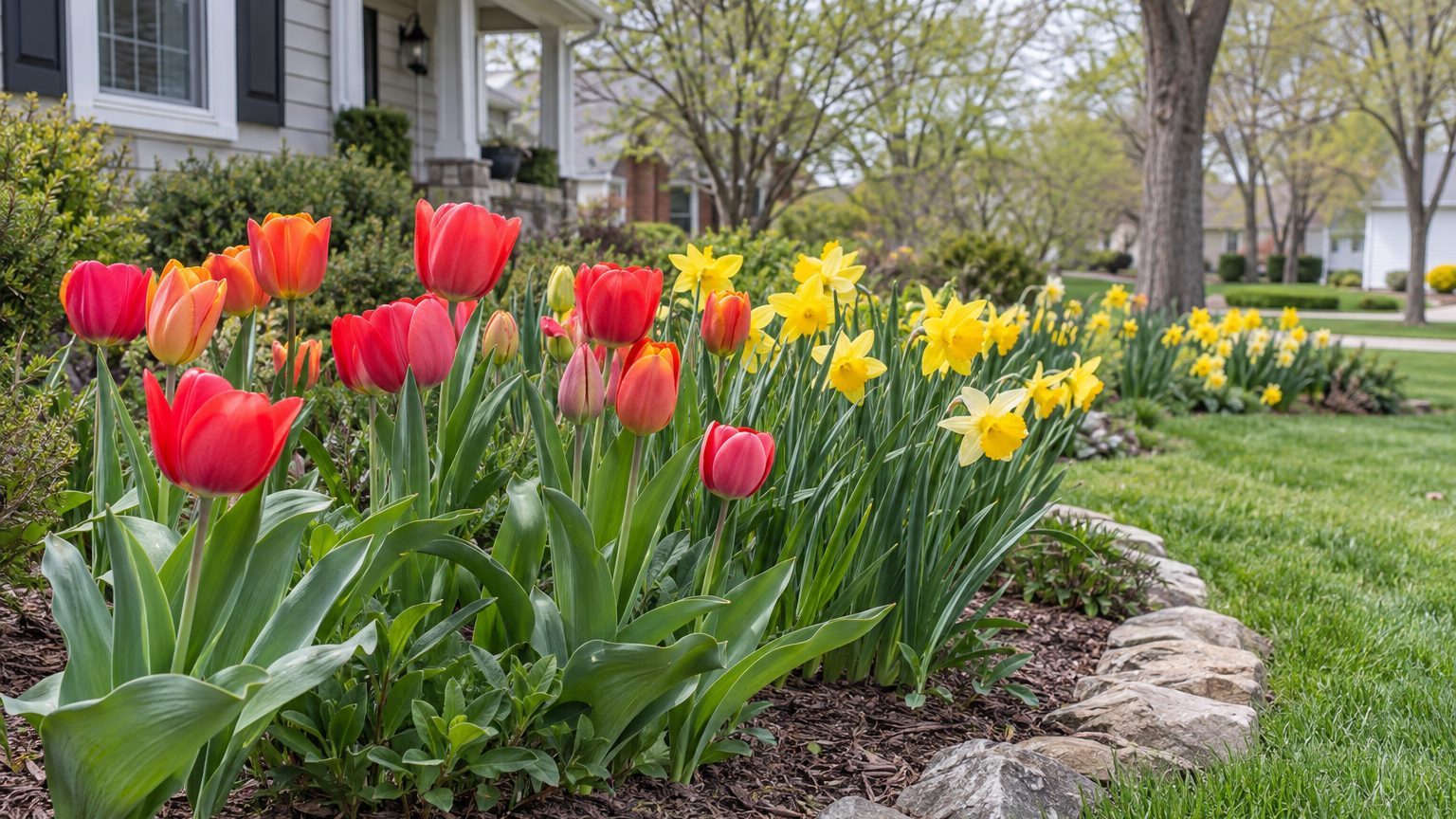
Daffodil shoots pushing through cold, leafy ground are a sign that someone planted bulbs well the autumn before. Iowa’s planting season for tulips and daffodils is a long one, with a comfortable stretch in early fall and a forgiving tail that runs into winter. Timing, bulb choice and a few yearly habits decide how those shoots turn out.
When to Plant Tulips and Daffodils in Iowa

Plant tulips, daffodils and other spring bulbs in September and October, with late September through October the sweet spot, and keep November and even December open as a fallback while the ground can still be dug. A bulb’s year in Iowa runs like this:
- In late summer, buy bulbs that feel firm and heavy for their size, and keep them somewhere cool and dry until the soil is ready.
- Through fall and winter, skip the refrigerator, because Iowa winters deliver all the cold that tulips and daffodils need to set flower buds.
- In September and October, set the bulbs in the ground once the soil has cooled, which gives roots time to settle before the freeze.
- In November and December, plant any leftovers if the ground is still unfrozen, since a late bulb in the soil does better than one waiting on a shelf.
- After planting, once the weather turns reliably cold, spread a layer of mulch to even out thaws and freezes through winter.
- In March or early April, shoots break the surface, and tulips open from April into May.
Fall frost typically arrives between October 14 and October 25 at the reference station, and the state sits in USDA zones 4b to 6a, so the north runs colder than the south. A frost date marks risk for tender plants. For bulbs underground, the calendar months above are what count.
Iowa — the year and the numbers
- State
- Iowa
- USDA zones
- 4b-6a
- Last spring frost
- April 12 to April 24
- First fall frost
- October 14 to October 25
- Annual rain
- 37 in
- Lawn zone
- cool-season
- Source
- NOAA NCEI 1991-2020 Climate Normals, 32F freeze probabilities · Des Moines
Which Spring Bulbs Do Best in Iowa?
Winters here are cold enough to give tulips, daffodils, crocus, hyacinths and alliums the chill they need, and the soil is rarely the limit. Wildlife is the bigger question. Voles, squirrels, rabbits, deer and chipmunks take a keen interest in some bulbs and ignore others.
Daffodils come out ahead on reliability, while tulips are the bulb most likely to disappear or fade.
| Bulb type | How it does in Iowa | Why |
|---|---|---|
| Daffodils | Dependable and long-lived | More vigorous than tulips, and animals leave them alone |
| Tulips | Lovely but often short-lived | Favorite food of voles, squirrels, rabbits and deer |
| Crocus | Good where animals are kept off | Rabbits, voles and chipmunks go after them, much as they do tulips |
| Alliums | Thrive in cold winters | They need the cold of winter to bloom. |
Hyacinths go in during the same fall window as the others and ask for nothing special. If squirrels have a habit of raiding the bed, put the daffodils and alliums out front and tuck tulips where a cage or a fence can protect them. In Iowa, larger bulbs such as tulips are sometimes treated as annuals and lifted in late spring to make room for other plants, a sensible way to think about them anywhere.
When to Plant, Chill and Care for Spring Bulbs in Iowa
Three jobs fill the bulb year, and each has its moment. Planting comes first in fall, the cold treatment takes care of itself, and the leaves get left alone after the flowers fade.
Where a task has no month, a sign in the garden tells you when.
| Task | Best timing in Iowa | Why then |
|---|---|---|
| Plant | September and October | Soil that has cooled down enough means roots form before the freeze without top growth starting in fall |
| Plant late | November and December, while the ground can be dug | A bulb in the soil beats one stored over winter |
| Chill | No refrigerator step needed outdoors | Most bulbs want about 12 to 16 weeks of cold, which Iowa winters supply, and alliums also need cold. |
| Leave the foliage | After bloom, until the leaves turn brown | Green leaves feed the bulb for next year |
After flowering, remove only the faded blooms. Bloom runs April into May, and the leaves can stay ragged for a while, so plant bulbs where later perennials will cover the yellowing foliage.
How Bulb Planting Time Changes Across Iowa
Iowa spans a good stretch of climate, from the colder zone 4b to the milder 6a, and that shifts the comfortable end of the planting window.
- Northern Iowa: Soil cools sooner and freezes earlier, so aim for the front of the window, September into early October, to give roots time to settle.
- Southern Iowa: Milder winters keep the ground workable longer, which makes the November and December fallback more realistic for stragglers.
Whichever part of the state you garden in, test the soil with a trowel. If it digs easily, bulbs can still go in.
Where to Get Bulb Advice in Iowa
Iowa State University Extension publishes bulb guidance written for local conditions, and county offices can look at a problem in person. Both are worth a call when a bed refuses to perform.
- The Iowa State University Extension site is where to look for planting and care questions, any time of year.
- Your county extension office can run a soil test and help diagnose bulbs that came up weak, so go before fall planting.
- Bring a few bulbs that failed, along with a note of where they grew and how wet the spot stays.
Common Questions
Can You Plant Forced Daffodils Outdoors in Iowa?
Yes. Daffodils are an exception to the rule that forced bulbs rarely survive, and many forced cultivars perform well once they are in the garden. Tulips and most other forced bulbs are far less likely to come back.
Do Tulips Come Back Every Year?
Sometimes, but tulips are often short-lived, and animals shorten that life further. Daffodils last longer and are the more reliable perennial bulb, so lean on them for flowers that return.
Does a Fall Frost Mean It Is Too Late to Plant Bulbs?
No. A frost date marks risk for tender plants above ground, not the end of bulb planting. Bulbs follow the calendar months and the state of the soil, so plant any bulb as long as the ground can be dug.