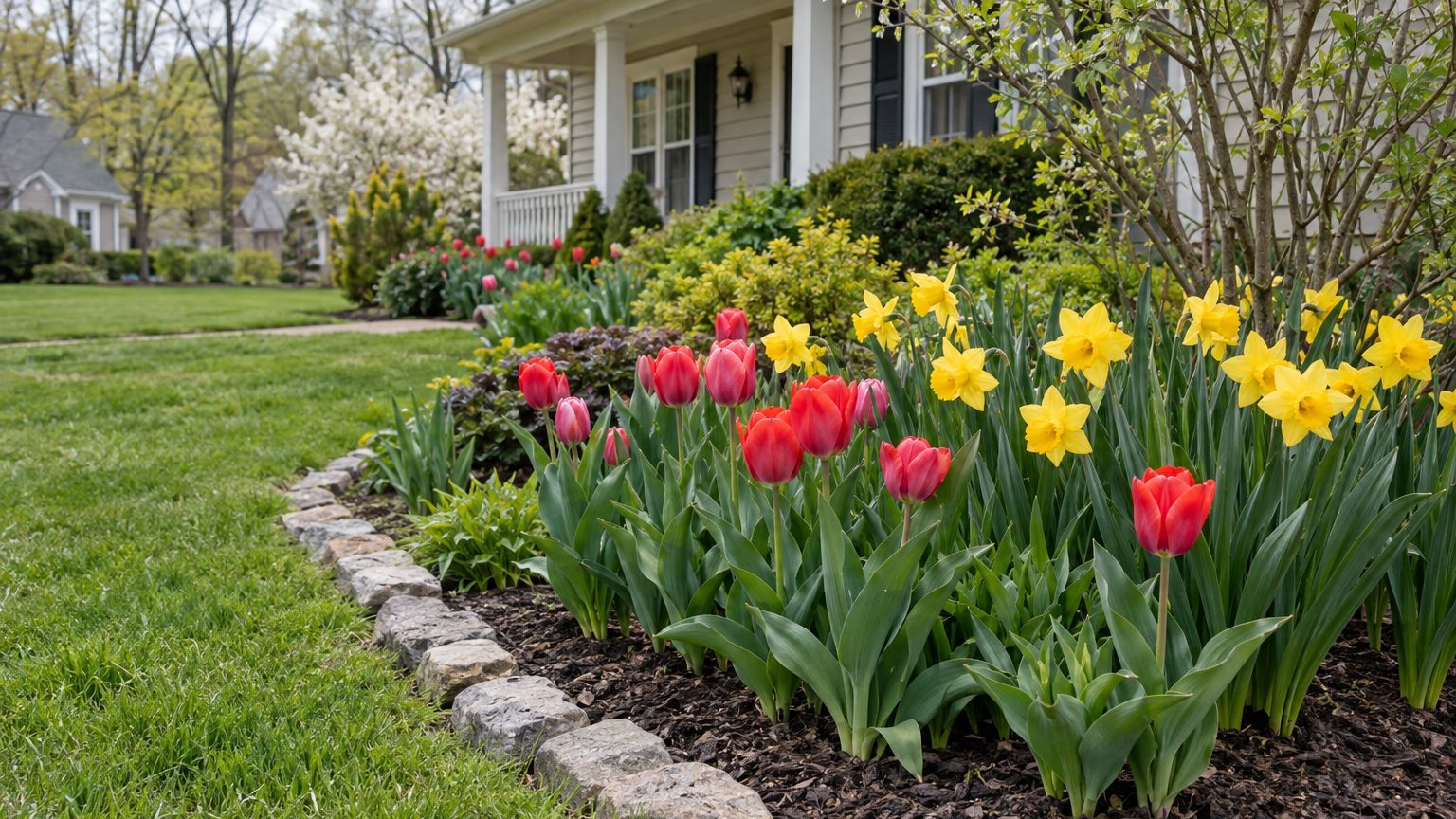
Daffodils pushing through cold ground in March are the payoff for a job done months earlier, when the soil felt cool and the garden was winding down. In New Jersey, spring bulbs go in during autumn. The timing ranges from the start of the cooling season in cooler spots to the end of the cooling season in slower-cooling ones, and it decides whether roots settle before winter.
When to Plant Tulips and Daffodils in New Jersey

October is the month to plant tulips and daffodils in New Jersey, and September or November also work when the soil cools sooner or later than usual. A bulb’s year here runs like this:
- In September, buy bulbs while the selection is full, and keep them somewhere cool and airy until planting time.
- In October, set tulips and daffodils into the ground, with the same window covering crocus, alliums and hyacinths.
- In November, plant any stragglers, since the ground is often still workable.
- In late fall, once the top of the soil has turned cold, spread a layer of mulch to even out the freezing and thawing.
- In late winter and into March, April and May, green tips break the surface and the flowers open.
Newark’s first fall frost typically falls between November 4 and November 16, but suburban and rural yards often see it sooner, so check your own county. New Jersey spans zones 6a to 7b on the USDA hardiness system, a winter cold that gives bulbs what they need without a stop in the refrigerator.
New Jersey — the year and the numbers
- State
- New Jersey
- USDA zones
- 6a-7b
- Last spring frost
- March 29 to April 6
- First fall frost
- November 4 to November 16
- Annual rain
- 47 in
- Lawn zone
- transition-season
- Source
- NOAA NCEI U.S. Climate Normals 1991-2020, 32F freeze probabilities · Newark
Which Spring Bulbs Do Best in New Jersey?
Daffodils are the dependable choice here, with alliums close behind. Winters in zones 6a to 7b give most bulbs the cold they want, and the main trouble is animals. Voles, squirrels, rabbits and deer eat tulips and crocus, but leave daffodils alone.
| Bulb type | How it does in New Jersey | Why |
|---|---|---|
| Daffodils | Return year after year and spread over time | Hardy perennial bulbs that animals leave alone |
| Tulips | Bloom well but are often short-lived | Animals eat them, and they fade sooner than daffodils |
| Crocus | Pretty but exposed to damage | Voles, squirrels and rabbits dig for them |
| Alliums | Reliable, with big round blooms | Needs winter chill to bloom, and deer pass them by |
Hyacinths are another bulb that deer tend to ignore. If squirrels or deer visit your yard, fritillaria and scilla are also left alone. Tulips are still worth growing, but treat them as a seasonal planting that may need replacing, with daffodils doing the long-term work.
When to Plant, Chill and Care for Spring Bulbs in New Jersey
Plant once the soil has cooled below about 60°F. That gives roots time to form before the ground freezes, yet keeps the bulbs from sprouting too soon in the fall. Most spring bulbs also need roughly 12 to 16 weeks of cold to flower, which New Jersey winters supply on their own.
| Task | Best timing in New Jersey | Why then |
|---|---|---|
| Plant tulips, daffodils, crocus, alliums and hyacinths | October, or mid-September to late November depending on how fast the soil cools | The ground is cool enough to hold the bulbs back but not yet frozen |
| Plant leftover bulbs | As long as the ground can be dug | A bulb in the ground, even late, does better than one stored all winter |
| Remove faded flowers | As the blooms finish in March, April or May | The plant stops spending energy on seed and keeps it for the bulb |
| Let the leaves die back | While they are still green, until they turn brown | The leaves feed the bulb for next year’s flowers |
Take off only the spent flowers and leave the leaves alone. Cutting or tying them while green weakens next year’s bloom, so wait for them to brown and pull away easily.
How Bulb Planting Time Changes Across New Jersey
The state is small, but the ground cools at different speeds from the hills to the shore, and that shifts where you land inside the October window.
- Sussex County and the Highlands: Frost and cold soil arrive sooner here, so planting can start toward the early edge of the window, when September gives way to October.
- Central Jersey suburbs: Soil cools at a middle pace, so October suits most yards, with some leeway into November.
- The Jersey Shore and South Jersey: The ground stays warm longer, so planting leans later, often into November, and gardeners here watch the soil rather than the calendar.
Whichever part of the state you garden in, the soil is a better guide than the date on the calendar.
Where to Get Bulb Advice in New Jersey
Rutgers Cooperative Extension handles bulb questions for the whole state, and each county has its own office that knows local soil and local pests. Reach out when bulbs fail to appear or when you want to know what your yard needs.
- The Rutgers Cooperative Extension website has fact sheets on spring bulbs, which are handy to read before the planting window opens in September.
- Your county extension office can test your soil and look at a failed planting, so call when bulbs stay small or fail to return in spring.
Common Questions
Should You Chill Tulips in the Refrigerator Before Planting in New Jersey?
Not here. Refrigerator chilling is for places where winters are too mild to supply the cold, and a New Jersey winter does that work in the ground. Plant tulips and hyacinths straight into the soil in October.
Are Daffodils Good for Naturalizing in a Yard?
Yes. Daffodils are well suited to naturalizing, meaning scattered clumps across an area. They never have to be dug up, and rabbits and deer pass them by, so a drift planted once keeps coming back.
Which Spring Bulbs Bloom at the Start and the End of the Season?
Snowdrops and winter aconites open at the start of the season. Alliums, the ornamental onions, come at the end. Daffodils, hyacinths and tulips fill the stretch between.