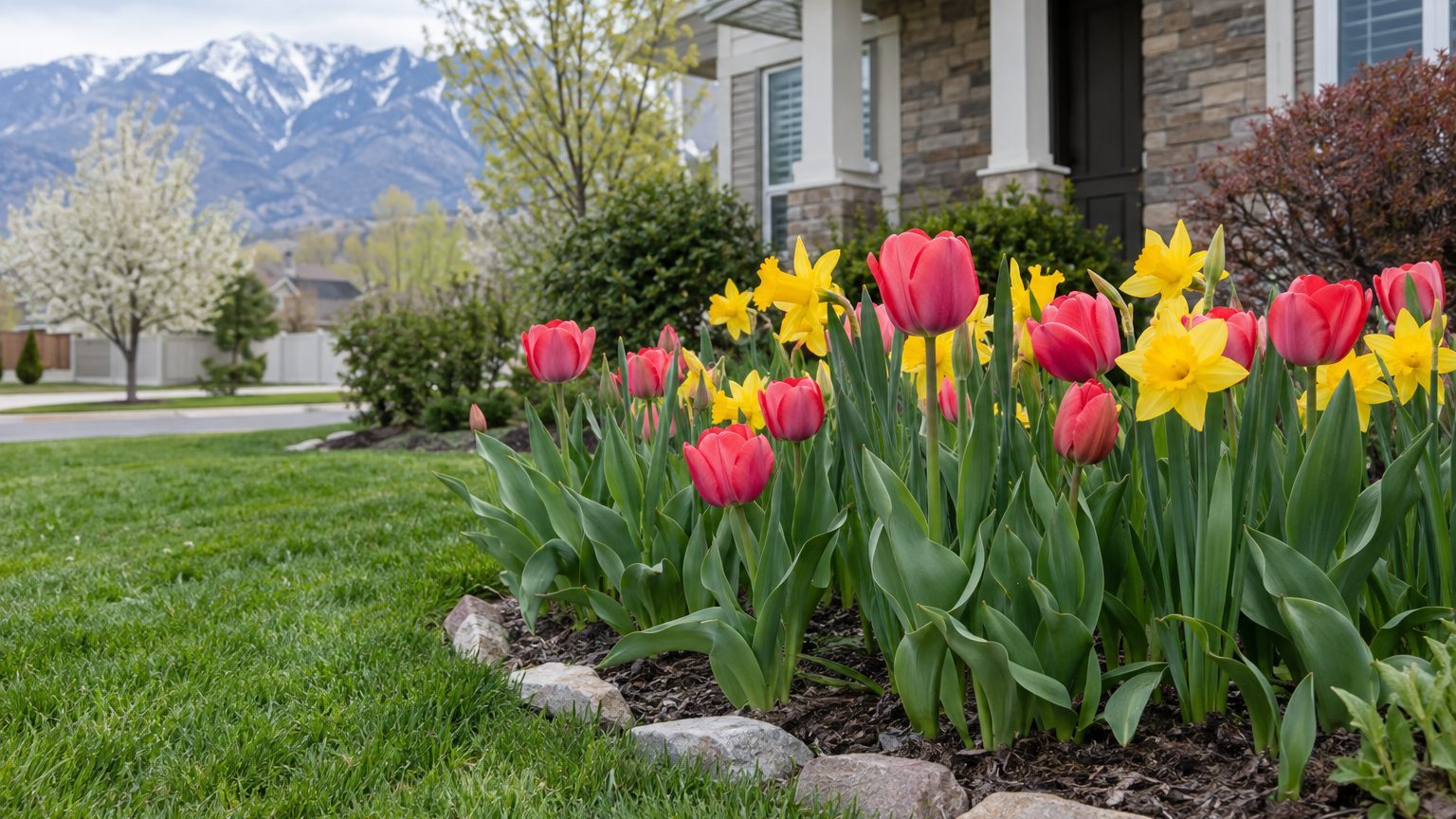
Daffodil shoots pushing through cold ground in spring are the payoff for work done months earlier, while the soil was cooling. In Utah that work belongs to autumn. The bulbs need time to root before winter locks the ground, and elevation shifts the timing from one part of the state to another.
When to Plant Tulips and Daffodils in Utah

Plant tulips and daffodils in Utah in September and October, so the bulbs root well before the ground freezes. A bulb’s year here runs in a few clear steps.
- In September, buy bulbs while the selection is full, and pick ones that feel firm and heavy, with no soft spots or mold.
- Through September and October, plant once the soil has cooled below about 60°F. That keeps the bulbs from sprouting in the fall and still gives roots time to form.
- In late fall, after planting, spread a loose layer of mulch over the bed so the soil does not swing between thaw and freeze.
- Through winter, the cold in the ground gives tulips and daffodils the chilling they need to flower, so there is nothing to do but wait.
- In early spring, green shoots break the surface and the bed begins building toward bloom.
Dates here are given for Salt Lake City, where the first fall frost usually falls between October 18 and October 29. A frost date marks the risk to tender plants, not the day bulbs stop rooting. Utah spans zones 4a to 9a on the USDA hardiness system, so higher and southern parts of the state differ from the valley.
Utah — the year and the numbers
- State
- Utah
- USDA zones
- 4a-9a
- Last spring frost
- April 12 to April 29
- First fall frost
- October 18 to October 29
- Annual rain
- 16 in
- Lawn zone
- transition-season
- Source
- NOAA NCEI 1991-2020 Climate Normals, 32F freeze probabilities · Salt Lake City
Which Spring Bulbs Do Best in Utah?
Daffodils are the dependable choice in Utah, and they are deer resistant. Tulips flower well once they get their winter cold, but they are a favorite of hungry wildlife. Crocus and alliums also grow here, with alliums asking for the least fuss.
How well a bulb copes with your soil and with hungry critters should guide most of your choices, so pick the common bulbs with those two conditions in mind.
| Bulb type | How it does in Utah | Why |
|---|---|---|
| Daffodils | Dependable, and left alone by wildlife | Deer resistant, so they are easy to leave unfenced |
| Tulips | Flower once they get winter cold, but need protection | Voles, squirrels, rabbits and deer eat them |
| Crocus | Grow well, though often nibbled | Voles, squirrels, rabbits and deer eat them |
| Alliums | Bloom after winter chill | They need winter chill to flower |
Hyacinths follow the tulip pattern, needing winter cold to bloom. Where a bed gets visited by deer or voles, put daffodils and alliums in the front line and tuck tulips and crocus into spots you can guard.
When to Plant, Chill and Care for Spring Bulbs in Utah
Three jobs fill the bulb year, and each has its own signal. Planting and chilling follow the calendar, while leaf care follows what the plant is doing.
| Task | Best timing in Utah | Why then |
|---|---|---|
| Plant | September and October | Bulbs root before the ground freezes |
| Chill | Through winter, in the ground | Most spring bulbs need about 12 to 16 weeks of cold to flower |
| Leave the foliage | After bloom, while the leaves are green | Leaves feed the bulb for next year |
Take off only the faded flowers. Leave the leaves standing until they turn yellow and then brown, and do not cut or tie them while they are green.
How Bulb Planting Time Changes Across Utah
Utah’s elevation swings are large, and the soil cools at different speeds from place to place. The state’s monthly window stays the same, but where you sit inside it shifts.
- Salt Lake Valley: This mild valley follows the usual September and October window comfortably. Plant any time soil has cooled.
- Park City and the Wasatch high country: Higher ground is colder, so soil cools sooner. Lean toward the front of the window and get bulbs in early.
- Cache Valley: This northern valley sits high and runs colder than Salt Lake. Plant earlier in the window so roots settle before the ground hardens.
- St. George: Southern Utah is warmer, so the soil takes longer to cool. Wait until the soil has dropped below the planting threshold, toward the later part of the window.
A soil thermometer pushed a few inches into the bed settles the question wherever you garden.
Where to Get Bulb Advice in Utah
Utah State University Extension publishes gardening guidance written for the state’s conditions, and your county extension office can help with a specific bed.
- The extension website carries articles on bulb planting, and it is worth reading before shopping in September.
- A county extension office can look at a struggling planting or test your soil, which helps in a bed where bulbs have failed before.
- Before planting day, bring a soil sample to the county office, so any fixes are in place when the bulbs go in.
Common Questions
Do Tulips Come Back Every Year in Utah?
Often they do not. Tulips are frequently short-lived in the garden, fading after a season or two. Daffodils last longer and are the more reliable perennial bulb, so they are the better pick for a bed meant to stay put.
Can You Plant Bulbs After the Ground Starts to Freeze?
Yes, as long as the ground can still be dug. A bulb left in its bag is better planted late than stored over the winter, because it will not bloom if it never gets its cold.
Do You Need to Chill Tulips in the Refrigerator?
Not for bulbs planted outdoors in fall, since the winter ground does the chilling. The refrigerator is for forcing indoors: pot the bulbs, chill them, then bring them out into warmth and light.