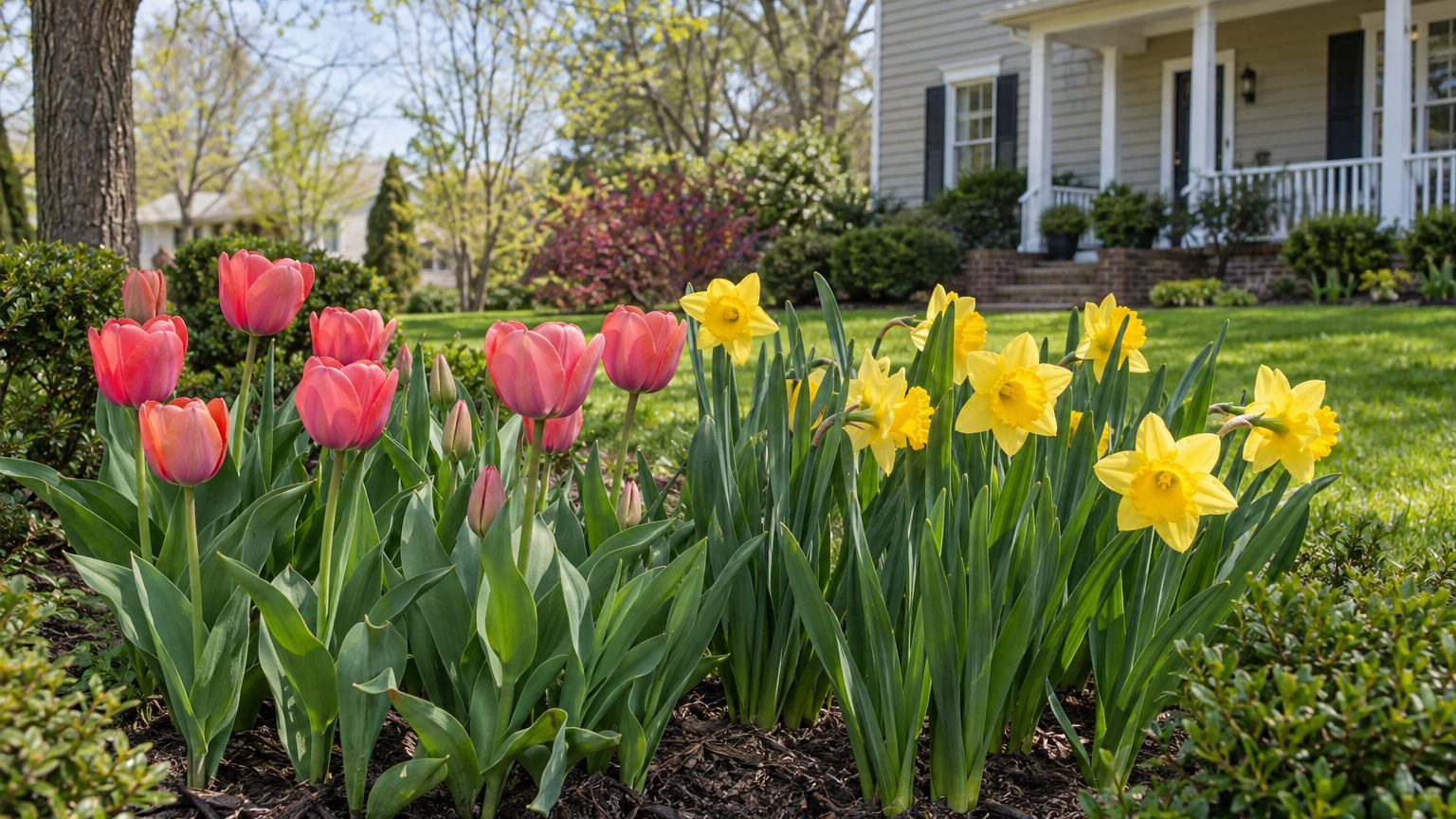
Daffodil leaves poking through cold ground and tulip cups opening in spring begin with a quiet job done months earlier, when the soil turned cool. In Virginia, that job belongs to autumn, and the exact timing depends on where you garden. These are the months, the bulbs worth planting, and the habits that keep them coming back.
When to Plant Tulips and Daffodils in Virginia

October is the month for planting tulips and daffodils in Virginia, and the job can also be done in September or November if your soil cools early or late. At Virginia Beach, the first fall frost tends to arrive between November 10 and November 24, and the state spans USDA hardiness zones 5a to 8b. Here is the bulbs’ year.
- In September, shop while the selection is full, and choose bulbs that feel firm and heavy for their size. Soft or moldy ones rarely recover.
- In late summer and early fall, if winter stays mild where you garden, tulips and hyacinths go into the refrigerator before planting so they get the cold they would otherwise miss.
- In October, plant once the soil has cooled down from its summer warmth. That is early enough for roots to form before the ground freezes and late enough that the bulbs do not sprout in fall.
- After planting, and again once cold weather settles in, spread a layer of mulch over the bed to even out soil temperature through winter.
- By late winter, green tips push through the mulch, and flowers open from March to May, with the earliest sometimes showing in February.
Bulbs cannot read a calendar, only the soil, so a warm October may call for waiting a little, while a cool one lets you start sooner.
Virginia — the year and the numbers
- State
- Virginia
- USDA zones
- 5a-8b
- Last spring frost
- March 20 to April 3
- First fall frost
- November 10 to November 24
- Annual rain
- 47 in
- Lawn zone
- transition-season
- Source
- NOAA NCEI 1991-2020 Climate Normals, 32F freeze probabilities · Virginia Beach
Which Spring Bulbs Do Best in Virginia?
Daffodils are the most dependable choice here. They come back year after year and animals leave them alone. Alliums, crocus, and hyacinths also grow well, since Virginia’s winters supply the cold they need to flower. Tulips succeed too, but they take more care.
The real trouble in Virginia yards is wildlife. Voles, squirrels, rabbits, and deer eat tulips and crocus, which can leave a bed empty by spring.
| Bulb type | How it does in Virginia | Why |
|---|---|---|
| Daffodils | Reliable, returns for years | Hardy perennial bulb that animals skip |
| Tulips | Lovely but often short-lived | Eaten by voles, squirrels, rabbits, and deer |
| Crocus | Fine where animals are kept off | Eaten by voles, squirrels, rabbits, and deer |
| Hyacinths | Good, often left alone by deer | Chilled first where winters run mild |
| Alliums | Dependable, a good pick for deer country | Alliums need the cold of winter to bloom |
If deer or squirrels visit your yard, lean on daffodils, hyacinths, and alliums, and treat tulips as a seasonal pleasure rather than a permanent resident. Fritillaria and scilla are also bulbs deer tend to pass over.
When to Plant, Chill and Care for Spring Bulbs in Virginia
The bulb year has only a few jobs, and each one has its moment. Planting follows the soil. Chilling matters only where winters are too gentle. Leaf care takes place in spring, after the flowers have faded.
| Task | Best timing in Virginia | Why then |
|---|---|---|
| Plant | October, though September and November also work | Soil has cooled, so roots settle before freezing |
| Chill tulips and hyacinths | In the refrigerator before planting, only where winter is mild | Most spring bulbs need about 12 to 16 weeks of cold to flower |
| Enjoy the bloom | March to May, sometimes February | Bulbs open in a long run through spring |
| Leave the leaves | Until they turn yellow to brown | Green leaves feed the bulb for next year |
Remove only the faded flowers, never the leaves while they are green. A bulb still in the bag is better planted late than stored over the winter, so put it in whenever the ground can be dug.
How Bulb Planting Time Changes Across Virginia
Virginia stretches from the ocean to the mountains, and soil cools on different schedules along the way. Plant earlier where fall arrives sooner and later where it lingers.
- Blue Ridge and southwest Virginia: Fall comes sooner and winter is colder here, so start planting early in the window, even in September when the soil has cooled. Bulbs get settled well ahead of hard freezes.
- Virginia Beach and the Hampton Roads coast: This is the mild end of the state, so lean toward late October or November. Waiting keeps bulbs from sprouting early, and tulips and hyacinths here are the ones most likely to need a stint in the refrigerator.
Between those ends, trust a soil thermometer more than the date, and plant when it shows the soil has turned reliably cool.
Where to Get Bulb Advice in Virginia
Virginia Cooperative Extension answers local questions about bulbs, and your county office can look at problems up close.
- The extension website has guides on planting and bulb care, worth a read in late summer before you buy.
- Your county extension office can run a soil test and help diagnose a bed where bulbs fail, so take a sample before planting.
- Master gardeners connected with your county office can suggest bulbs suited to your neighborhood, so ask early in September and plant when the soil cools.
Common Questions
Which Way Up Do Tulip and Daffodil Bulbs Go?
Pointed end up, flat root end down. If a bulb’s orientation is unclear, plant it on its side, and the shoot will find its way to the surface.
Do Daffodils Need to Be Dug Up and Divided?
No. Daffodils never have to be dug, and they are good for naturalizing, which means scattering clumps through a lawn edge or bed. Lift them only if flowering thins out and the clump has grown crowded.
What Kind of Soil Do Spring Bulbs Like?
Loose, well-drained soil, because bulbs rot where water stands. Work compost into heavy clay before planting, or raise the bed slightly. A soil test through your county extension office shows whether anything else is needed.