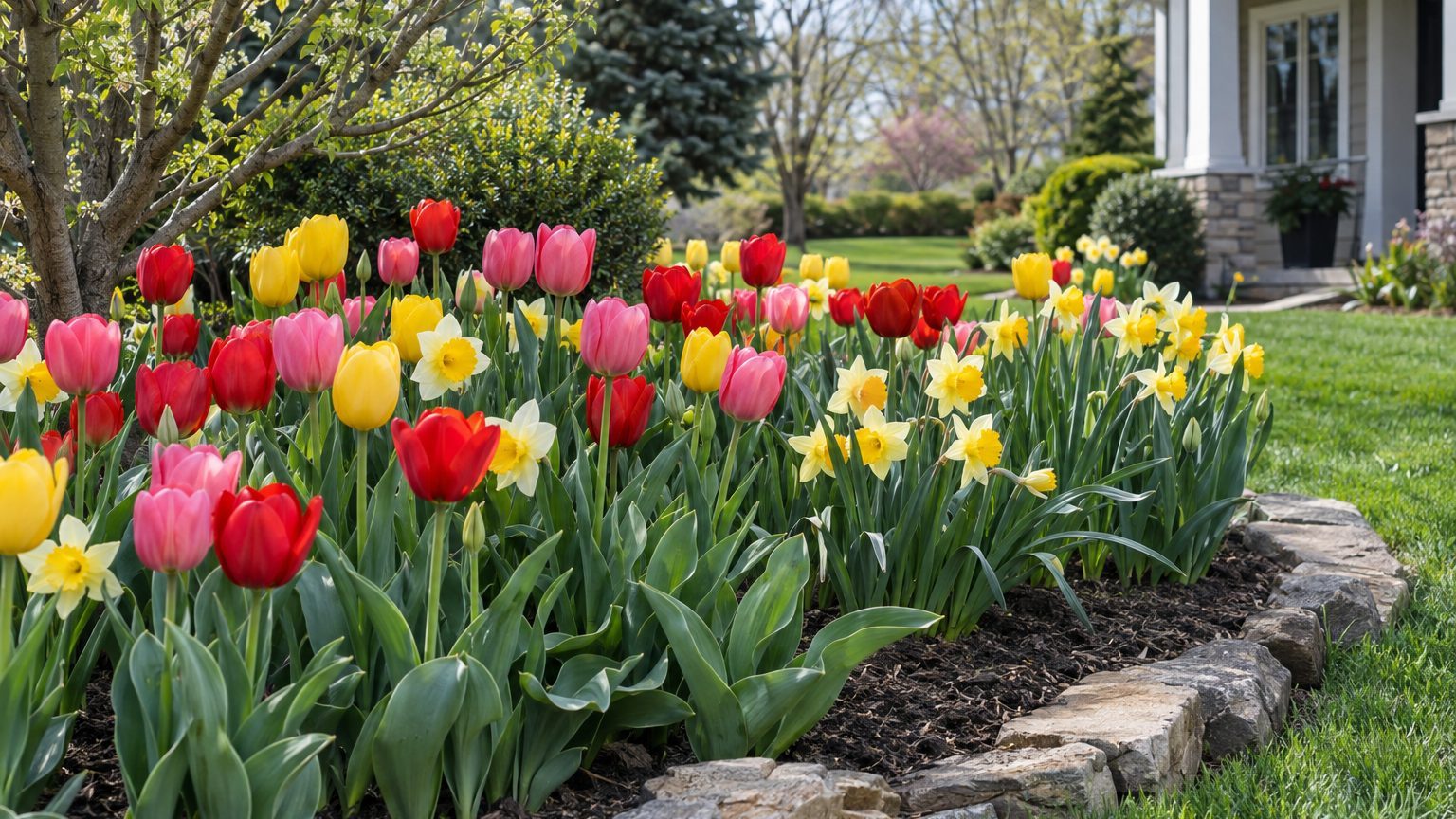
Tulip foliage pushing through cold soil in early spring is the payoff for work done months earlier, when the bulbs went into the ground. Growing tulips well comes down to a handful of choices: which group to buy, when to plant, how deep to set the bulb, and how to treat the leaves afterward. Each one is simple once you know the reason behind it.
When Should You Plant Tulips?
Plant tulip bulbs in the fall, because they need a stretch of winter cold before they will flower in spring. The exact month shifts with your climate, since a bulb in a cold northern yard meets that cold sooner than one on the Gulf Coast.
Mild-winter regions change the rule most. In Texas, where winters are gentle, tulips need six to 10 weeks of chilling, and in California, chilling the bulbs for 4 to 6 weeks before planting gives a better bloom.
The state selector right below this section leads to the page for your own state, where the planting months are laid out for your climate.
From the almanac
Bulbs in your state
The dates on this page depend on where you live. Your state's page carries its frost dates, its USDA zones and the year laid out month by month.
Northeast
Southeast
- Alabama
- Arkansas
- Delaware
- Florida
- Georgia
- Kentucky
- Louisiana
- Maryland
- Mississippi
- North Carolina
- South Carolina
- Tennessee
- Virginia
- West Virginia
Midwest
Southwest
West
Pacific Northwest
Canada
How to Grow Tulips

Tulips are forgiving when the basics are right: a sunny spot, loose soil that drains, and a bulb set at the proper depth. A few practical choices make the difference.
- Choose a spot with full sun or partial shade and well-drained, sandy, humus-rich soil, so that the bulb does not sit in water and rot over winter.
- Buy firm, full-sized bulbs, since a large bulb carries more stored energy into its first bloom.
- In Illinois, plant tulips in fall, setting bulbs 4 to 8 inches deep. Space them 4 to 8 inches apart; deeper planting within reason discourages multiplication and favors good-sized flowers for several years.
- Set them in groups or masses rather than single rows, so the color reads as a patch from the street instead of scattered dots.
- Remove faded flowers, which keeps the plant from spending energy on seed and sends it back to the bulb.
- Leave the leaves in place until they turn yellow, because the green foliage is feeding the bulb for next year.
Whether tulips return depends heavily on where you live. In Texas, they usually do not come back the next year, especially the farther south you plant, because winter soils never give them enough chilling hours. Heat works against them too: in North Carolina, tulips generally decline each year once exposed to temperatures above 70 degrees F, and the plant loses floral vigor when soil reaches 70 degrees F. That is why many gardeners in warm regions treat tulips as annuals and plant fresh bulbs each year, a habit also mentioned in Illinois.
Size varies a great deal from one variety to the next. In North Carolina, tulips run from 4 to 28 inches tall, and in Iowa they can be as short as 4 to 6 inches or as tall as 30 inches in bloom. Check the tag before choosing a spot, so tall flowers do not hide shorter neighbors.
Tulip Groups by Bulb Type
Tulips are sorted into groups by bloom time and parentage. In Georgia, the classification for cultivated tulips lists 15 divisions, and in Illinois, over 400 named cultivars are grouped into common classes such as Triumph, Darwin hybrid, Lily-flowered, Cottage, Parrot, Double-flowered and species tulips.
Most flowers are solitary, upright and saucer-shaped, with a total of six petals and sepals unless they are doubles. Colors cover everything except true blue.
| Bulb Type | What changes | Why it matters |
|---|---|---|
| Darwin hybrid | Grows to 30 inches tall, with large red, pink, orange, yellow or white blossoms | Tall stems suit the back of a bed, and in Utah this group is described as generally the longest blooming |
| Species tulips | Usually planted shallower than other tulips | A shallower hole fits the smaller bulb, so dig less deep than for garden hybrids |
| Garden tulips in general | Heights range from 8-10 inches to upwards of 24 inches in New York | Height decides whether a bed looks tidy or crowded, so match tall and short types to the right spots |
Triumph, Cottage, Parrot and the other classes each have their own look, so reading the label for height and flower form helps more than guessing from a photo. In South Dakota, late April and early May bring the broad range of colors and textures that more than 100 known species of garden tulips offer. For cut flowers, growers in Maryland look for a top bulb size of 12 cm and up, though some use the smaller 11/12 cm size, so bigger bulbs are the better pick when you want tall, sturdy stems.
Tulip Growing Mistakes to Avoid
Planting Too Shallow

A bulb set near the surface tends to multiply into many small bulbs and produce smaller flowers. In Illinois, dig 4 to 8 inches deep, enough to favor large blooms for several years but not so deep that the shoot struggles to reach the light. Species tulips are the exception and want a shallower hole.
Cutting Green Leaves

Trimming or tying the foliage after bloom looks tidy, but it starves the bulb. The leaves keep feeding it until they turn yellow, and the next spring’s flower depends on that. Remove only the faded flower heads, and hide the leaves behind other plants if they bother you.
Skipping the Chill in Warm Regions
Gardeners in mild climates sometimes plant tulips straight from the bag and wonder why the bloom is poor. In Texas, six to 10 weeks of chilling is needed before planting, and in California, 4 to 6 weeks gives a better bloom. If your winters are mild, chill the bulbs first, and plan on fresh bulbs the following year since they may not return.
When to Plant Tulips in Your State
The signal to plant is the fall season itself: the bulbs go in once the weather has turned cool and before the ground freezes hard. Bulbs still unplanted go in as soon as the soil can be dug.
- Open the page for your state to find the planting months that match your local climate.
- Go there before you shop, so the bulbs you buy arrive in time to be planted.
Common Questions
Can You Plant Tulips in the Spring?
Tulip bulbs must be planted in the fall for spring color. A bulb set out in spring has missed the winter cold it needs, so it will not give the bloom you expect.
Where Do Tulips Grow Best?
Full sun or partial shade suits them, in soil that drains freely. Sandy ground rich in organic matter works well, while heavy, soggy soil invites rot.
What Should You Do with Tulip Bulbs After the Foliage Dies Back?
In Illinois, bulbs may be moved or discarded in midsummer once the foliage has withered. Some gardeners simply plant new bulbs each year, which is a practical route where the climate is too warm for tulips to return.