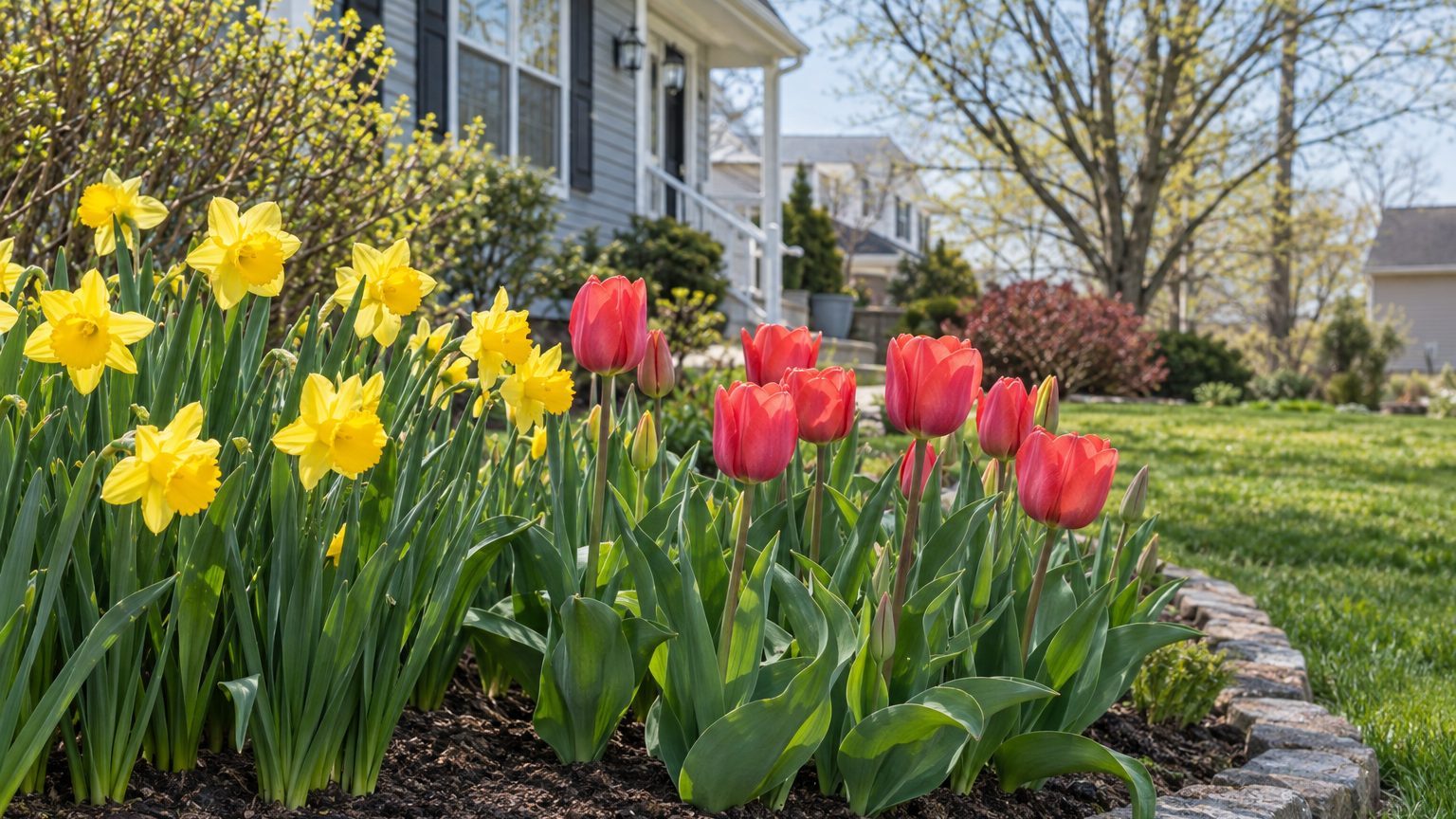
Bulb bags show up in garden centres while the maples are still turning, and that is the cue for tulips and daffodils across Nova Scotia. The bulbs go in the ground in autumn, spend the winter in cold soil, and flower the following spring. The timing matters because roots need a head start before the ground freezes.
When to Plant Tulips and Daffodils in Nova Scotia

October is the month to plant tulips and daffodils in Nova Scotia, and the bulb’s year runs from autumn purchase to a first green shoot in spring. These dates follow the nearest comparable climate, so confirm local timing with a garden centre, a garden society or a provincial gardening group.
- In early autumn, buy bulbs while the selection is full, choosing firm ones with no soft spots or mold, and keep them somewhere cool and dry until the soil is ready.
- Through October, plant tulips, daffodils, crocus, hyacinths and alliums once the soil has cooled below about 15°C (60°F), early enough for roots to form and late enough that nothing sprouts before winter.
- In November and December, plant any bulbs still waiting, as long as the ground is not frozen and a trowel still goes in.
- After the first hard freeze, mulch the bed with shredded leaves or bark to keep the soil evenly cold and stop winter thaws from heaving the bulbs.
- In April and May, the first shoots push up through the mulch, and flowers follow. Bloom can start in March for the hardiest bulbs.
Halifax sits in Canadian hardiness zone 6b, and the first fall frost arrives there on average October 18, so frost comes sooner in some years and later in others. Colder inland and upland districts run behind that, which is one more reason to plant at the start of the window rather than the end.
Nova Scotia — the year and the numbers
- State
- Nova Scotia
- Hardiness zones
- 6b
- Last spring frost
- May 7
- First fall frost
- October 18
- Annual rain
- 55 in
- Lawn zone
- cool-season
- Source
- Environment and Climate Change Canada — Canadian Climate Normals 1981-2010, station HALIFAX STANFIELD INT'L A · Halifax
Which Spring Bulbs Do Best in Nova Scotia?
Daffodils, tulips, crocus, hyacinths and alliums all grow in Nova Scotia, because winters give the cold that spring bulbs need to flower. The real differences are in wildlife and staying power. Daffodils are the dependable choice, while tulips and crocus need protection from hungry animals.
Soil should drain freely, since bulbs sitting in cold standing water tend to rot. Hyacinths follow the same planting window as tulips and need the same drainage.
| Bulb type | How it does in Nova Scotia | Why |
|---|---|---|
| Daffodils | Reliable, and they last for years | Voles, squirrels, rabbits and deer leave them alone |
| Tulips | Bloom well but often fade after a few seasons | Voles, squirrels, rabbits and deer eat them |
| Fosteriana tulips | Come back better than most tulips | This group perennializes well |
| Crocus | Grow well where animals are kept off | Voles, squirrels, rabbits and deer eat them |
| Alliums | Flower at the end of the spring bulb season | They need the cold of winter to bloom |
Daffodils also work as a living fence. Planted around tulips, they help protect plants that deer like to browse.
When to Plant, Chill and Care for Spring Bulbs in Nova Scotia
The jobs are few and they cluster in autumn and just after bloom. Most spring bulbs need about 12 to 16 weeks of cold to flower. A Nova Scotia winter delivers that outdoors, so the refrigerator step used in mild-winter climates is not needed here.
| Task | Best timing in Nova Scotia | Why then |
|---|---|---|
| Plant bulbs | October, or November and December if the ground is not frozen | Roots form before the freeze, and soil below 15°C (60°F) keeps bulbs from sprouting |
| Chill bulbs | Not needed, winter does it in the ground | Cold soil supplies the weeks of chilling the flower buds require |
| Mulch | After the ground turns cold | Even cold keeps bulbs from heaving in winter thaws |
| Leave the foliage | After bloom, in April and May, until the leaves turn brown | Green leaves feed the bulb for next year’s flowers |
A bulb still unplanted belongs in the ground as soon as it can be dug, even late in the year. That beats storing it over winter.
How Bulb Planting Time Changes Across Nova Scotia
Nova Scotia is a long, narrow province wrapped in ocean, so soil cools at different speeds from one district to the next. Start the planting window earlier where autumn arrives sooner and use more of it where the season lingers.
- Annapolis Valley: Sheltered inland ground cools a little sooner on clear autumn nights, so planting early in the window works well here.
- South Shore and Halifax coast: The Atlantic holds warmth into the fall, so soil cools later than inland and planting can run toward the end of the window.
- Cape Breton Highlands: Upland ground turns cold sooner and freezes sooner, so plant at the start of the window and mulch promptly.
- Eastern Shore: Cool, damp ocean air slows the spring warm-up, so bloom tends to come a little later than in the valley.
A soil thermometer settles the question wherever you garden. When the soil reads below about 15°C (60°F), it is time to plant.
Where to Get Bulb Advice in Nova Scotia
Nova Scotia has no county extension offices, so local help comes through the province and through gardeners who know your district. Soil that stays wet or bulbs that fail to come up are good reasons to ask.
- The Nova Scotia Department of Agriculture is the provincial source for questions about growing and soil, and a call before planting saves guessing.
- Local garden centres and garden societies know which bulbs are performing in your district, and autumn is when they stock the best advice and the bulbs.
- A soil test in early autumn tells you if the bed drains well enough before the bulbs go in.
Common Questions
Can You Plant Bulbs That Were Left in the Bag?
Yes. Plant them as soon as the ground can be dug, even if that falls well after the usual window. A bulb in the soil, even a late one, has a better chance than one stored through winter.
Do Daffodils Come Back Every Year?
Daffodils are the more reliable perennial bulb and tend to last for years. Tulips are often short-lived in the garden, so many gardeners replant them or choose types known to perennialize.
Should You Remove Faded Flowers After Bloom?
Take off only the faded flowers. The leaves stay on until they turn brown, because they are still feeding the bulb for next year’s bloom.