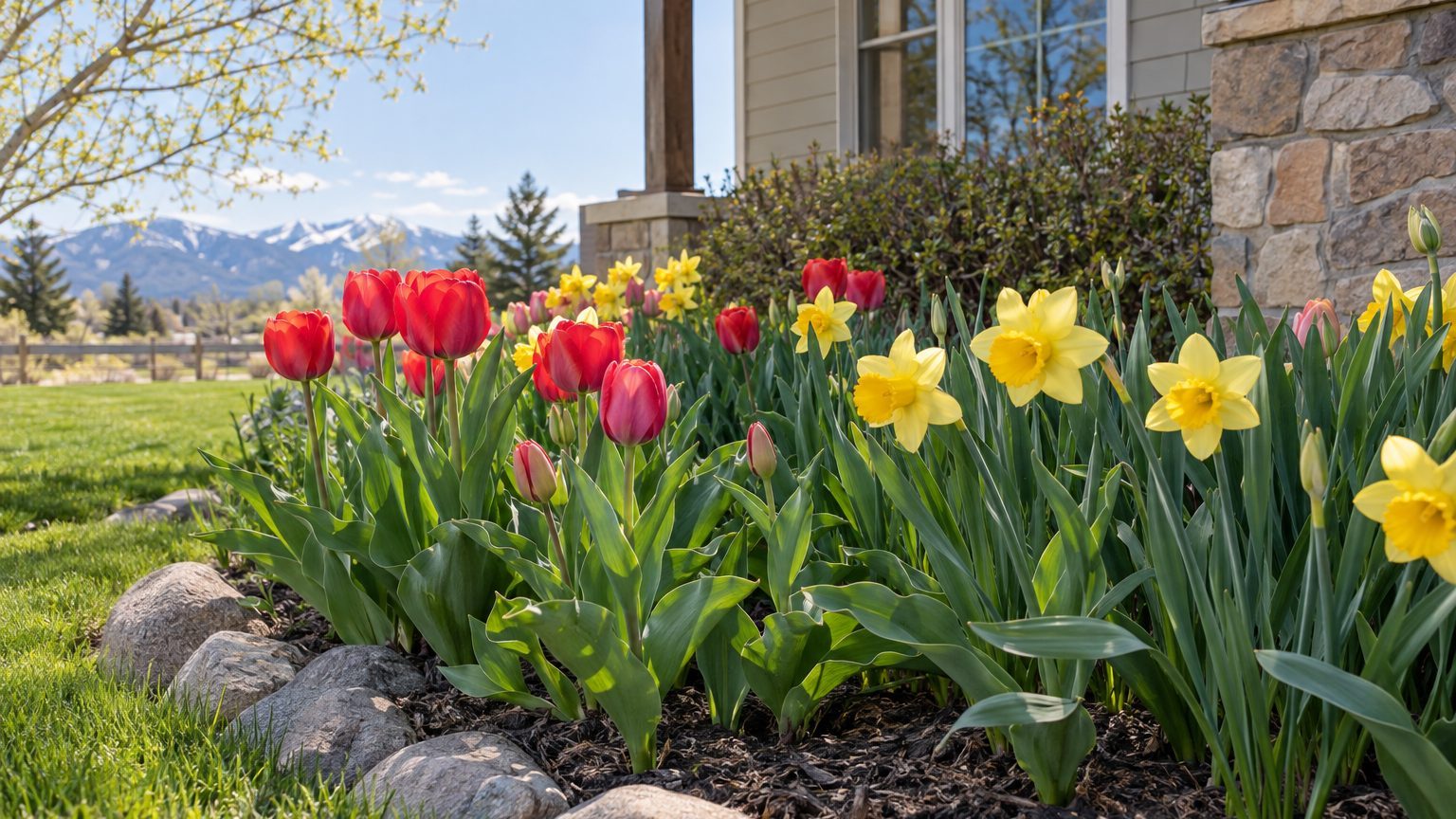
Tulip and daffodil shoots pushing through cold spring soil are the payoff for work done the autumn before. In Montana, that work happens as the garden winds down and the ground cools, well before the first hard freeze locks it up.
When to Plant Tulips and Daffodils in Montana

Plant tulips and daffodils in September and October, so the bulbs root before the ground freezes. The year for a spring bulb here runs like this.
- In late summer, buy bulbs while garden centers still have a full selection, and choose firm ones with no soft spots or mold.
- In September, start planting once the soil has cooled below about 60°F, which keeps the bulbs from sprouting in fall and still gives roots time to form.
- Through October, keep planting while the soil can still be worked, since roots grow as long as the ground is unfrozen.
- After the soil starts to freeze, spread a layer of mulch over the bed to hold the cold steady and limit the thaw-and-freeze swings that heave bulbs upward.
- In spring, the first green tips break the surface as the snow melts, and the leaves start building next year’s flowers.
Billings, used here as the reference city, sees its first fall frost between October 1 and October 14, and it sits on the milder side. Montana spans hardiness zones 3a to 6a on the USDA system, so mountain valleys can run colder and frost in any month.
Montana — the year and the numbers
- State
- Montana
- USDA zones
- 3a-6a
- Last spring frost
- April 29 to May 10
- First fall frost
- October 1 to October 14
- Annual rain
- 14 in
- Lawn zone
- transition-season
- Source
- NOAA NCEI 1991-2020 Climate Normals, 32F freeze probabilities · Billings
Which Spring Bulbs Do Best in Montana?
Daffodils are the most dependable choice here, and tulips do well too, since Montana winters give them all the cold they need. Crocus and alliums fit in easily. The real obstacle is wildlife, because voles, squirrels, rabbits and deer go after some bulbs and skip others.
| Bulb type | How it does in Montana | Why |
|---|---|---|
| Daffodils | Reliable perennial that lasts for years | Deer and other critters leave them alone |
| Tulips | Bloom well but fade sooner than daffodils | Voles, squirrels, rabbits and deer eat them |
| Crocus | Thrive in dry soil but need protection from critters | Crocus are among the best-adapted bulbs for droughty conditions, though voles and squirrels eat them. |
| Alliums | Bloom without trouble | They need a chill period to flower |
Species tulips deserve a look if your yard is dry, since they rank among the bulbs best adapted to droughty conditions. Darwin hybrids and Emperor tulips are bred to return for several years, a useful trait where tulips usually fade. Hyacinths grow here as well, planted on the same schedule as the others.
When to Plant, Chill and Care for Spring Bulbs in Montana
The bulb year has only a few jobs, and each has a clear window or a clear sign. Planting has months attached. Aftercare is judged by the plant itself.
| Task | Best timing in Montana | Why then |
|---|---|---|
| Plant tulips, daffodils, crocus, alliums and hyacinths | September to October | Roots settle in before the ground freezes |
| Plant bulbs that are still in the bag | Any day the ground can be dug | A late bulb in the ground beats a stored one |
| Remove faded flowers | Right after bloom | The plant stops spending energy on seed |
| Leave the foliage alone | While the leaves are still green, until they turn brown | The leaves feed the bulb for next year’s flowers |
Mulching follows planting, once the soil has begun to freeze. Take off only the spent blooms. Leave the leaves standing, never tied or cut while green, even when they look a little untidy beside the emerging perennials.
How Bulb Planting Time Changes Across Montana
Elevation does most of the sorting in Montana. Higher, colder ground cools off sooner, so the planting window shifts toward the front of the range.
- Billings and the Yellowstone Valley: This is one of the milder valleys, so planting can run through both months of the window, as long as the soil can still be worked.
- Bozeman and the Gallatin Valley: Higher ground and colder nights mean the soil cools sooner, so lean toward September and get bulbs in early.
- Butte and West Yellowstone: Frost can arrive in any month at these elevations, so plant at the first sign of cooling soil and do not wait for October.
Wherever you garden, the soil thermometer is a better guide than the calendar for deciding which week to start.
Where to Get Bulb Advice in Montana
Soil, elevation and critters vary from one valley to the next, so local help pays off when bulbs fail or you are unsure about a site.
- Montana State University Extension has research-based guidance for the state’s growing conditions, and it is worth checking in late summer before you order bulbs.
- Your county extension office can diagnose a struggling bed and often handles soil tests, so call before planting if drainage is a worry.
Common Questions
Do You Need to Chill Tulip Bulbs in the Refrigerator in Montana?
No. Most spring bulbs need about 12 to 16 weeks of cold to flower, and a Montana winter supplies that outdoors. Refrigerator chilling is for places where winters are too mild.
Do Tulips Come Back Every Year in Montana?
Some return, but tulips are often short-lived in the garden. Daffodils are the more reliable perennial, so plant them where you want a lasting display and treat tulips as a bonus.
Can You Plant Bulbs After the Ground Starts to Freeze?
Yes, as long as you can still dig a hole. A bulb planted late will do better than one left sitting in storage, so get it in the ground, mulch over it, and let winter do the rest.