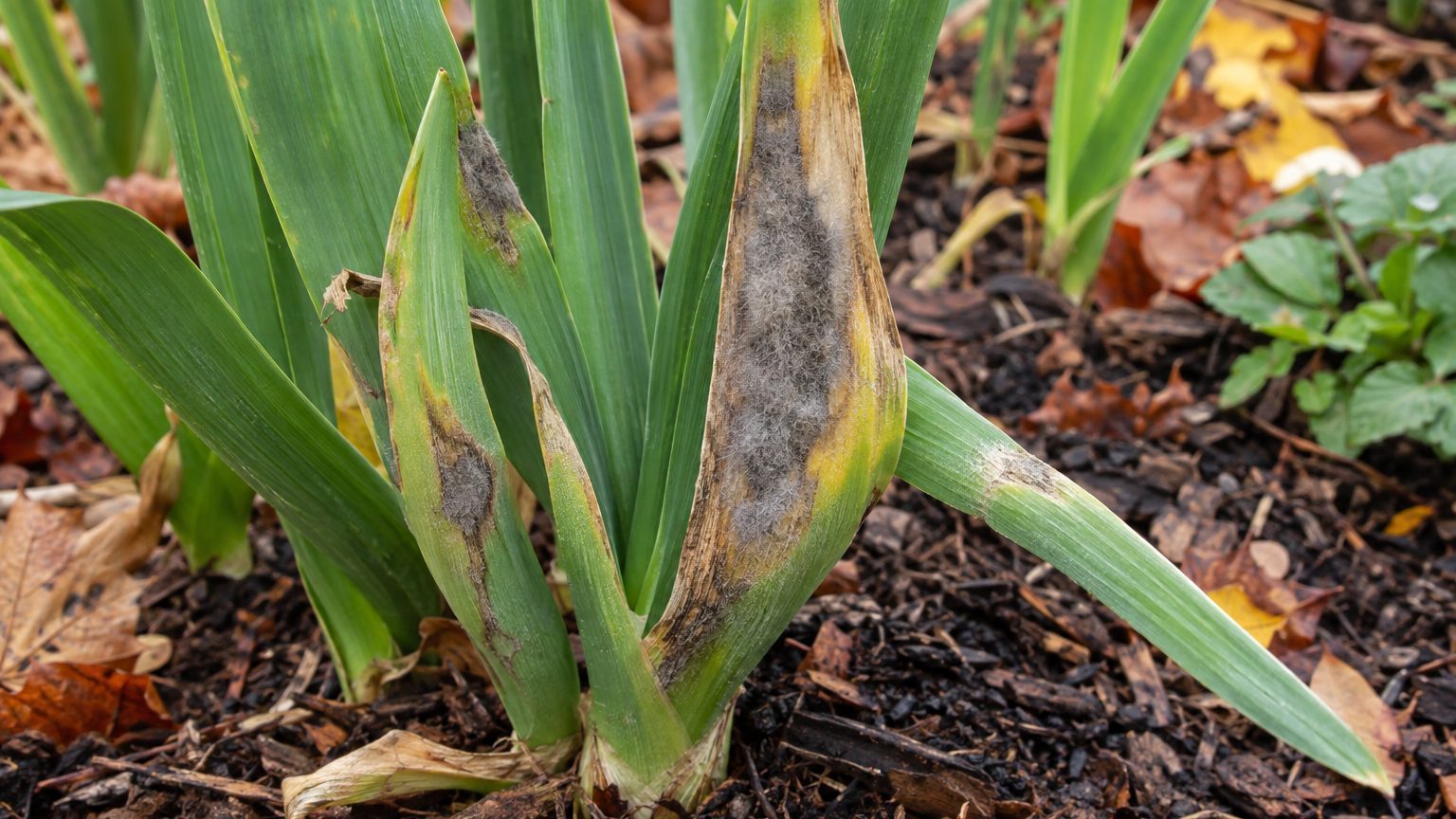
Tulip leaves that emerge twisted, or petals dotted with spots after a damp spell, are easy to spot when you walk the bed in spring. The usual cause is tulip fire, a fungal disease of tulips that attacks leaves, stems and flowers. A bed that has had it can be managed with a few steady habits, and most of them cost nothing.
Tulip Fire: What You See
Look first for burned-looking spots on leaves and flowers, then check the rest of the plant for these signs.
- Spots on leaves and flowers often have dark borders that resemble burn injury.
- On leaves, the patches are slightly sunken, yellow to light tan and ringed by a water-soaked area, which shows most on light-colored varieties.
- Spots on colored petals look white, while spots on white petals look brown.
- In Arkansas, leaves just emerging from the soil may be distorted and twisted, and they often wither.
- In damp, overcast weather, damaged leaves, stems and flowers become covered with a fuzzy grey mat.
In Washington, severe infections can blight entire buds and blossoms.
From the almanac
Bulbs in your state
The dates on this page depend on where you live. Your state's page carries its frost dates, its USDA zones and the year laid out month by month.
Northeast
Southeast
- Alabama
- Arkansas
- Delaware
- Florida
- Georgia
- Kentucky
- Louisiana
- Maryland
- Mississippi
- North Carolina
- South Carolina
- Tennessee
- Virginia
- West Virginia
Midwest
Southwest
West
Pacific Northwest
Canada
Tulip Fire or Something Else?
Several ordinary problems leave brown or pale marks on tulips, so one odd spot proves little. Pair what you see with where it sits and what the weather has been doing.
| Looks like | How to tell them apart |
|---|---|
| Frost or hail injury: torn, blackened or scorched edges on leaves and petals | Injury alone leaves clean damage. Tulip fire adds water-soaked rings around sunken spots and a grey fuzzy mat in damp weather. In Illinois, the disease commonly follows frost or hail damage. |
| Gray mold on another plant: fuzzy grey growth on soft tissue | This fungus is specific to tulips and lilies, so grey mold on a shrub or perennial is a separate matter. Check whether the spotted plant is a tulip or lily and whether its leaves show spots. |
| Normal petal fading: browning petals at the end of bloom | Fading petals are dead tissue. Tulip fire shows on young leaves and fresh petals that are still colored, with spots that have darker borders. |
Because the fungus feeds first on dead or declining tissue, fading petals are often where trouble starts, even though the browning itself is normal.
What Causes Tulip Fire, and Where It Is Worst
A fungus called Botrytis tulipae causes the disease. It overwinters in soil, in affected bulbs and in diseased plant debris. Each spring, the usual starting point is a stunted, blighted plant grown from a diseased bulb that was planted by accident. In damp, overcast weather, a dense grayish mold forms on it and spreads to neighbors.
Cool, damp spring or summer weather favors the disease in Washington. In Illinois, cool, wet spring weather can lead to an almost complete loss of flowers if the disease is not controlled. It is also a common fungal disease of bulbs in the Northeast. The disease is the most common and serious one wherever tulips are grown, so no region is exempt.
Poor air movement helps it along, whether from crowded plantings, excessive weeds or a stagnant spot. In Illinois, spores have survived on the surface of moist soil at 50°F (10°C). They can stay there for up to six weeks. Petals that drop onto leaves can carry the infection further.
How to Treat Tulip Fire
Start with the plants themselves, then clean up the bed and change its conditions.
- Dig out stunted, twisted or blighted shoots, bulb included, so that the plants feeding the first spores are gone before the mold spreads.
- Pick off fallen petals lying on leaves, because decaying petals give the fungus a place to feed and spread.
- Bag diseased debris and put it in the trash instead of the compost pile, since the fungus overwinters in plant debris.
- Pull weeds and thin crowded clumps so air moves through the bed and foliage dries faster.
- Water at the soil rather than over the leaves, which keeps leaves from staying wet in cool weather.
- Ask your state’s cooperative extension office which fungicides are approved where you live, since labels and rules differ from state to state.
Leaves that still look healthy stay on the plant until they turn yellow, because they are feeding the bulb for next year.
How to Prevent Tulip Fire Coming Back
Prevention follows the year, from the planting bed in fall to the cleanup after the leaves fade.
- In fall, plant in an open spot with good airflow, clear of weeds, and discard any bulb that looks diseased before it goes in the ground.
- In early spring, check emerging shoots for twisted or stunted growth and pull them at once, since these plants spread the fungus to the rest.
- During bloom, snip off spent flower heads before petals drop onto the leaves, and leave the foliage alone.
- In cool, damp stretches of spring, keep weeds down regularly so air keeps moving around the plants.
- Once the leaves have turned yellow, clear away the dead foliage and any debris so the fungus has nowhere to overwinter.
Doing this each year matters more than any single treatment, because the fungus lives on in the bed between seasons.
Where This Comes From
The details here come from university extension and government pages written for Washington, Illinois, Arkansas and the Northeast. Timing and weather patterns vary, so check with your state’s cooperative extension service for what applies in your yard.
Common Questions
Can Tulip Fire Spread to Other Plants in the Bed?
The fungus is specific to tulips and lilies, so other bulbs growing nearby are not its target.
Does Frost or Hail Make Tulip Fire Worse?
In Illinois, the disease commonly follows frost or hail injury, because damaged tissue gives the fungus an easy way in. After a late cold snap or a storm, look over the leaves closely for spots.
Can You Replant Tulips Where Tulip Fire Struck?
Tulips planted in contaminated soil within two years face considerable risk of infection. Move them to a fresh bed, and throw out any diseased bulbs instead of replanting them.