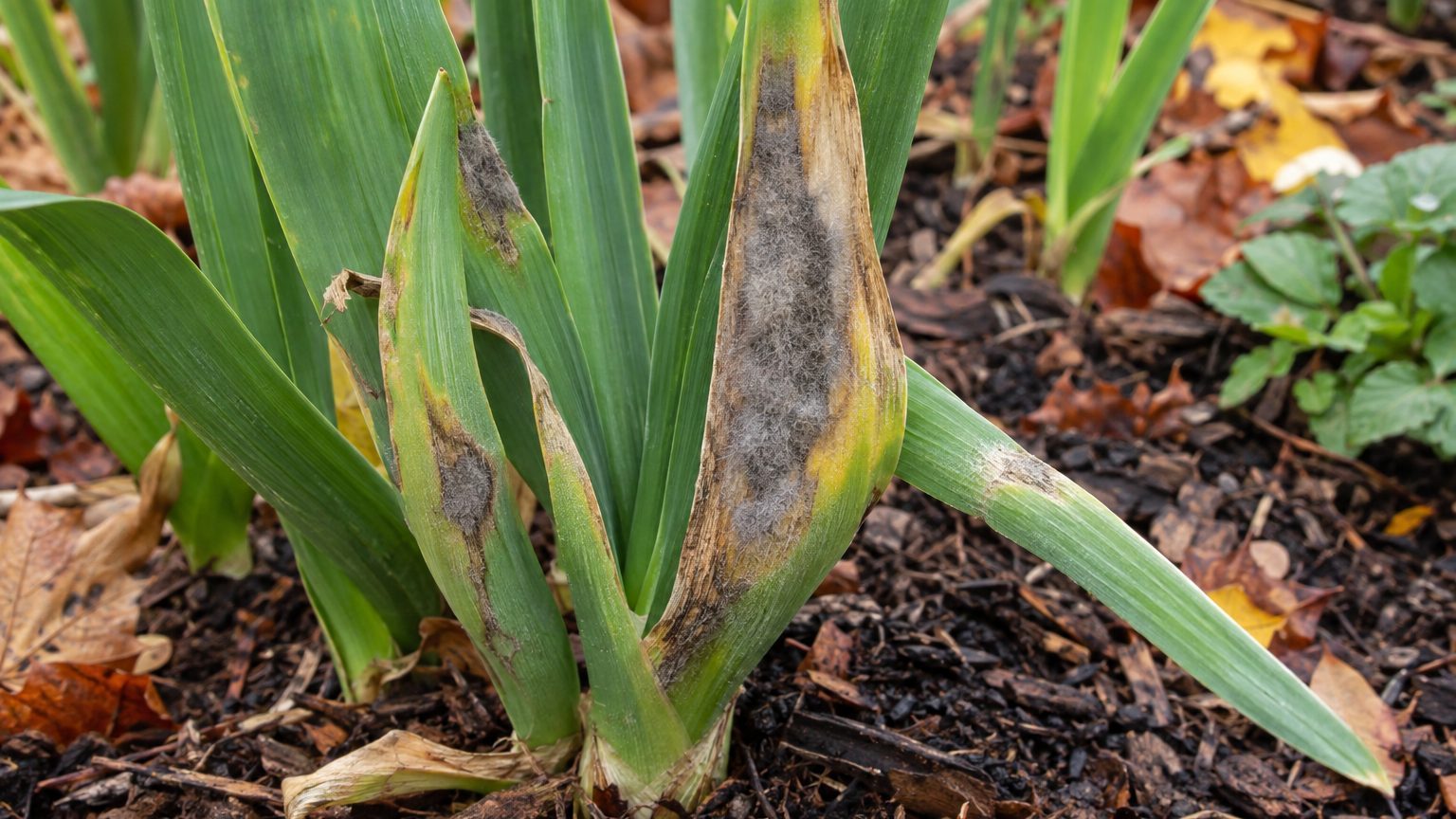
Spring bulb leaves that should look clean and green sometimes turn up with angular brown blotches, usually as the foliage fills out in the garden bed. That pattern points to leaf spot, a disease you can slow down by cleaning up affected foliage and keeping water off the leaves. Tulips, iris and their neighbors can all be hit, though the cause differs from plant to plant.
Leaf Spot: What You See
The clearest signs show up on the leaves themselves, and the shape of the spot tells you the most.
- The spots are usually angular, and the leaf veins stop them at the edges, so they look boxy rather than round.
- Young spots look water-soaked, then turn yellow, brown or black as they age.
- On iris, the first spots are small and tan with water-soaked margins, and they sit near the leaf tips.
- Spots can grow into large blotches, and the affected leaves wither and die.
- Where infection is heavy, leaves, stems and flowers may collapse.
Check the leaf edges and the veins first, because that boxy outline is what separates leaf spot from most look-alikes.
From the almanac
Bulbs in your state
The dates on this page depend on where you live. Your state's page carries its frost dates, its USDA zones and the year laid out month by month.
Northeast
Southeast
- Alabama
- Arkansas
- Delaware
- Florida
- Georgia
- Kentucky
- Louisiana
- Maryland
- Mississippi
- North Carolina
- South Carolina
- Tennessee
- Virginia
- West Virginia
Midwest
Southwest
West
Pacific Northwest
Canada
Leaf Spot or Something Else?
Several bulb problems leave brown marks on leaves, and a spot alone does not settle the question. Pair the look of the mark with where it sits on the plant and what the weather has been doing.
Two problems are easy to mistake for leaf spot, and they call for different handling.
| Looks like | How to tell them apart |
|---|---|
| Botrytis blight (tulip fire) | Leaf spots are small, oval and slightly sunken with a dark margin, and flowers carry light-colored oval spots. In humid weather a brown-gray mold covers the spots. |
| Bacterial soft rot | The damage is a soft, watery decay in the bulb, crown or fleshy stem rather than a boxy spot on a leaf. The rot is below or at the base of the plant, not scattered across the blades. |
Frost or hail damage on tulips is worth a second look, since in Iowa the Botrytis fungus commonly attacks tulips that have been hurt that way. Spots that spread across whole leaves in damp weather also fit that blight more than the angular, vein-bound pattern.
What Causes Leaf Spot, and Where It Is Worst
Leaf spot on bulbs comes from fungi or bacteria, depending on the plant. On iris in Virginia, a fungus called Cladosporium iridis is behind the common iris leaf spot, which gardeners there also know as Heterosporium leaf spot. It overwinters on dead iris leaves and sends spores to young foliage in spring.
Water does the moving. Rain or irrigation splashes spores from old debris onto healthy leaf tissue through the growing season, and bacteria also depend on splashing water to spread and to set up the wet film they need to infect a leaf.
No region is spared on the strength of its climate alone, so a bed that stays wet will invite trouble anywhere. In California, bacteria in this group can also ride in on infected cuttings and other propagative material, and some may be carried in seed and irrigation water, which makes the source of new plants matter as much as the weather.
How to Treat Leaf Spot
Treatment is mostly cleanup, done in an order that keeps spores from reaching healthy foliage.
- Cut off the leaves or plant parts that show spots, so that the disease has less tissue to spread from. Leave healthy green leaves in place until they yellow on their own, because they are still feeding the bulb.
- Remove and destroy plants whose foliage is diseased throughout, so that they stop shedding spores into the bed.
- Bag the trimmings and dispose of them away from the garden rather than dropping them on the soil, because spores overwinter on dead leaves and return to young growth.
- Clear fallen leaves and old debris from around the clump, so that rain has nothing to splash from.
- Ask your state’s extension service which fungicides or bactericides, if any, are approved where you live, since labels and rules differ from state to state.
Cutting infected material away is the control the evidence points to, and it works best when done as soon as spots appear.
How to Prevent Leaf Spot Coming Back
Prevention follows the year, because the disease lives on last season’s leaves and moves with water.
- In early spring, as new leaves emerge, rake out last year’s dead iris foliage, since that is where spores wait to reach young leaves.
- Through the growing season, water at the base of the plants so the leaves stay dry, because splashing water carries spores and bacteria from leaf to leaf.
- After the foliage has turned yellow and died back, clear it away and discard it, so the fungus has no dead leaves to overwinter on.
- In fall, when you plant or divide, start with clean, healthy bulbs and divisions, since bacteria can travel on infected propagative material.
Keep an eye on any clump that was spotted the year before, as it is the likeliest to show symptoms again.
Where This Comes From
The details here come from university extension and government plant disease pages written for gardeners in states such as Virginia, Iowa and California. Confirm timing, product approvals and local conditions with your own state’s extension service.
Common Questions
Does Leaf Spot Hurt the Bulb Underground?
It can, indirectly. When leaves die early, the bulb lacks the nourishment those leaves would have sent down, so the plant starts the next season weaker.
Should You Cut Back All the Leaves When You See Spots?
No. Cut only the parts that are affected and keep healthy green foliage until it turns yellow, since it feeds the bulb for next year.
Do Spots on the Flowers Mean Leaf Spot?
Not by themselves. Brown to tan flecks on flowers often go with Botrytis blight, so look at the leaf spots as well, noting whether they are small sunken ovals with dark margins or angular marks stopped by veins.