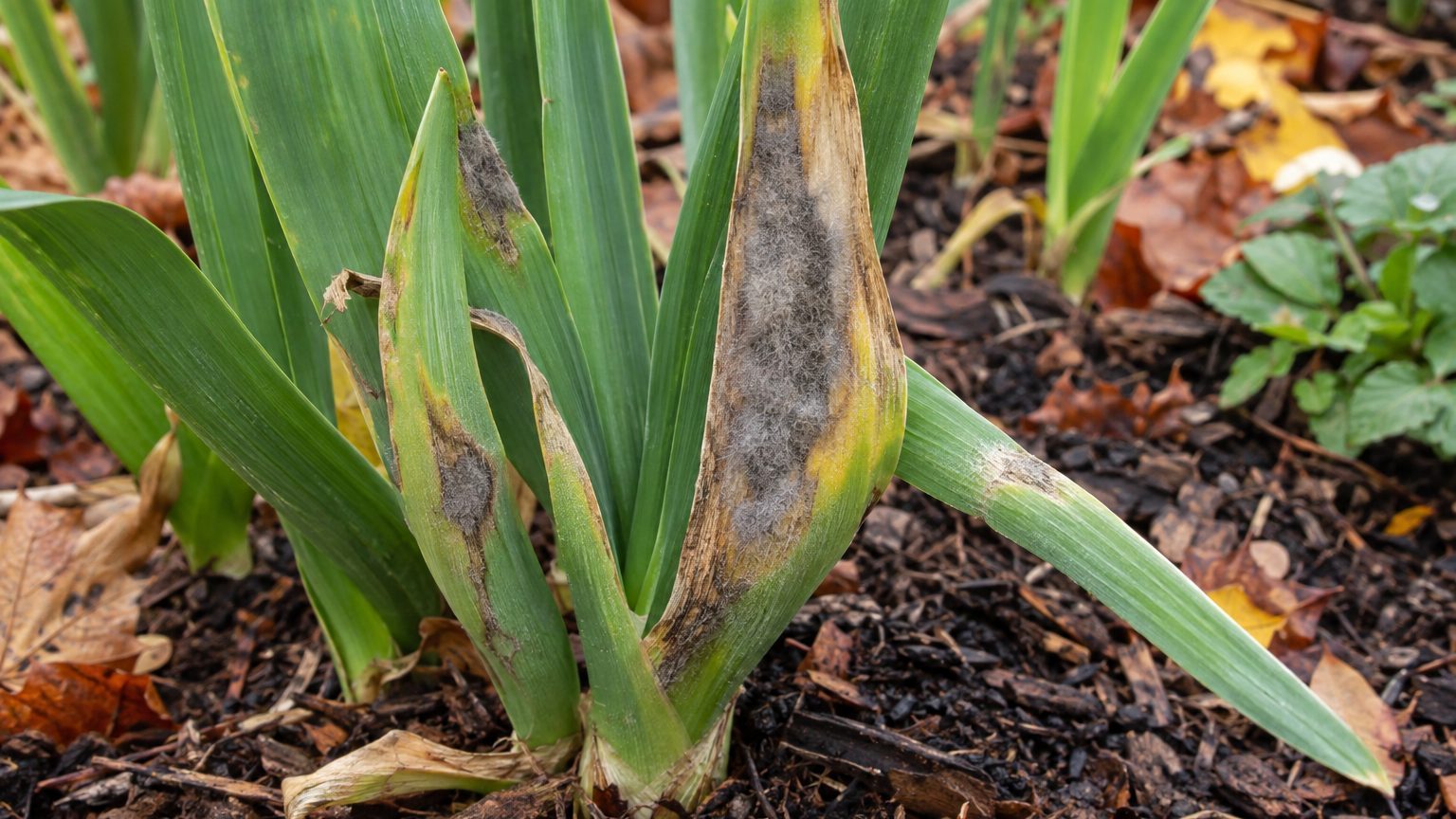
A tulip bulb that never sends up a shoot, or a stalk that flops over at the base in spring, often points to rot underground. The cause is usually a fungus, a bacterium or a nematode working on a bulb that sits in wet soil. Knowing the signs lets you act before it spreads through the bed.
Bulb Rot: What You See
Most of the damage happens out of sight, so the first clues are usually on the plant above ground or on the bulb once you lift it.
- A bulb that rots in the ground produces no stem at all when the infection starts early, because the rot moves up from the roots through the base of the bulb.
- A stalk that rises and then collapses with a rotted base (shanking) never opens a flower.
- Small yellow flecks show on the outer surface of the bulb, then turn sunken.
- Those spots run together as the bulb rots, and a foul odor comes with it.
- Discolored patches and a soft, spongy decay can spread through the bulb when nematodes or bacteria are the cause.
In the worst cases the whole bulb is colonized and rots where it was planted, leaving only a mushy shell when you dig it up.
From the almanac
Bulbs in your state
The dates on this page depend on where you live. Your state's page carries its frost dates, its USDA zones and the year laid out month by month.
Northeast
Southeast
- Alabama
- Arkansas
- Delaware
- Florida
- Georgia
- Kentucky
- Louisiana
- Maryland
- Mississippi
- North Carolina
- South Carolina
- Tennessee
- Virginia
- West Virginia
Midwest
Southwest
West
Pacific Northwest
Canada
Bulb Rot or Something Else?
A weak or odd-looking plant does not always mean rot. Some problems affect only the leaves and flowers while the bulb stays firm, so a quick look at the bulb itself sorts things out.
Check the pattern on the plant, then check the bulb. A firm, healthy bulb with a streaked flower points away from rot.
| Looks like | How to tell them apart |
|---|---|
| Virus (flower break or mosaic) | White streaks break up the petal color and the foliage shows yellow mottling, while the bulb itself is not soft or foul smelling. |
| Bulb that failed to grow | No stem appears, but a bulb dug from wet, heavy soil that is soft with a foul odor is rot, not a planting failure. |
Bulbs injured before planting can look sound from the outside, so a cut or bruise on a soft bulb also points toward rot rather than a leaf problem.
What Causes Bulb Rot, and Where It Is Worst
Several fungi, nematodes and bacteria can attack tulip and daffodil bulbs. Diseases named in this group include basal rot, black slime, blue mold and crown rot. Moist conditions favor infection, and water is what lets bacteria enter and spread.
Bulbs planted in heavy, continually wet soil are the most exposed to Phytophthora, whose spores are drawn to the bulb as soon as it makes roots. Soil fungi also get in more easily through injured bulbs, so nicks from digging or handling matter.
Wet ground is the common thread. In Western Oregon’s wet climate, raised beds or berms improve drainage and reduce rot risk. In drier regions, a bed that gets regular water, such as one beside a lawn that is sprinkled often, needs well-drained soil for the same reason.
How to Treat Bulb Rot
Once a bulb is rotting, it cannot be saved, so the work is about removing it and protecting the neighbors.
- Dig up any bulb that is soft, sunken or foul smelling, so that the decay does not reach healthy bulbs nearby.
- Destroy the infected bulbs rather than composting them, because the pathogens can carry on and build up in the soil.
- Dig carefully around the rest, since wounds give soil fungi an easy way in.
- Check the soil for pooling and improve drainage before replanting, since infection is favored by moist conditions.
- Control insect and mite pests in the bed, which also helps limit the damage to bulbs.
For any fungicide or other treatment, ask your state’s cooperative extension office, since they know what is approved where you live.
How to Prevent Bulb Rot Coming Back
Prevention follows the year, from choosing the planting spot to handling bulbs gently.
- Before fall planting, choose a spot in full sun with well-drained soil, and skip any area where water pools during winter.
- At planting time, handle bulbs gently and avoid unnecessary injury, because soil-borne fungi invade damaged bulbs more easily.
- In fall, where the bed holds moisture, build a raised bed or berm so the roots stay out of standing water.
- Through winter and wet spells, keep an eye on the bed for puddles, since bulbs in continually wet soil are the most susceptible.
- Whenever you replant a bed, rotate the flower beds so the soil pathogens do not build up to high levels.
Where This Comes From
Your state’s cooperative extension service can confirm which problems and treatments apply in your area.
Common Questions
How Common Is Bulb Rot in Tulips?
It is a highly damaging disease of tulips worldwide. In storage and in the field together, it accounts for 20–30% loss of bulbs in a tulip garden every year.
Can Rot Show Up Before Bulbs Are Planted?
Yes. Rot occurs in both field and storage conditions, so check bulbs before planting and discard any that are soft.
Does Bulb Rot Affect Onions and Garlic Too?
It does. Multiple bacterial pathogens can cause bulb rot in onion and garlic, with symptoms that can appear anytime between bulbing and harvest or even during storage.