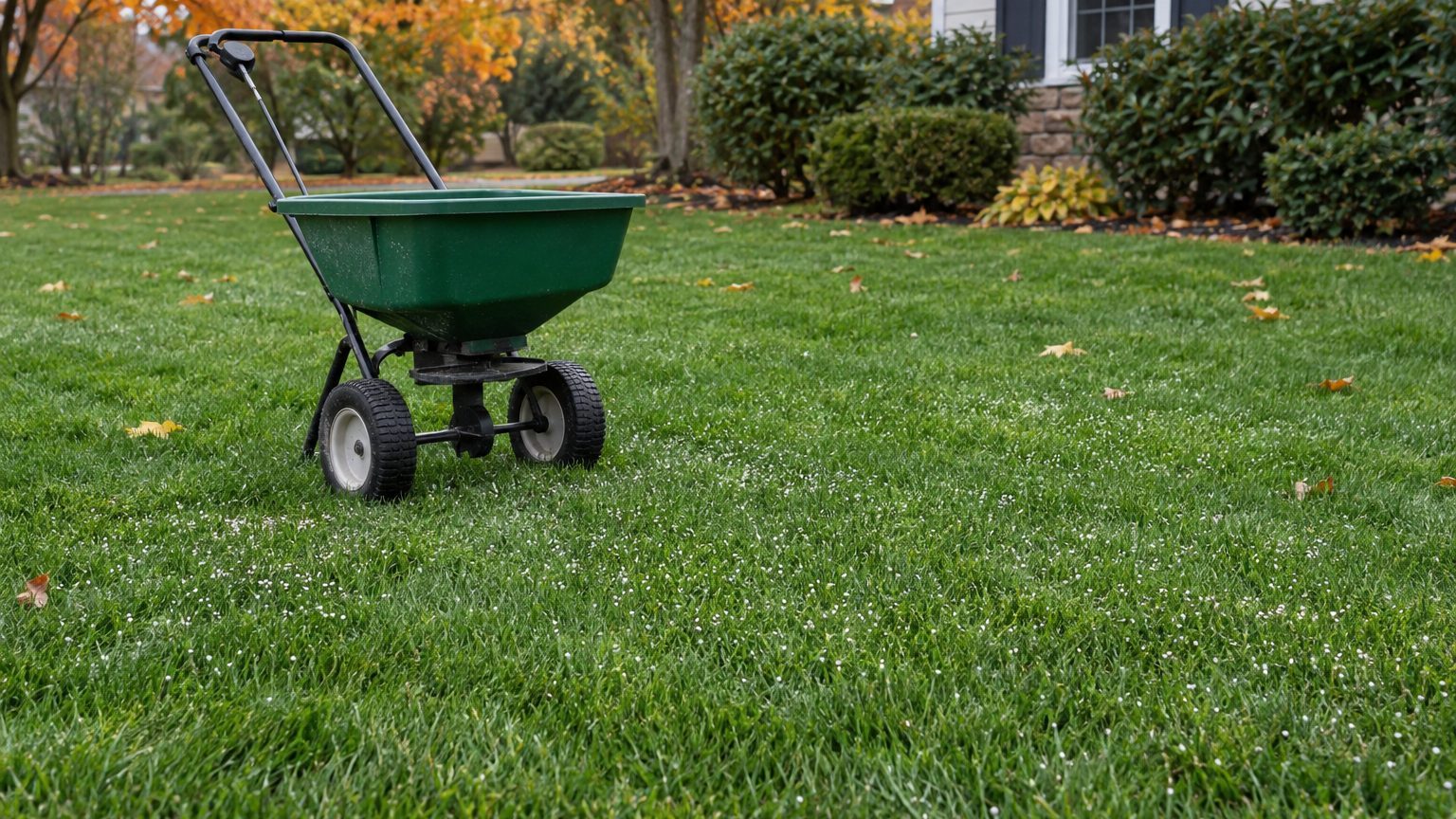
Grass can pale or slow for many reasons, so its appearance alone does not tell you whether it needs fertilizer. Feeding at the wrong moment wastes fertilizer and can wash it into the nearest storm drain. The right moment depends on whether your lawn is a cool-season or warm-season type, and on how your region’s weather moves through the year.
When Should You Fertilize Your Lawn?
Feed cool-season lawns mostly in fall and warm-season lawns during their summer growing season. Bluegrass, fescue and ryegrass are cool-season grasses common across the North and the Upper Midwest. Bermudagrass and zoysia are warm-season grasses common across the South.
Fall feeding suits cool-season grass because the roots keep working in cool soil after the top growth slows. Warm-season grass runs the other way. In California, time the last feeding well before the likely first frost. Region shifts the picture too, since a Gulf Coast lawn wakes up well before one in the Upper Midwest.
The state-by-state table just below gives each state’s window, with its months and its zone.
From the almanac
When to fertilize the lawn, state by state
The months each state's extension calendar marks for this, kept inside that state's own frost-free season. Open your state for the frost dates, the USDA zone and the rest of the year.
Northeast
- ConnecticutMay, SepUSDA 6a-7b
- MaineMay, SepUSDA 3b-6a
- MassachusettsMay, SepUSDA 5a-7b
- New HampshireMay, SepUSDA 3b-6a
- New JerseyMay, SepUSDA 6a-7b
- New YorkMay, SepUSDA 3b-7b
- PennsylvaniaMay, SepUSDA 5a-7b
- Rhode IslandMay, SepUSDA 6a-7b
- VermontMay, SepUSDA 3b-5b
Southeast
- AlabamaMay–AugUSDA 7a-9a
- ArkansasMar, Sep–OctUSDA 6b-8a
- DelawareMay, SepUSDA 7a-8a
- FloridaApr–MayUSDA 8b-11b
- GeorgiaMay–AugUSDA 6a-9b
- KentuckyMar, Sep–OctUSDA 6a-7a
- LouisianaMay–AugUSDA 8a-10a
- MarylandSep–NovUSDA 5b-8a
- MississippiMay–AugUSDA 7b-9a
- North CarolinaMar, Sep–OctUSDA 5b-8b
- South CarolinaMay–AugUSDA 7a-9a
- TennesseeMar, Sep–OctUSDA 5b-8a
- VirginiaMar, Sep–OctUSDA 5a-8b
- West VirginiaMay, SepUSDA 5a-7a
Midwest
- IllinoisSep, NovUSDA 5a-7b
- IndianaSep, NovUSDA 5b-7a
- IowaSep, NovUSDA 4b-6a
- KansasMar, Sep–OctUSDA 5b-7a
- MichiganSep, NovUSDA 4a-6b
- MinnesotaSep–OctUSDA 3a-5a
- MissouriMar, Sep–OctUSDA 5b-7b
- NebraskaSep, NovUSDA 4a-5b
- North DakotaMay, SepUSDA 3a-4b
- OhioSep, NovUSDA 5b-6b
- South DakotaMay, SepUSDA 3b-5b
- WisconsinSep–OctUSDA 3b-6a
Southwest
- ArizonaMay–Jun, Sep–OctUSDA 4b-10b
- New MexicoMar, Sep–OctUSDA 4b-9a
- OklahomaMar, Sep–OctUSDA 6a-8a
- TexasMay–JunUSDA 6a-10a
West
- CaliforniaMar, May, Sep–OctUSDA 5a-11a
- ColoradoSep, NovUSDA 3b-7b
- HawaiiMar–OctUSDA 9a-13a
- IdahoSep, NovUSDA 3b-7b
- MontanaSep, NovUSDA 3a-6a
- NevadaSep, NovUSDA 4a-10a
- UtahSep, NovUSDA 4a-9a
- WyomingSep, NovUSDA 3a-6a
Pacific Northwest
Canada
- AlbertaMay, SepZone 4a
- British ColumbiaSepZone 9a
- ManitobaMay, SepZone 3b
- New BrunswickSepZone 5a
- Newfoundland and LabradorSepZone 6a
- Nova ScotiaSepZone 6b
- OntarioSepZone 7a
- Prince Edward IslandSepZone 5b
- QuebecSepZone 5b
- SaskatchewanMay, SepZone 3a
Sources: state frost facts and Penn State Extension — Lawn Management through the Seasons; Lawn Establishment · UMass Extension — BMPs for Lawn and Landscape Turf, Appendix B (calendar) · Clemson Cooperative Extension, HGIC — Bermudagrass / Zoysiagrass / Centipedegrass / St. Augustinegrass maintenance calendars · University of Tennessee Extension — PB1903 Lawn Maintenance Calendar (2025). A state with no marked month is not shown.
How to Fertilize a Lawn

The basic workflow is similar, but timing, rate and fertilizer choice change with the grass and local rules.
- Use the timing on your state page and confirm that the lawn is actively growing before you spread fertilizer.
- Choose a fertilizer that meets your soil-test needs and your state’s slow-release requirements.
- Set the spreader for the recommended rate. According to Rutgers Cooperative Extension, a typical recommendation for a soluble form is one pound of nitrogen per 1,000 square feet, which keeps the grass from getting more than it can use.
- Walk at a steady pace and overlap the wheel tracks slightly, so you do not leave stripes of dark and pale grass.
- Follow the label’s watering directions after spreading the fertilizer.
- Sweep stray granules off the driveway and sidewalk, so a rainstorm does not carry them into the street.
For a cool-season lawn in New York, the cue is unfrozen soil and slowing top growth, which arrives once air temperatures stay under 50°. Use a 10-day stretch as the signal. Over a full year, Virginia allows cool-season lawns up to 3.5 pounds of nitrogen per 1,000 square feet. According to University of New Hampshire Extension, the annual total should not exceed 3.25 lbs, as long as at least 20% of the nitrogen is slow-release. Use the annual limit for your own state rather than borrowing Virginia’s or New Hampshire’s.
Fertilizer Timing by Grass Type
Cool-season and warm-season grasses run on opposite clocks. Cool-season turf does much of its feeding in fall, while warm-season turf feeds during active summer growth. The figures below apply to New York and South Georgia, so use your state page for local timing.
| Grass | Season | Start signal | Pace |
|---|---|---|---|
| Cool-season lawn (New York) | Cool | Soil unfrozen, growth slowing in fall | 60% of the year’s feeding goes on in fall |
| Bermudagrass (South Georgia) | Warm | Soil at 65°F at 4″ depth, typically late April | Every 6-8 weeks until mid-August |
| Zoysiagrass (South Georgia) | Warm | Fully greened up, usually late April/early May | Every 7-8 weeks until mid-August |
Bermuda and zoysia need 2-3 applications over the growing season, so the intervals above add up to a few feedings, not a monthly routine. Stopping in mid-August in South Georgia lets the grass harden off before cold weather. Tall fescue, Kentucky bluegrass and ryegrass are cool-season grasses, but local timing and rates still apply. If you are unsure which group your lawn belongs to, ask your state extension office to identify it.
Lawn Fertilizing Mistakes to Avoid
Too Much at Once
A heavy dose gives a short flush of growth and sends the extra nitrogen toward streams and groundwater. According to University of New Hampshire Extension, applying more than 0.9 lbs of actual nitrogen per 1,000 square feet per application may contribute to water degradation.
Measure the lawn, follow local per-application and annual limits, and do not exceed the bag rate.
Feeding Too Late in Fall
Fertilizer put down just before frost feeds tender growth that the cold cuts back. In California, the last application should go on 6 to 8 weeks before the likely first frost. Many places also set a legal last date, and in New York it may be November 1 or November 15 depending on your area.
Mark your last feeding date on the calendar and check local rules before the final bag goes on.
Feeding a Dry Summer Lawn
In New York, an unirrigated lawn in dry weather may need little or no fertilizer in summer. Grass that has slowed down for lack of water cannot use the food, so the nitrogen sits on the surface and can burn the blades.
Hold off until rain or irrigation returns, and save the main feeding of a cool-season lawn for fall.
When to Fertilize a Lawn in Your State
Watch the grass and the soil more than the date on the wall. Cool-season lawns want food as top growth slows in fall, and warm-season lawns want it once they have fully greened up and the soil has warmed.
- Each state’s lawn page lists the months that fit its grass types, so read it before you buy fertilizer.
- The zone on that page is only a clue; the grass itself and local guidance determine whether it is cool-season or warm-season.
- Match those months to what the grass is doing, and spread only when the timing agrees.
Common Questions
How Often Should You Test Lawn Soil?
According to Virginia Cooperative Extension, soil tests taken every three or four years give useful information about lawn fertility. A level of at least medium for phosphorus and potassium is desirable for existing turf, so a low reading is the signal to add them.
Can You Fertilize a Lawn in Early Spring?
In New York, fertilizer should not go on before April 1st. If no fall application was made and spring sports are planned, a light nitrogen feeding can follow after that date.
How Much Slow-Release Nitrogen Should a Fertilizer Have?
According to Virginia Cooperative Extension, a slowly available nitrogen source contains at least 15% slow-release nitrogen. In New York, sandy soils call for at least 60% when establishing turf. Non-sandy soils there call for at least 30%.