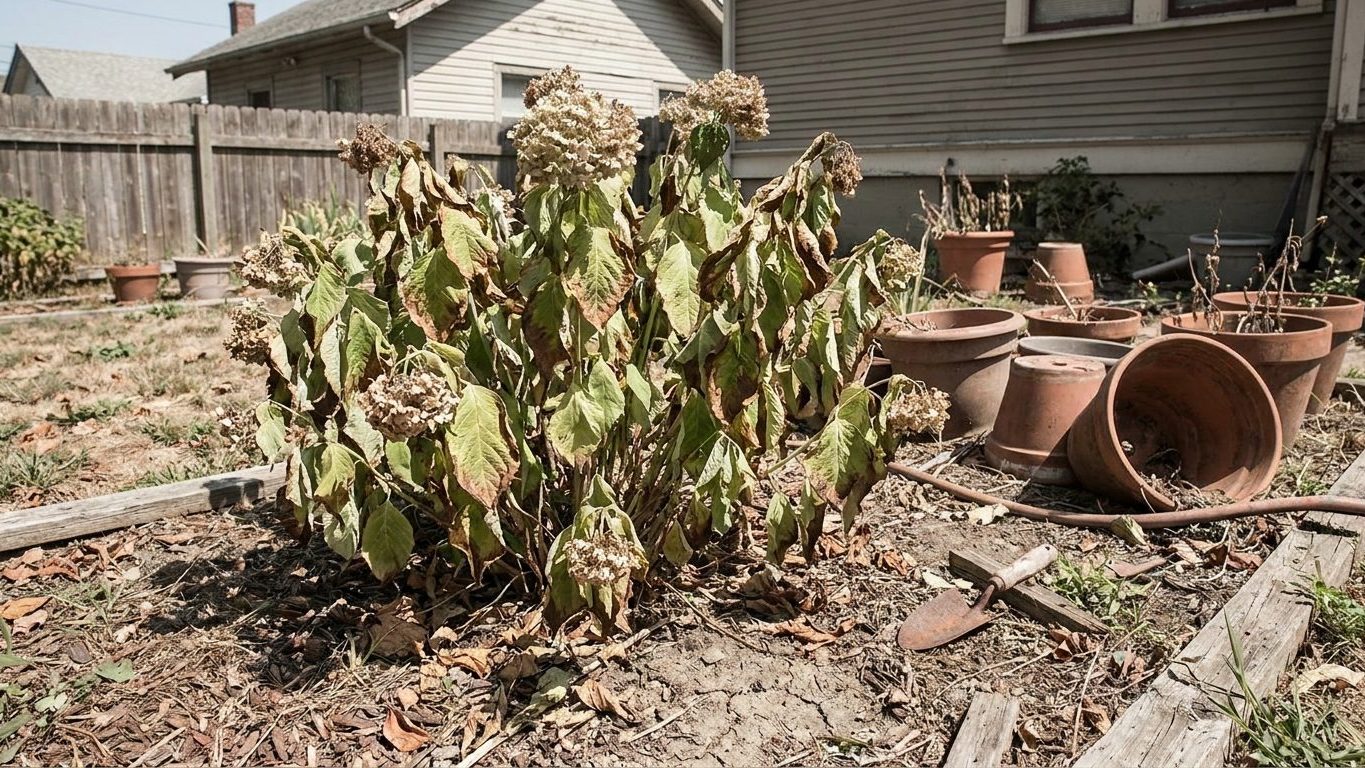
Hydrangeas wilt in summer heat because their broad leaves lose water faster than shallow roots can replace it, and that drooping usually reverses once evening cools things down. Real damage looks different: crisped brown leaf margins that don’t recover, and blooms that fade in half the time. Shade placement and morning watering matter more than the heat itself.
Hydrangeas Heat Stress: The Short Answer
NC State Extension Gardener Plant Toolbox lists the genus at USDA zones 3a through 9b, but that range covers plants that react to heat in opposite ways. Bigleaf sits at 6a-11b and wilts fastest, since it keeps blooming on wood it grew the year before.
Panicle hydrangea handles full sun and heat far better, since it flowers on the current season’s growth and can be cut back hard each winter. The type in your yard, not just the thermometer, decides how much shade and water it needs.
Afternoon sun does more damage than the zone number alone, since a bigleaf shrub in dappled light can outlast one in full western exposure by weeks. Mulch and steady moisture matter as much as latitude once a shrub is shallow-rooted.
The state selector below this section opens the page built for where you garden.
From the almanac
Hydrangeas in your state
The dates on this page depend on where you live. Your state's page carries its frost dates, its USDA zones and the year laid out month by month.
Northeast
Southeast
- Alabama
- Arkansas
- Delaware
- Florida
- Georgia
- Kentucky
- Louisiana
- Maryland
- Mississippi
- North Carolina
- South Carolina
- Tennessee
- Virginia
- West Virginia
Midwest
Southwest
West
Pacific Northwest
Canada
Hydrangeas Heat Stress, Step by Step

Heat stress in hydrangeas shows up as afternoon wilting, crisped leaf edges, and blooms that fade fast, and the fix follows the same order every time you spot it.
- Water deeply before 9 a.m.: NC State Extension Gardener Plant Toolbox notes both bigleaf and paniculata are shallow-rooted, so a slow, deep soak reaches the root zone before afternoon heat pulls moisture back out through the leaves, and morning timing gives the plant reserves before the hottest hours.
- Check the wilt again at dusk: a bigleaf that drooped hard at 2 p.m. and stands back up by evening is coping with heat the normal way, since its large leaves lose water faster than its shallow roots replace it, and no extra watering that night is needed.
- Mulch the root zone: both bigleaf and paniculata benefit from mulch over their shallow roots, and a steady layer buffers soil temperature swings and holds the moisture those roots depend on through a hot afternoon.
- Match sun exposure to the type: bigleaf wants dappled sun or partial to deep shade and needs protection from afternoon sun, while paniculata is the only hydrangea in the genus that takes full sun well.
- Hold pruning until after bloom: bigleaf sets its flowers on the previous summer’s wood, so any cut made before August 1 removes buds already formed, and a heat-stressed shrub recovers better with its canopy intact anyway.
- Tell scorch from simple wilt: crisp brown margins on the sun-facing side of the leaf mark lasting damage rather than a passing water deficit, and that tissue will not green back up once the season cools.
None of these steps change by much once you’ve matched the gesture to the type in the ground, but skipping the order, shielding leaves before checking the soil, for instance, wastes effort on the wrong problem.
Hydrangeas Heat Stress by Hydrangea Type
Bigleaf and panicle are the two types with enough stated detail for a straight comparison, since both come with zones and a stated sun tolerance from the source.
NC State Extension Gardener Plant Toolbox puts bigleaf at 6a-11b and panicle at 3a-8b, a wider hardiness gap than most shoppers expect from two shrubs sold side by side, and the source even calls panicle a good substitute for bigleaf where bigleaf is not winter hardy.
| Kind | Flowers on | USDA zones | Sun |
|---|---|---|---|
| Bigleaf | Last year’s wood | 6a-11b | Dappled or partial to deep shade, protect from afternoon sun |
| Panicle | Current season’s growth | 3a-8b | Full sun |
Smooth, oakleaf, mountain, and climbing hydrangeas all flower on wood set the year before except smooth, which blooms on new growth, but the source gives none of them a stated zone range or sun preference, so the other kinds are on their own pages.
Hydrangeas Heat Stress: Mistakes That Cost a Season
Pruning bigleaf during a heat wave

A drooping bigleaf hydrangea looks like it needs cutting back, but bigleaf sets its blooms on the previous summer’s wood, so any cut made before August 1 removes flowers already formed for next year. Wait out the wilt and check the type table above before reaching for shears.
Full sun bed for a shade type
Bigleaf planted in a west-facing bed scorches because it wants dappled sun or partial to deep shade and needs protection from afternoon sun, while paniculata is the type built for full exposure. Matching the type to the bed avoids replanting a shrub that was never going to hold up there.
Kitchen remedies for blue flowers

Coffee grounds and citrus peel are a widely held belief for turning flowers blue, but the pH shift they cause is small, and colour change depends on available aluminium in the soil, which only shifts reliably with aluminium sulfate or lime, and only on bigleaf and mountain hydrangeas, not on panicle, smooth, oakleaf, or climbing types.
Hydrangeas Heat Stress in Your State
The short answer above holds nationally, but pruning dates, mounding depth, and the safe zone verdict for your shrub depend on where you live, since a bigleaf hydrangea in a coastal zone 8 yard behaves nothing like one in a zone 6 valley.
- Your state page: the frost dates and the pruning window for your zone, matched to your hydrangea type.
- Which types hold up here: a by-type read on what survives your winter low and your summer high.
- Your extension office: the office that can confirm a diagnosis in person if leaf scorch or wilt doesn’t clear up on its own.
Common questions
Should I water hydrangeas more during a heat wave?
Yes, for shallow-rooted types like bigleaf and paniculata, a deep morning soak matters more than watering more often, since both types lose moisture fast through large leaves and pull it back from shallow roots.
Is daytime wilting always a sign of heat stress?
No, afternoon drooping that plumps back up by evening is normal transpiration, not damage. Real damage looks like crisp brown leaf margins that stay that way after the day cools down.
Will more shade fix a hydrangea that won’t bloom?
Sometimes, but the more common cause on bigleaf is a spring prune removing wood set the previous summer, since flowers form on that older wood rather than on new growth. Check the pruning date before changing the spot.