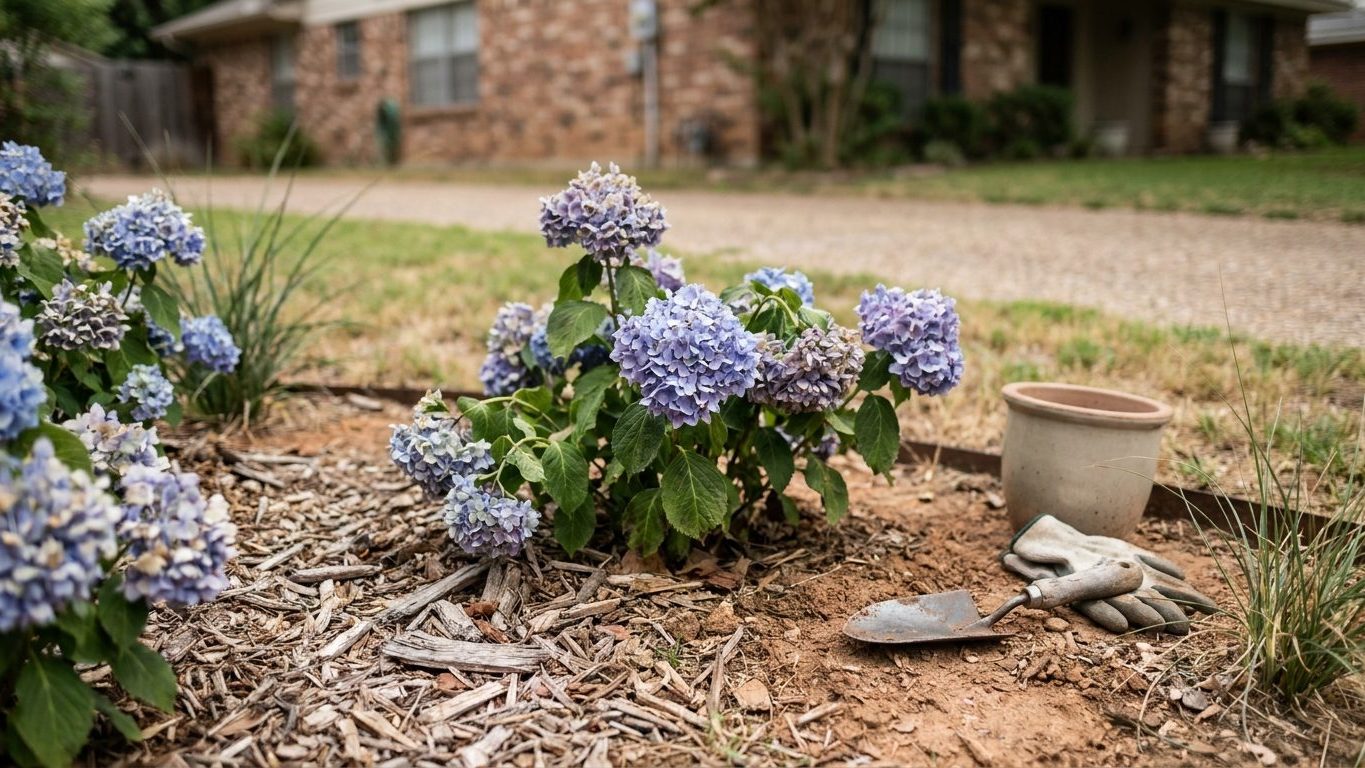
In central Ohio, hydrangeas bloom reliably from spring planting through fall color, provided the kind matches a zone that runs 5b to 6b and a frost window that lands in May, then again in October. Panicle and smooth types shrug off the swings. Bigleaf needs a warmer pocket and some shelter. The right pick depends less on the flower color and more on which wood survives winter.
Hydrangeas Care Calendar for Ohio

Columbus sits in USDA zone 6a, and Ohio State University Extension’s Ohio Gardening Calendar puts the last spring frost there between May 5 and May 15, with the first fall frost returning between October 5 and October 15. The wider state runs 5b to 6b, from the Lake Erie shoreline down to the Ohio River, but Columbus is the reference point behind the dates below.
- Dormancy: the safe window to move or divide a hydrangea, roots undisturbed, runs through the cold months before growth restarts.
- Planting: wait two to three weeks past the last spring frost window, so soil has warmed enough for new roots to take hold.
- Bud break: new leaves show up within a couple of weeks of that same frost window, and that’s the cue for the first feeding.
- Early summer growth: bigleaf types set next year’s flower buds now, so any pruning has to happen right after this year’s bloom fades.
- Peak bloom and second feed: midsummer heat calls for another round of fertilizer and steady watering, not a dry stretch.
- Frost prep: mulch heavy before the first fall frost arrives, protecting buds already set for next spring.
Miss the planting window and the plant still survives, it just spends its first year catching up instead of filling out.
Ohio — the year and the numbers
- State
- Ohio
- USDA zones
- 5b-6b
- Last spring frost
- May 5 to May 15
- First fall frost
- October 5 to October 15
- Annual rain
- 42 in
- Lawn zone
- cool-season
- Source
- Ohio State University Extension — Ohio Gardening Calendar · Columbus
Best Hydrangeas for Ohio
Ohio’s 5b to 6b range, per the USDA Plant Hardiness Zone Map, favors hydrangeas that flower on new wood over ones betting everything on stems that survived winter. That single distinction decides more than sun, soil, or color ever will.
Bigleaf remains popular for its big mophead blooms, but it carries real risk in a 5b winter. Panicle, smooth, and climbing types carry almost none.
| Kind | Flowers on | Fares in 5b to 6b | Sun |
|---|---|---|---|
| Bigleaf (H. macrophylla) | Old wood | Marginal, buds often killed | Part shade |
| Panicle (H. paniculata) | New wood | Reliable end to end | Full sun to part shade |
| Smooth (H. arborescens) | New wood | Reliable, native to Ohio woodlands | Part shade |
| Oakleaf (H. quercifolia) | Mostly old wood | Borderline, safer near Lake Erie | Part shade |
| Climbing (H. anomala petiolaris) | Old wood | Hardy through the range | Part shade to shade |
Reblooming bigleaf hybrids and mountain hydrangea are less common here and get their own coverage. For a sense of how differently this plays out in a colder, drier climate, the same comparison runs on the Colorado hydrangea page.
When to Plant, Prune and Feed Hydrangeas in Ohio
Ohio State University Extension’s Ohio Gardening Calendar sets three windows that matter more than anything printed on a plant tag: when to plant, when to prune bigleaf, and when to feed.
Planting stretches across spring and late summer, pruning stays tight to bigleaf’s old wood, and feeding brackets the season’s heaviest growth.
| Task | Window here | Counted from |
|---|---|---|
| Plant | May, June, August, September | After soil warms past frost, or before fall’s cool spell sets in |
| Prune bigleaf | June, July | Right after bloom fades, before next year’s buds form |
| Fertilize | May, July | Bracketing the peak growth push |
Panicle and smooth hydrangeas prune on a different schedule entirely, in late winter instead of after bloom, and that month by month sequence lives on its own page.
Hydrangeas Problems in Ohio and What Causes Them
No blooms after a hard winter

Bigleaf sets its flower buds on old wood the summer before, and a sharp cold snap in a zone 5b pocket kills them outright. Plant in a sheltered spot, or lean on a kind that blooms on new wood instead.
Leaves scorched on the sunny side

Afternoon sun and heat bouncing off pavement or siding burn leaf edges by midsummer, especially on plants set against a south or west wall. Part shade in the afternoon solves this before it starts.
Wilting despite regular watering

Ohio’s clay soil holds water, then bakes hard between storms, so roots sit soggy one week and starved the next. Working in organic matter at planting time evens that out for good.
Ohio North to South: How the Dates Shift
Ohio’s 5b to 6b range doesn’t sit flat across the state. Lake Erie and the Ohio River push the edges warmer, while the northeast interior holds onto winter longer than the rest.
- Lake Erie shoreline (zone 6b): the lake delays both frosts, giving bigleaf buds better odds of making it through winter than almost anywhere else in the state.
- Northeast snowbelt and interior uplands (zone 5b): cold air pools in these valleys, and gardeners here do better sticking with panicle and smooth types.
- Ohio River Valley and the south (zone 6b): frost clears earliest in this stretch, opening the planting window a little sooner than the rest of the state.
For the county level detail behind these zones, the Ohio page breaks the state down further.
Ohio Extension Offices and County Contacts
Ohio’s zone 5b to 6b range is a starting point, not a final answer, since soil, wind, and one yard’s microclimate change the picture fast. USDA NIFA’s Land-Grant University Extension directory names Ohio State University Extension as the state’s contact for that finer detail.
- Ohio State University Extension: extension.osu.edu connects to the county office nearest you and a horticulturist who knows your soil.
- The hydrangea guide: the full species breakdown covers bloom wood and sun needs kind by kind, past what fits here.
- Your county’s frost dates: worth confirming directly, since May 5 to 15 is a range, not a promise for every yard.
This month, the move is simple: check the calendar table above, and match it to whatever’s still dormant or already blooming in the yard right now.
Common questions
Can hydrangeas survive Ohio winters without protection?
Panicle, smooth, and climbing types generally do, since they flower on new wood that regrows each spring regardless of winter cold. Bigleaf is the exception, and in a 5b pocket it can lose its buds most years without a sheltered spot.
When is the best time to plant hydrangeas in Ohio?
May, June, August, and September are the windows the Ohio Gardening Calendar sets, giving roots time to settle before either summer heat or winter cold arrives.
Do hydrangeas need full sun in Ohio?
Most do better in part shade here, since Ohio summers bring enough heat and humidity to scorch leaves in a full sun spot, especially against a wall that holds afternoon heat.