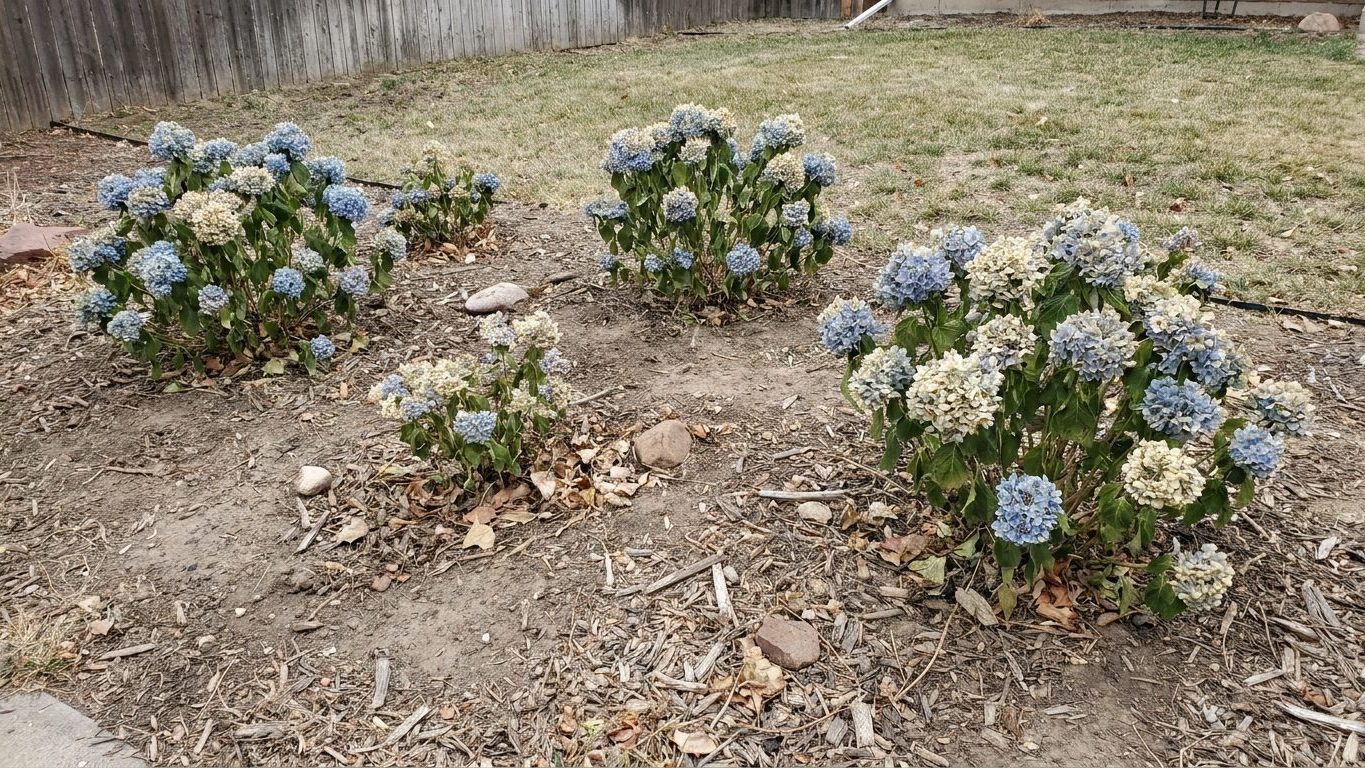
Connecticut’s frost dates and its split hardiness zone decide almost everything about growing hydrangeas here, from which kind sets buds that survive winter to the week you’re safe to plant. The short answer: pick a new-wood bloomer if you’re inland, plant two to three weeks after your local last frost, and mulch the base before the ground freezes in fall.
Hydrangeas Care Calendar for Connecticut

My gardening year in Connecticut starts and ends with two numbers: NOAA NCEI’s 1991-2020 Climate Normals put the last spring frost at Bridgeport between April 2 and April 12, and the first fall frost between October 28 and November 10, with the whole state spanning USDA zones 6a to 7b.
- Dormancy: the one safe window to move a plant, roots undisturbed, runs from leaf drop in fall through late winter before buds swell.
- Planting: settle a new hydrangea into the ground two to three weeks after the last spring frost, so late April into early May near Bridgeport and later inland.
- Bud break: watch for the first leaves within a week or two of that same frost date, a sign the roots have woken up.
- Pruning: cut back only the kinds that bloom on new wood right after bud break, and leave old-wood bloomers alone until you see which stems made it through winter.
- Feeding: apply a balanced fertilizer once new growth is a few inches long, generally three to four weeks after the last frost.
- Mulch and wrap: pile mulch over the root zone, and wrap tender stems, before the first fall frost arrives between October 28 and November 10.
Every one of those dates moves with the calendar this site keeps for Connecticut, not with the day on your kitchen wall.
Connecticut — the year and the numbers
- State
- Connecticut
- USDA zones
- 6a-7b
- Last spring frost
- April 2 to April 12
- First fall frost
- October 28 to November 10
- Annual rain
- 44 in
- Lawn zone
- cool-season
- Source
- NOAA NCEI 1991-2020 Climate Normals, 32F freeze probabilities · Bridgeport
Best Hydrangeas for Connecticut
Not every hydrangea shrugs off a Connecticut winter the same way. The USDA Plant Hardiness Zone Map puts the state at 6a to 7b, and that split decides which kinds set flower buds that actually survive to open.
Kinds that flower on new wood grow past a hard freeze because the stems that carry the blooms haven’t even formed until spring. Old-wood bloomers depend on last year’s stems, so a cold winter can erase the whole flower show.
| Kind | Flowers on | Verdict here | Why |
|---|---|---|---|
| Bigleaf | Old wood, mostly | Marginal | Buds often die in the colder inland half of the zone range |
| Panicle | New wood | Reliable | New stems carry the flowers, so winter cold can’t erase the bloom |
| Smooth | New wood | Reliable | Native to the eastern US and tolerant of the full 6a to 7b range |
| Oakleaf | Old wood | Marginal to good | Holds up better on the milder coastal strip than inland |
Panicle and smooth types make the easiest choice for most Connecticut yards, since a late frost can’t erase a flower bud that hasn’t formed yet. Bigleaf and oakleaf still work well close to the coast, and climbing hydrangea and other lesser-grown kinds have their own page for which ones hold up here.
When to Plant, Prune and Feed Hydrangeas in Connecticut
NOAA NCEI’s 1991-2020 Climate Normals put Bridgeport’s last spring frost between April 2 and April 12, and that date anchors every task below.
The first fall frost, October 28 to November 10, sets the outer edge for the opposite end of the season, especially for pruning old-wood bloomers before the plant goes dormant.
| Task | Window here | Counted from |
|---|---|---|
| Planting | Late April to mid-May near the coast, later inland | Two to three weeks after the last spring frost |
| Pruning, new wood | Within two weeks of bud break | Right after the last frost date passes |
| Pruning, old wood | Immediately after flowers fade, by late summer | Well ahead of the first fall frost, October 28 to November 10 |
| Feeding | Early spring into early summer | Three to four weeks after the last frost through midsummer |
The month by month version of this same calendar lives on the state’s dated page, with the twelve-month ribbon above showing exactly where today sits.
Hydrangeas Problems in Connecticut and What Causes Them
The USDA Plant Hardiness Zone Map puts the cold end of the state at zone 6a, and that’s where most of the trouble below starts.
No flowers on an otherwise healthy shrub

Old-wood bloomers like bigleaf and oakleaf set next year’s buds in late summer, and a hard winter at the 6a end of the range kills them before spring. Choose a new-wood bloomer instead, or check the which-ones page for a variety bred to rebloom.
New leaves blackened after a spring cold snap
A frost arriving after the April 2 to April 12 window can still nip tender new growth that broke early. Cover plants with a sheet whenever frost threatens past that date, and expect the damaged leaves to be replaced within weeks.
Stems dying back to the ground each winter
This is ordinary at the cold end of the state’s 6a to 7b range, especially for bigleaf hydrangea planted inland or in a low, wind-exposed spot. Mound extra mulch over the crown before the first fall frost, and the roots will usually push new stems in spring.
Connecticut North to South: How the Dates Shift
The frost dates above come from one coastal station, and the rest of Connecticut doesn’t keep the same calendar.
- Long Island Sound coast (Bridgeport, New Haven, Stamford): the mildest part of the state, closest to the frost dates and zone printed above, and the safest place for bigleaf and oakleaf.
- The Connecticut River Valley (Hartford, Middletown): a few days behind the coast in spring and a few days ahead of it in fall.
- The Litchfield Hills and northwest corner (Norfolk, Canaan): the coldest part of the state, where the last frost lands later and the first frost arrives earlier, favoring panicle and smooth types.
- The eastern uplands (Willimantic, Putnam): a lag similar to the northwest, though milder than the highest elevations.
Check the frost dates for the town nearest you before trusting the coastal window above for a planting or pruning date.
Connecticut Extension Offices and County Contacts
The zone 6a to 7b range above is a starting point, not a guarantee for your particular yard, so a local check helps before you plant.
- UConn Extension: extension.uconn.edu connects you to the office serving your county and its current seasonal advice.
- Your county office: ask about soil pH before you plant, since it shapes bloom color on bigleaf hydrangeas as much as any frost date does.
- This month’s task: match your next move, planting, pruning, or feeding, to where today falls between the last and first frost on the calendar above.
Common questions
Can I grow bigleaf hydrangea anywhere in Connecticut?
It survives best near the coast, where winter lows are milder. Inland and in the Litchfield Hills, at the colder end of the state’s 6a to 7b range, its flower buds are more likely to die over winter.
When is it too late to plant a hydrangea in fall?
Give the roots at least six weeks to settle before the ground freezes, which points to planting no later than mid-September in most of the state, well ahead of the October 28 to November 10 first frost window.
Do I need to cover hydrangeas for a late spring frost?
Only if new growth has already broken. A sheet or frost cloth over the plant on a night when temperatures dip after your local last-frost date usually protects the tender leaves and any early buds.