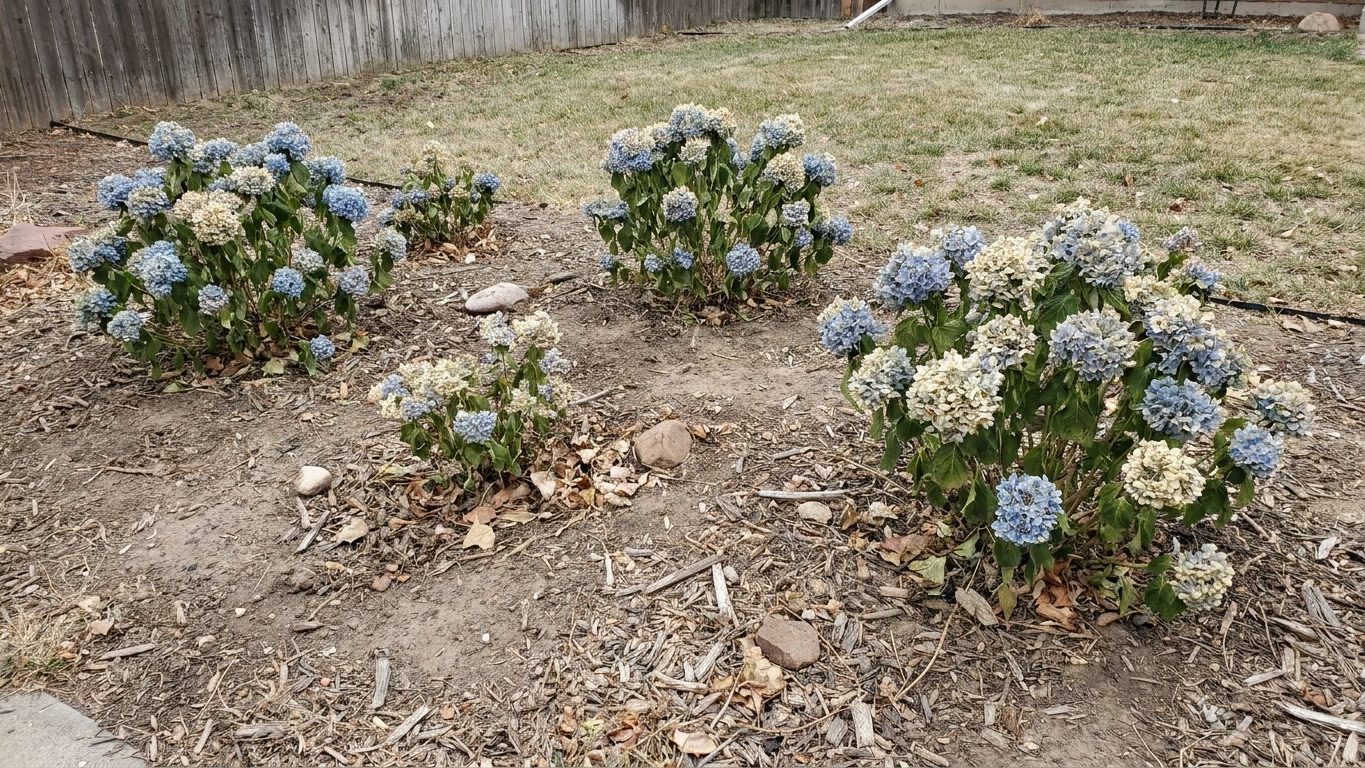
Plant after Boston’s last spring frost clears in early April, lean on panicle or smooth hydrangeas if you garden inland or in the Berkshires, and save bigleaf mopheads for the milder coastal stretch near the harbor. The state’s 5a to 7b hardiness spread means the same shrub can thrive in one town and sulk thirty miles away.
Hydrangeas Care Calendar for Massachusetts

Boston’s last spring frost falls April 1 to April 8 and its first fall frost lands November 3 to November 14, per NOAA NCEI’s 1991-2020 Climate Normals, and that gap decides when a hydrangea can go in the ground, against the state’s 5a to 7b hardiness range on the USDA map.
- Dormancy: the safe window to move or divide a shrub, anytime between the first fall frost and the last spring frost.
- Late-winter pruning: cut back panicle and smooth types in the weeks before the last spring frost, April 1 to April 8 in Boston.
- Spring planting: set new shrubs two to three weeks after the last spring frost, once the soil has warmed.
- First feeding: feed as new leaves unfurl, roughly a month after the last spring frost.
- Summer watering: give two deep soaks a week through the hottest stretch so bigleaf types don’t wilt by afternoon.
- Fall mulch: pile four inches over the root zone within two weeks of the first fall frost, November 3 to November 14 in Boston.
- Bud protection: wrap or cage bigleaf stems before the ground freezes solid, since next year’s flower buds are already set on this year’s wood.
Follow this order and a hydrangea planted this spring should carry its first full bloom by the second summer, whether it flowers on old wood or new.
Massachusetts — the year and the numbers
- State
- Massachusetts
- USDA zones
- 5a-7b
- Last spring frost
- April 1 to April 8
- First fall frost
- November 3 to November 14
- Annual rain
- 44 in
- Lawn zone
- cool-season
- Source
- NOAA NCEI 1991-2020 Climate Normals, 32F freeze probabilities · Boston
Best Hydrangeas for Massachusetts
Not every hydrangea takes Massachusetts winters the same way. The state’s spread runs from the mild waterfront around Boston to cold inland valleys and the Berkshires, and that range decides which shrub blooms reliably and which one dies back most winters.
The USDA Plant Hardiness Zone Map’s 2023 update, built on the 1991-2020 normals, sets the state at 5a to 7b, with the Boston waterfront holding the mild end and the Berkshires anchoring the cold one, and that split separates the shrubs that shrug off winter from the ones that need coddling.
| Kind | Flowers on | Zone fit here | Sun |
|---|---|---|---|
| Bigleaf (mophead) | Last year’s wood | Best at the mild, coastal end | Part shade |
| Panicle | New wood | Handles the full range | Full sun |
| Smooth (‘Annabelle’ type) | New wood | Handles the full range | Full sun to part shade |
| Oakleaf | Last year’s wood | Struggles at the cold, inland end | Part shade |
Climbing and mountain hydrangeas show up in Massachusetts gardens too, but the finer split on which selections hold up here belongs on the dedicated which ones page for the state.
When to Plant, Prune and Feed Hydrangeas in Massachusetts
NOAA NCEI’s 1991-2020 Climate Normals put Boston’s last spring frost at April 1 to April 8 and the first fall frost at November 3 to November 14, and every hydrangea task in the state counts forward or back from those two dates.
Planting and feeding both track the spring date, pruning happens just before it, and winter protection follows the fall one, so a single pair of dates covers the whole task list.
| Task | Window here | Counted from |
|---|---|---|
| Plant | Two to three weeks after last frost | Last spring frost, April 1 to April 8 |
| Prune new-wood types | Weeks just before last frost | Last spring frost, April 1 to April 8 |
| Feed | About a month after last frost | Last spring frost, April 1 to April 8 |
| Mulch and protect | Within two weeks of first fall frost | First fall frost, November 3 to 14 |
Bigleaf owners should skip the pruning line entirely, since last year’s wood already carries this year’s buds, and any cut there removes the coming bloom.
Hydrangeas Problems in Massachusetts and What Causes Them
No flowers despite a healthy shrub

Bigleaf hydrangeas set next year’s flowers on old wood, and a cold pocket in the Berkshires or a pruning cut at the wrong time removes them before they open. Skip fall or spring pruning on this type and see the what goes wrong page for pest causes too.
Stems dead to the ground each spring

Inland and Berkshire winters sit at the cold end of the state’s 5a to 7b range, and bigleaf or oakleaf stems die back to the roots there even in a mild year. Panicle and smooth types sidestep this entirely since they rebuild from new wood anyway.
Buds browned by a late frost

A warm stretch can push buds open before the last spring frost window closes, and a snap freeze after that browns them overnight. Hold winter wrap in place until the date has safely passed rather than pulling it at the first mild afternoon.
Massachusetts North to South: How the Dates Shift
The frost dates above are Boston’s, and nowhere else in Massachusetts frosts on quite the same schedule.
- Coastal Boston and the South Shore (mild end of the zone range): frost arrives latest in fall and leaves earliest in spring, giving bigleaf hydrangeas their best shot at keeping old-wood buds alive.
- The Berkshires and the far inland west (cold end of the range): frost comes weeks earlier in fall and lingers later in spring, favoring panicle and smooth types that don’t depend on old wood.
- The Connecticut River Valley (mid-range, low-lying): a corridor that drains cold air at night, so plantings there should track the later end of any window, not the earlier one.
- The North Shore and Merrimack Valley (near-coastal but wind-exposed): close enough to water to soften frost dates, but open enough that winter wind, not cold alone, burns bigleaf buds.
Check the state calendar page for the dates that match your own town more closely than a single airport station can.
Massachusetts Extension Offices and County Contacts
Massachusetts’ 5a to 7b range is a starting point, not a forecast for your own yard, and UMass Extension tracks the local frost pockets and soil the state map can’t capture.
- Your state page: the frost dates and pruning window for Massachusetts.
- Which ones hold up here: the fuller rundown of bigleaf, panicle, smooth, oakleaf and climbing hydrangeas in the state.
- What goes wrong here: pests and disease on Massachusetts hydrangeas, deeper than the cold-driven issues covered above.
This month, hold off on feeding and let new growth harden before the first fall frost reaches Boston in early November.
Common questions
Do hydrangeas need winter protection in Massachusetts?
Bigleaf types generally do, especially inland and in the Berkshires where the zone range dips toward 5a. Panicle and smooth types usually get through winter without any wrap.
When is it safe to plant hydrangeas in Massachusetts?
Wait two to three weeks past Boston’s last spring frost, April 1 to April 8, and push that later if you garden inland or in the hills where frost lingers longer.
Can hydrangeas survive a Massachusetts winter without mulch?
Panicle and smooth types usually can. Bigleaf and oakleaf risk stem dieback without a mulch mound over the crown, especially where winters bottom out near the cold end of the state’s range.