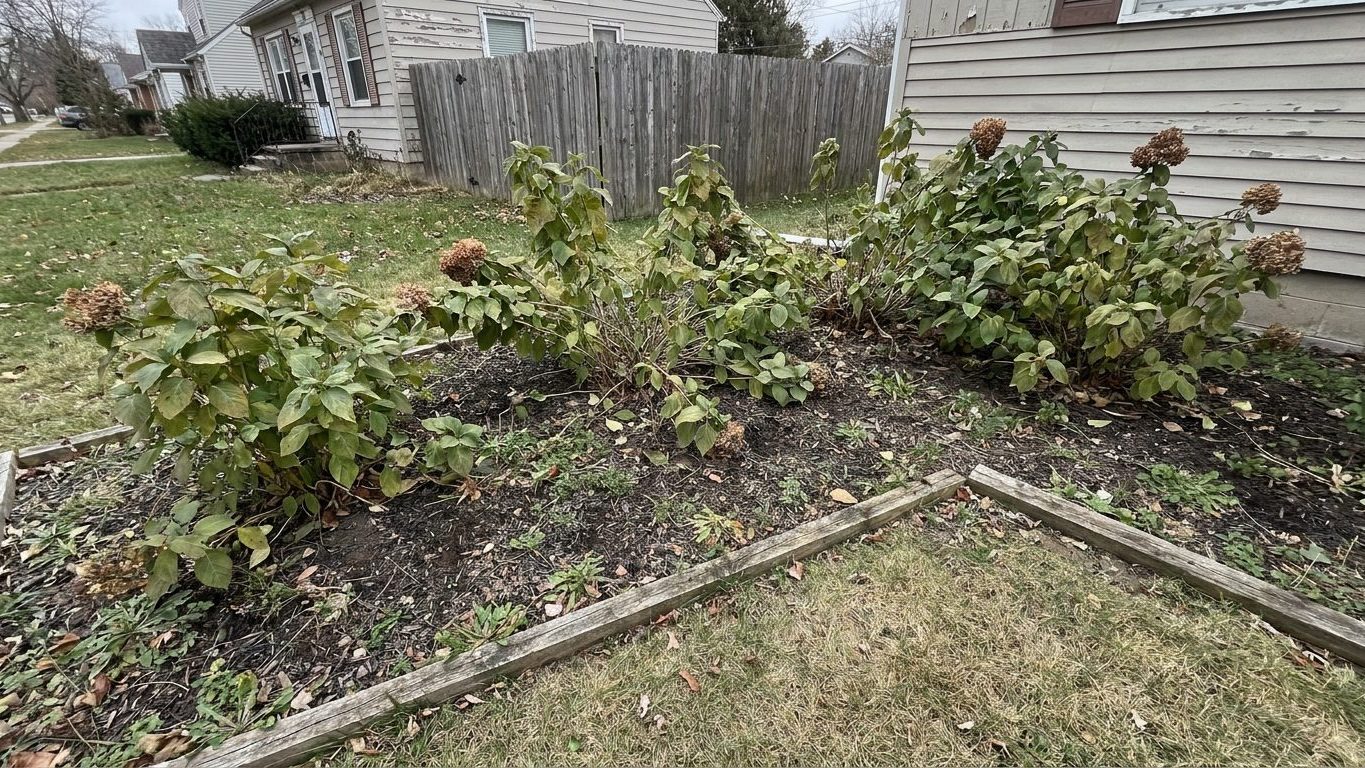
Michigan runs from USDA zone 4a to 6b, with a last spring frost around April 30 near Detroit and a first fall frost between October 6 and October 21 farther out across the Lower Peninsula. That spread favors panicle and smooth hydrangeas in nearly every yard in the state, while bigleaf types need a sheltered spot, a warm microclimate, and some luck to bloom reliably each summer.
Hydrangeas Care Calendar for Michigan

Detroit’s last spring frost falls around April 30, and MSU Extension’s Frost-Free Dates puts the rest of the Lower Peninsula into early or mid May. Fall’s first frost lands October 6 to October 21, inside zone 6a, and the state spans USDA zone 4a to 6b. That spread decides when I move a hydrangea out.
- Dormancy: the one safe window to move a plant, roots undisturbed, runs from late fall until buds swell in spring.
- Planting: get the shrub in the ground once soil has warmed past the last spring frost, not before.
- Watering-in: soak deeply twice a week for the first few weeks after planting, while roots settle.
- First feeding: apply once new growth is clearly underway, well after the last spring frost has passed.
- Pruning bigleaf: wait until leaves show which stems survived winter before cutting anything back.
- Mulching for winter: pile mulch a few inches deep as the first fall frost approaches, to buffer root temperatures.
- Bud protection: after the first hard freeze, wrap or cage bigleaf types if last winter’s buds were lost.
In a state spanning two full hardiness zones, the safest rule is to count from frost dates, not from a fixed date on the wall, and to treat bigleaf as the variety needing the most winter care.
Michigan — the year and the numbers
- State
- Michigan
- USDA zones
- 4a-6b
- Last spring frost
- April 30 in the Detroit area; early to mid May across most of the Lower Peninsula
- First fall frost
- October 6 to October 21
- Annual rain
- 34 in
- Lawn zone
- cool-season
- Source
- MSU Extension — Frost-Free Dates · Detroit
Best Hydrangeas for Michigan
USDA’s Plant Hardiness Zone Map puts Michigan across zone 4a to 6b, and that spread is why bloom wood matters more here than in milder states. Kinds that set buds on new spring growth shrug off a hard winter with little fuss.
Kinds that keep last year’s wood are the ones that struggle. Panicle and smooth types hold up from the Upper Peninsula down to Detroit, while bigleaf and oakleaf lean riskier the farther north or inland a yard sits.
| Kind | Verdict here | Why |
|---|---|---|
| Panicle | Reliable statewide | Flowers on new wood, tolerates the cold end of the 4a to 6b range |
| Smooth | Reliable statewide | Dies back and rebounds fine each spring, also blooms on new wood |
| Bigleaf | Risky in the north, better near Lake Michigan | Many varieties set buds on old wood, which the coldest nights kill |
| Oakleaf | Marginal, needs shelter | Borderline hardy at the colder edge of the state’s zone range |
The other kinds, like climbing hydrangea, are on their own pages, since they need site-by-site judgment this table can’t capture.
When to Plant, Prune and Feed Hydrangeas in Michigan
Michigan State University Extension’s Garden Calendar sets three windows for hydrangeas here: planting, feeding, and pruning bigleaf types. Each one counts from the last spring frost, which lands around April 30 in Detroit and later farther north.
Planting opens once soil has warmed past that frost date and reopens again in late summer, ahead of the first fall frost between October 6 and October 21. Feeding follows its own rhythm through the growing season.
| Task | Window here | Counted from |
|---|---|---|
| Plant | April, May, then again August, September | After the last spring frost, or ahead of the first fall frost |
| Feed | March, May, July | Before growth starts, then through the growing season |
| Prune bigleaf | June, July | Once leaf-out reveals which wood survived winter |
Bigleaf is the only kind that needs a strict rule on pruning, since cutting before leaf-out risks removing next year’s blooms. Panicle and smooth tolerate a wider window and can be shaped anytime after that same leaf-out.
Hydrangeas Problems in Michigan and What Causes Them
No flowers on an otherwise healthy bigleaf

This usually means winter killed the old wood buds, a common outcome in the colder pockets of the state’s 4a to 6b range. Choose a reblooming variety or protect buds through winter, and see which kinds hold up here.
New growth blackened after it looked fine

A late frost is the likely cause, since the last spring frost can land into early or mid May across the Lower Peninsula. Hold off uncovering plants too early, and check the calendar page for this state’s exact windows.
Buds cut off before they ever opened

Pruning bigleaf outside its June to July window strips wood that hasn’t yet set next year’s flowers. Wait for leaf-out to show which stems are alive before cutting anything back.
Michigan North to South: How the Dates Shift
Frost timing and winter cold don’t land the same way across the state, and that changes what a hydrangea can handle from one yard to the next.
- The Upper Peninsula: the coldest ground in the state, where bigleaf struggles and panicle or smooth do the heavy lifting.
- The Lake Michigan shoreline: the lake moderates swings enough that bigleaf gets a slightly better shot than inland spots at the same latitude.
- Southeast Michigan and the Detroit area: the mildest corner of the state, closest to the reference frost dates used above.
- The northern Lower Peninsula interior: colder and slower to warm than the shoreline, closer in behavior to the Upper Peninsula.
None of that changes the state’s zone range, only how close a given yard sits to its warm or cold edge, so check timing against your own local frost date rather than the state average.
Michigan Extension Offices and County Contacts
Michigan State University Extension runs county offices across the state, reachable through its outreach network. That’s the fastest way to check a frost date for your exact town, not just the reference city used above.
- Your county MSU Extension office: local frost dates and soil questions answered close to home.
- Which ones hold up here: the sibling page ranking Michigan hydrangea varieties in more detail.
- What goes wrong here: the page covering pests and disease beyond frost and zone.
Common questions
What USDA zone is Michigan for hydrangeas?
The state spans USDA zone 4a to 6b, according to the USDA Plant Hardiness Zone Map. That range decides which kinds bloom reliably and which need extra winter protection.
When is it safe to plant hydrangeas in Michigan?
Planting windows fall in April, May, and again in August and September, once soil has warmed past the last spring frost and before the first fall frost arrives.
Do hydrangeas need winter protection in Michigan?
Bigleaf types often do, especially away from the moderating effect of Lake Michigan, since their old-wood buds can die in a hard winter. Panicle and smooth types generally don’t need it.